


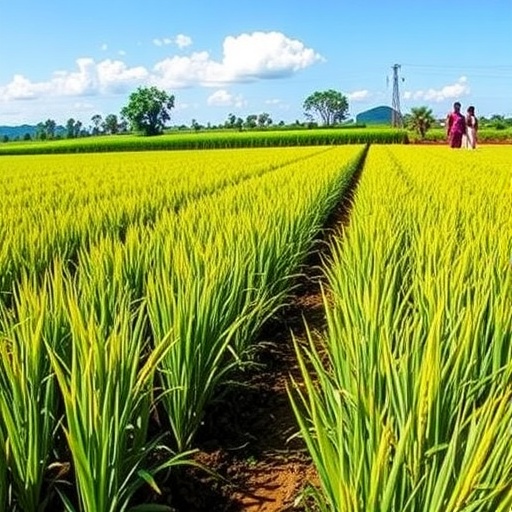
In the face of climate change, the agricultural sector is increasingly becoming a focal point for greenhouse gas emissions analysis, particularly methane emissions from rice farming systems. Rice, a staple food for over half of the global population, accounts for a notable share of methane emissions, which are primarily generated during the flooded cultivation of rice paddies. In Sub-Saharan Africa, where rice cultivation is intensifying to meet rising food demands, developing strategies to mitigate these emissions is imperative. A recent study by Lyimo sheds light on innovative approaches that could revolutionize rice production while also preserving our environment.
The agricultural practice of rice cultivation is steeped in tradition, yet it has significant impacts on our planet. The anaerobic conditions prevalent in flooded rice paddies create a perfect environment for methanogenic bacteria, which produce methane as a byproduct. This potent greenhouse gas, with a global warming potential many times that of carbon dioxide, is responsible for contributing to rising temperatures and shifting weather patterns. Addressing methane emissions from rice is not merely an environmental concern; it is also a critical part of global efforts to combat climate change and secure food systems for future generations.
Central to mitigating these emissions is the exploration of lower-emission rice genotypes. The research emphasizes the potential benefits of breeding programs aimed at developing new rice varieties that can thrive in less waterlogged conditions or possess traits that minimize methane production. Such initiatives could significantly impact the amount of methane released into the atmosphere while maintaining high yield levels necessary to feed growing populations. The development of low-emission genotypes represents a crowning achievement in the intersection of agricultural science and sustainability.
Moreover, the management practices surrounding rice cultivation are equally pivotal. The study highlights that integrated approaches—combining the use of low-emission rice varieties with improved water management and alternate wetting and drying techniques—can further accelerate the reduction of methane emissions. Adjusting irrigation practices to allow for drier conditions intermittently could disrupt the anaerobic process, thus curbing methane production while also fostering healthier plants. This multifaceted approach necessitates collaboration among scientists, agronomists, and local farmers, emphasizing an education component to ensure successful implementation.
Notably, the research conducted by Lyimo also recognizes the socio-economic dimensions of transitioning to low-emission rice varieties and practices. Farmers in Sub-Saharan Africa often face financial and resource constraints, limiting their ability to adopt new technologies. Therefore, the success of low-emission strategies will depend not only on technological advancements but also on addressing these barriers through policy reforms and support systems. Creating an enabling environment for farmers to engage with sustainable practices is essential for long-term adoption.
In addition to the scientific advancements and management practices, the article calls attention to the importance of community engagement and participation in the adoption of these new methods. Farmers are more likely to embrace change when they are actively involved in the decision-making processes that affect their lands and livelihoods. Community-driven initiatives can play a significant role in raising awareness and fostering collective action towards reducing methane emissions in rice farming.
This innovative approach to rice cultivation is especially pressing as world leaders convene to address climate change on a global scale. The agriculture sector is facing increasing scrutiny and pressure to reduce its environmental footprint, and the rice industry is no exception. By advancing research capable of providing actionable insights, studies like these are critical for shaping policy and guiding international efforts to combat climate change.
The implications of reducing methane emissions extend far beyond the confines of rice fields. A successful mitigation strategy could serve as a blueprint for other agricultural sectors to follow, thereby amplifying the overall impact on reducing global greenhouse gas emissions. It is vital that the lessons learned from rice farming are extrapolated to other crops and regions, establishing a comprehensive framework for sustainable agriculture.
Another aspect worth stating is the role of technology and data analytics in modern farming. Precision agriculture tools can now provide farmers with real-time data on field conditions, allowing for informed decisions regarding irrigation and fertilizer application. The integration of technology in agriculture can provide the impetus for adopting low-emission practices, making it easier for farmers to minimize their environmental impact while optimizing yield.
Discussions around climate-smart agriculture increasingly highlight collaboration among countries, particularly in regions vulnerable to the effects of climate change. The holistic approach advocated by Lyimo not only calls for individual country efforts but also emphasizes the need for regional partnerships in agriculture and environmental policies. By sharing research findings, propagating successful practices, and supporting farmers across borders, countries can collectively mitigate the effects of climate change.
As we look toward the future of agriculture, the road to achieving lower methane emissions from rice farming in Sub-Saharan Africa involves a blend of traditional knowledge, innovative science, and community inclusion. Facilitating discussions and fostering partnerships among government, research institutions, and local farming communities can create a more resilient food system that contributes to food security while protecting our environment.
In conclusion, as atmospheric methane levels continue to rise, prioritizing the development of low-emission rice farming systems becomes even more urgent. The research conducted by Lyimo provides a comprehensive roadmap that not only addresses the scientific and management aspects but also considers the socio-economic factors essential for the successful implementation of these sustainable practices. If these strategies are embraced widely, they can catalyze a significant transformation in the rice industry, paving the way toward a more sustainable and food-secure future. The potential impact of these initiatives is vast, and as evidence accumulates, the agricultural community is poised for a much-needed shift towards sustainability.
Lyimo, L.D. Mitigating methane emissions in rice (Oryza sativa) farming systems: a breeding and management roadmap for low-emission genotypes in Sub-Saharan Africa.
Discov Agric 4, 16 (2026). https://doi.org/10.1007/s44279-026-00486-7
Cite Scienmag News
Alan Morgan. (January 19, 2026). Reducing Methane Emissions in African Rice Farming. Scienmag. https://scienmag.com/reducing-methane-emissions-in-african-rice-farming/
Alan Morgan. "Reducing Methane Emissions in African Rice Farming." Scienmag, 19 January 2026, https://scienmag.com/reducing-methane-emissions-in-african-rice-farming/. Accessed 4 September 2026.
Alan Morgan. "Reducing Methane Emissions in African Rice Farming." Scienmag. January 19, 2026. https://scienmag.com/reducing-methane-emissions-in-african-rice-farming/


