


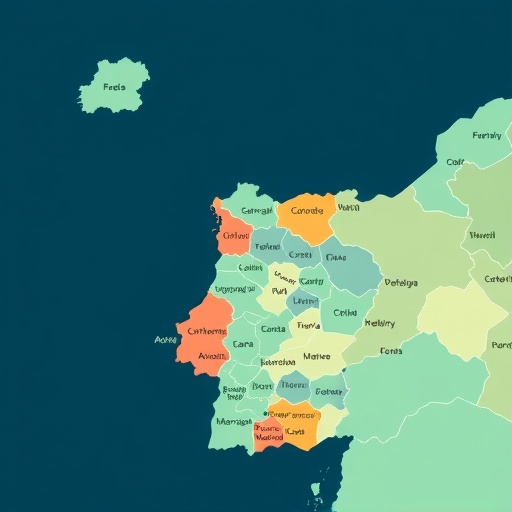
Portugal is one of the fastest-aging countries in Europe, yet a new national survey reveals that its future doctors may be graduating without the training they need to care for older adults. A descriptive observational study published in European Geriatric Medicine has mapped, for the first time in recent years, how Geriatric Medicine is taught across Portuguese medical schools, and the picture it paints is one of patchy, uneven and often minimal preparation for a demographic reality that will define medicine for decades to come.
The study was conducted by researchers affiliated with the Faculty of Medicine of the University of Lisbon, Hospital da Luz, Hospital CUF Descobertas and NOVA Medical School, led by Joana Soares and Mariana Alves. Their objective was straightforward but ambitious: to document the presence and characteristics of geriatrics teaching at every Portuguese medical school and to assess how well that teaching aligns with the undergraduate recommendations issued by the European Union of Medical Specialists, known as the UEMS. Those recommendations, developed through an international modified Delphi process and published in Age and Ageing, define the core competencies and topics that every medical student should encounter before graduation, from falls and frailty to polypharmacy, cognitive decline, incontinence and the ethical dimensions of end-of-life care.
To build the national picture, the team deployed a structured online questionnaire to the presidents of the pedagogical councils of all eleven Portuguese medical schools. The instrument was designed to capture the fundamental architecture of geriatric education: whether a dedicated geriatrics course exists at all; whether that course is mandatory or elective; whether it stands alone or is embedded within broader curricular units; the number of European Credit Transfer and Accumulation System credits assigned to it, which translate to an estimated total student workload; and the extent to which specific UEMS-recommended topics are covered. The ECTS framework is a useful measuring stick here because each credit corresponds to roughly 28 hours of estimated work, encompassing lectures, seminars, clinical placements and private study alike, allowing curricula of very different shapes to be compared on a common scale.
Nine of the eleven schools responded, a response rate high enough to give the survey genuine national coverage. What the responses revealed is a system divided against itself. Five of the nine responding schools reported offering a mandatory geriatrics course, meaning that in nearly half of the country’s medical faculties, a student can complete the entire degree without structured, compulsory exposure to the discipline dedicated to the care of older people. Of those five mandatory courses, only three are standalone offerings, with the remaining two woven into other curricular units. ECTS credits assigned to mandatory geriatrics teaching ranged from a single credit, corresponding to approximately 28 hours of total student workload, to eight credits, equivalent to roughly 224 hours. That fortyfold difference in workload between the minimum and the maximum illustrates just how heterogeneous geriatric education is across the country.
Beyond the mandatory layer, four schools reported offering an elective geriatrics course, providing an opportunity for interested students to deepen their knowledge but doing nothing to guarantee a baseline of competence among all graduates. Electives, by their nature, reach only those already convinced of the field’s importance, while the students who might benefit most from confronting their assumptions about aging, disability and multimorbidity are precisely the ones who opt out.
The survey also probed content in detail, benchmarking what is taught against the UEMS undergraduate framework. Encouragingly, in schools with mandatory geriatrics courses, most of the recommended topics were addressed. Core areas such as the comprehensive geriatric assessment, falls, frailty, cognitive disorders and the management of multiple chronic conditions appear to be broadly represented. But the mapping exercise exposed consistent blind spots. Several areas were covered inconsistently or not at all: fecal incontinence, sexuality in older adults, palliative care, ethical and legal issues, and elder abuse. These are not peripheral concerns. Fecal incontinence affects a substantial share of older people and is a common driver of institutionalization, yet it remains under-discussed in medical curricula worldwide. Elder abuse is increasingly recognized as a public health problem with prevalence rising as populations age. Palliative care competencies are fundamental for any physician, given that most deaths in high-income countries occur in people over 65. And ethical and legal questions, from capacity assessments to advance directives, are daily realities in geriatric practice.
The context makes these gaps more consequential. According to the World Health Organization, the global population aged 60 and over is growing faster than any other age group, and Portugal sits near the sharp end of this trend, with one of the oldest demographic profiles in Europe and steadily increasing numbers of healthy life years spent after age 65 that demand appropriate medical support. Research published in Acta Médica Portuguesa has highlighted both the progress of value-based geriatric care in Portugal and the pressing need to strengthen the specialty’s footprint to consolidate those gains. Yet internationally, geriatric medicine has struggled to attract trainees. A Danish survey published in European Geriatric Medicine examined the factors influencing junior doctors’ decisions to specialize in geriatrics, and a systematic review in BMC Medical Education found that negative attitudes toward older people, perceived lack of prestige and limited early exposure to the field all discourage medical students from choosing geriatric careers. Studies of ageism among medical trainees in Korea have documented that stereotypes about aging are present even before clinical training begins, suggesting that undergraduate curricula are a critical point of intervention.
There is also a robust economic and clinical case for doing better. A recent systematic review in Health Economics Review assessed the cost-effectiveness of comprehensive geriatric assessment, the structured, multidimensional diagnostic process that lies at the heart of geriatric medicine, and found evidence supporting its value in improving outcomes for older patients with complex needs. Other work published in the Journal of Clinical Medicine has argued that geriatric medicine’s added value extends well beyond geriatricians, since the principles of the discipline, deprescribing, functional assessment, and attention to the interaction between acute disease and underlying reserve capacity, are relevant to every physician who treats older adults, whether in cardiology, surgery, oncology or primary care. In other words, the shortfall in undergraduate training identified by the Portuguese survey is not merely a problem for a small specialty; it is a problem for medicine as a whole.
Portugal’s experience mirrors a wider European unease. A pan-European mapping exercise published in Age and Ageing in 2026 documented substantial variation in geriatric medicine education, training and practice across the continent, and the PROGRAMMING COST Action CA21122, a European cooperation network, was launched with the explicit aim of bridging gaps in geriatric medicine education and issued a call for endorsement from national bodies. Surveys from Spain have tracked the slow and uneven evolution of geriatrics teaching in Spanish medical faculties, while analyses from Balkan countries described how the discipline was built, country by country, often from a low baseline, in the memorable formulation of one paper’s title: start low, go slow, but look far. The third national curriculum survey from the British Geriatrics Society, published in Age and Ageing, similarly asked what UK medical students are actually taught about aging and found persistent shortfalls against recommended curricula. Portugal is thus not an outlier but a case study in a shared European challenge.
The Portuguese authors are careful about the limitations of their design. The survey was descriptive and relied on self-report from pedagogical council leaders rather than direct audit of course syllabi, and two schools did not respond, leaving a small but real blind spot in the national map. The study also measured presence and scope of teaching rather than the quality of that teaching or the competencies actually acquired by students. Data were not made publicly available due to privacy and ethical restrictions, though the authors state they can be shared upon reasonable request. Because no personal or identifiable data were collected, formal ethics committee approval was not required, and informed consent was implied by questionnaire completion.
Even with those caveats, the conclusion the authors draw is hard to escape. Geriatric Medicine teaching in Portugal remains uneven, with compulsory training present in only half of the medical schools, a patchwork of standalone and integrated formats, workloads ranging from negligible to substantial, and important topic areas, palliative care, ethics, elder abuse, sexuality and incontinence among them, falling through the cracks. Practical, bedside exposure to older patients appears limited, at a time when virtually every future Portuguese physician will spend their career caring for an aging population regardless of chosen specialty.
The authors argue that their findings make the case for curricular strengthening and, crucially, for greater national harmonization, so that a medical graduate’s competence in geriatrics does not depend on which of the country’s eleven schools they happened to attend. Aligning national curricula with the UEMS undergraduate framework would give Portuguese medical schools a shared, externally validated benchmark and would help ensure that core topics currently taught inconsistently become standard everywhere. Given Europe’s concerted push through initiatives such as the PROGRAMMING COST Action and the growing body of evidence on the value and cost-effectiveness of geriatric care, the moment appears ripe for reform. As the study’s key summary puts it, there is an important gap between undergraduate medical education and the needs of future physicians caring for an aging population. The demographic clock, in Portugal and across Europe, is not waiting.
Cite Scienmag News
Beatrice Stafford. (September 4, 2026). Survey maps geriatric medicine teaching across Portuguese medical schools. Scienmag. https://scienmag.com/survey-maps-geriatric-medicine-teaching-across-portuguese-medical-schools/
Beatrice Stafford. "Survey maps geriatric medicine teaching across Portuguese medical schools." Scienmag, 4 September 2026, https://scienmag.com/survey-maps-geriatric-medicine-teaching-across-portuguese-medical-schools/. Accessed 4 September 2026.
Beatrice Stafford. "Survey maps geriatric medicine teaching across Portuguese medical schools." Scienmag. September 4, 2026. https://scienmag.com/survey-maps-geriatric-medicine-teaching-across-portuguese-medical-schools/


