


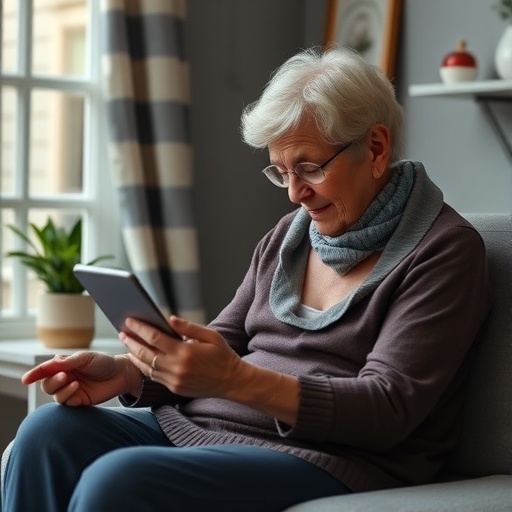
Loneliness has been formally recognized as a public health crisis in the United States, and the health care system’s response to it increasingly runs through digital channels. A new study published in the Journal of General Internal Medicine asks a deceptively simple question with far-reaching implications: does age change the way loneliness relates to telehealth use? The research, led by Ronald Anguzu of the Medical College of Wisconsin and colleagues, examines whether the association between feeling lonely and turning to remote medical care differs across generations of American adults, and the answer carries important consequences for how clinicians and policymakers design virtual care programs for a lonely and digitally divided population.
The investigation drew on de-identified, publicly available data from the 2024 Health Information National Trends Survey, a nationally representative, biennial surveillance program administered by the National Cancer Institute. HINTS collects detailed self-reported information on how American adults access, use, and perceive health information and communication technologies, making it one of the few data sources that simultaneously captures psychosocial measures such as loneliness and behavioral measures such as telehealth engagement. Because the survey uses probability sampling with known design weights, the investigators were able to generalize their findings to the civilian, non-institutionalized adult population of the United States, an analytical advantage over convenience samples of patients at a single health system.
The central analytical strategy involved testing interaction effects. In statistical terms, the team modeled telehealth use as the outcome and loneliness as the primary exposure, then introduced age as a potential effect modifier by fitting interaction terms between loneliness and age categories within weighted logistic regression frameworks. Rather than assuming that the association between loneliness and telehealth use is uniform across the life course, this approach explicitly estimates whether the slope of that relationship differs for younger, middle-aged, and older adults. Survey weighting, stratification, and clustering variables supplied with the public-use data were incorporated to produce valid standard errors, a technical necessity when working with complex, multistage survey designs. This kind of moderation analysis is crucial because averaging effects across age groups can mask opposing patterns that cancel each other out in pooled estimates.
The conceptual motivation for testing age as a modifier is grounded in a well-documented paradox in the loneliness literature. Contrary to popular assumption, coordinated analyses of nine longitudinal studies have shown that loneliness does not simply increase monotonically with age; in fact, young adults in the United States frequently report levels of loneliness that meet or exceed those of older adults, even as older adults remain more likely to face structural isolation through bereavement, living alone, and reduced mobility. At the same time, the pandemic-era expansion of telemedicine exposed a stark digital divide: older adults, particularly those in their seventies and eighties, were far less likely to have the devices, broadband connections, and digital skills required for video visits. Studies during the COVID-19 pandemic found that a substantial fraction of older adults were “telemedicine unreadiness,” lacking both the technological access and the confidence to conduct virtual care on their own. The new study therefore sits at the intersection of two age-sensitive phenomena: a psychosocial burden whose prevalence varies across the life course, and a care delivery modality whose accessibility varies across the same spectrum.
The public health stakes are considerable. The US Surgeon General’s 2023 advisory on the “epidemic of loneliness and isolation” framed social disconnection as a risk factor comparable in magnitude to smoking for all-cause mortality, with documented links to cardiovascular disease, dementia, depression, and anxiety. If lonely individuals rely more heavily on telehealth as a substitute for in-person connection with the health system, virtual care could become a critical touchpoint for identifying and addressing isolation. Conversely, if lonely older adults are precisely the people least able to reach clinicians through digital channels, telehealth may widen rather than narrow health disparities. The findings speak directly to which of these scenarios better describes the American health care landscape as telehealth matures beyond its pandemic-era surge.
Methodologically, the study exemplifies the growing use of national surveillance data for digital health equity research. Prior secondary analyses of HINTS data covering 2017 through 2022 documented that age-based disparities in digital health technology use persisted even as overall adoption accelerated during the COVID-19 pandemic, with older adults consistently trailing in the uptake of patient portals, health apps, and online communication with providers. Other work has compared in-person and telehealth utilization specifically among US adults experiencing loneliness and social isolation, finding patterns of care-seeking that differ by social connectedness status. By using 2024 data, the Anguzu team captures a post-peak period in which telehealth has stabilized as a routine modality rather than an emergency workaround, offering a clearer picture of who, among lonely Americans, actually uses it in the current era.
The moderation question also has implications for interpreting loneliness-reduction interventions delivered remotely. Systematic reviews and meta-analyses of remotely delivered interventions for loneliness in older adults have found that structured programs such as video-based social engagement, telephone befriending, and online cognitive behavioral approaches can meaningfully reduce loneliness, though effects vary by intervention type and delivery format. If the relationship between loneliness and telehealth use is strongest in certain age bands, those groups may be the most natural early adopters of digitally delivered loneliness interventions, while groups showing weaker or reversed associations may need hybrid or in-person outreach. In other words, the effect-modification structure of the loneliness–telehealth relationship is not merely a statistical curiosity; it is a targeting map for intervention design.
The research team reflects a deliberate interdisciplinary composition. Anguzu and Kohlbeck are based in the Division of Global, Community and Environmental Health at the Medical College of Wisconsin’s Institute for Health and Humanity, while Sandra Iregbu brings nursing science expertise from the University of Wisconsin-Milwaukee, Terri deRoon-Cassini contributes from the trauma and injury research sphere, and Sanjay Bhandari, the senior author, is based in the Division of General Internal Medicine, the clinical specialty on the front lines of telehealth adoption. The work was supported in part by the Clinical and Translational Science Institute through the National Center for Advancing Translational Sciences, part of the National Institutes of Health, under award UL1 TR001436. Because the analysis relied exclusively on de-identified, publicly available survey data, the Medical College of Wisconsin Institutional Review Board classified the study as exempt from ethics approval, and the authors declared no conflicts of interest.
Transparency and reproducibility were built into the study’s framework. The investigators made anonymized data available under conditions designed to balance openness with responsible stewardship: external teams must agree to collaborate on publications, secure funding for the administrative burden of data sharing, demonstrate documented training in human subjects protections, and abide by institutional data use agreements. This staged-access model reflects an emerging norm in clinical research, in which publicly funded analyses remain verifiable by independent investigators while protecting the integrity of the original cohort. For a study touching on a sensitive psychosocial state such as loneliness, these protections are particularly salient.
Ultimately, the study’s contribution lies in reframing how the health system should think about lonely patients and virtual care. Telehealth is often marketed as a convenience, a time-saver, or an infection-control tool, but for socially disconnected Americans it may function as something closer to a lifeline, or, depending on age and digital readiness, an inaccessible barrier. By demonstrating that age conditions the loneliness–telehealth relationship, the research argues against one-size-fits-all virtual care policy. Health systems seeking to serve lonely patients may need age-differentiated strategies: robust technical support, simplified interfaces, and telephone-first options for older adults, paired with awareness that younger lonely adults may already be using telehealth at high rates and could be engaged there for screening and connection to community resources. As the Surgeon General’s advisory calls for rebuilding social connection nationwide, studies like this one map the digital terrain on which that rebuilding will either succeed or falter.
The research, published as a concise research report in the Journal of General Internal Medicine, arrived after peer review beginning in April 2026 and acceptance in August of that year, and it adds to a rapidly growing evidence base linking social connection, digital access, and health care utilization. Its message to clinicians is practical: ask about loneliness, but ask differently depending on who is in the virtual waiting room. Its message to policymakers is structural: closing the connectivity and digital literacy gap for older adults is not merely a technology issue but a health equity imperative, one that determines whether the loneliest members of society can reach the care they need through the screens that increasingly mediate modern medicine.
Cite Scienmag News
Ophelia Keating. (September 4, 2026). Age May Shape How Loneliness Drives Telehealth Use. Scienmag. https://scienmag.com/age-may-shape-how-loneliness-drives-telehealth-use/
Ophelia Keating. "Age May Shape How Loneliness Drives Telehealth Use." Scienmag, 4 September 2026, https://scienmag.com/age-may-shape-how-loneliness-drives-telehealth-use/. Accessed 4 September 2026.
Ophelia Keating. "Age May Shape How Loneliness Drives Telehealth Use." Scienmag. September 4, 2026. https://scienmag.com/age-may-shape-how-loneliness-drives-telehealth-use/


