


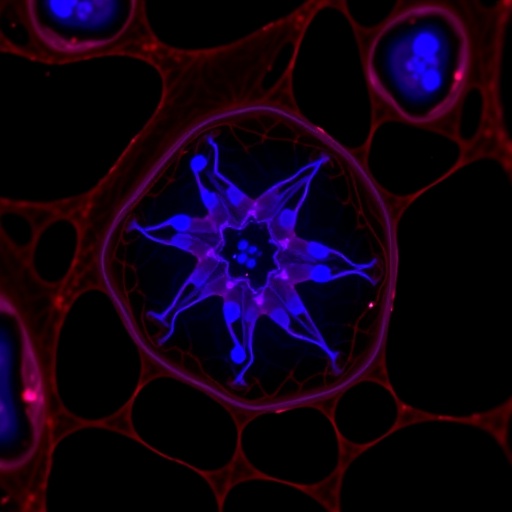
In a remarkable development that could reshape our understanding of reproductive biology, a recent study conducted by a team led by Zhu et al. has unveiled the critical role of the KRAS gene in the regulation of ovarian follicle development in Wuding chickens. This innovative research is more than just a scholarly achievement; it bridges a significant gap in avian genomics and offers insights that might extend to other species, including humans. As biologists delve deeper into the intricacies of ovarian function, this study highlights the transformative potential of transcriptome analysis in unraveling complex biological processes.
The investigation into the Wuding chicken breed, known for its unique reproductive traits and resilience, has provided a fertile ground for scientific inquiry. By focusing on this specific breed, researchers were able to document how variations in gene expression correlate with follicle maturation and ovulation. Their approach utilized high-throughput sequencing techniques to analyze the transcriptome—the complete set of RNA transcripts produced by the genome under specific circumstances, including developmental stages and environmental factors.
The study’s results are striking: KRAS emerged as a pivotal player in the signaling pathways that govern follicle development. KRAS, a well-known oncogene in many cancers, has been recognized in this context for its role in cell proliferation and differentiation. The research team meticulously mapped out the signaling networks influenced by KRAS, revealing how this gene orchestrates various biological functions leading to healthy reproductive outcomes. The implications of these findings are vast, pointing towards potential applications not only in poultry farming but also in advancing reproductive health knowledge in other animals and humans.
Zhu and colleagues took great care to ensure the robustness of their findings. They systematically cataloged gene expression profiles associated with different stages of ovarian follicle development in Wuding chickens, comparing these profiles to other avian species. The comparative approach underscored how KRAS functions uniquely in chicken models, contributing to the ongoing discussion about species-specific reproductive strategies. These comparisons open new avenues for understanding the evolutionary adaptations that have shaped animal reproduction over time.
Additionally, the significance of the research transcends poultry science. Given the parallels between avian and mammalian ovarian processes, insights gained from chicken models could provide a framework for investigating human reproductive health. Conditions such as polycystic ovary syndrome (PCOS) or premature ovarian failure may have common molecular underpinnings with those identified in the Wuding chickens. The research thus offers a potential pathway for developing therapeutic interventions and enhancing fertility treatments.
The methodologies employed in this study are also worth noting. The application of transcriptome sequencing marks a departure from traditional genetic analysis methods. By capturing the dynamic landscape of RNA expression, the researchers were able to gain a comprehensive view of the genetic regulation involved in ovarian development. This high-resolution snapshot of gene activity over time significantly enhances our understanding of the regulatory mechanisms at play during follicle maturation.
This groundbreaking study has not gone unnoticed within the scientific community. Positive responses have emerged from myriad researchers, particularly those studying genomics, reproductive physiology, and agricultural biotechnology. The certainty that KRAS plays an indispensable role in ovarian biology has prompted discussions on expanding the research to include potential genetic modifications aimed at enhancing poultry production. Such innovations could address food security challenges while ensuring sustainable practices in poultry farming.
The researchers also highlighted genetic diversity within the Wuding chicken population itself. The interplay between KRAS and other genes could be influenced by genetic background variations, leading to different reproductive outcomes. This concept of genetic variability stresses the importance of personalized approaches to breeding strategies in livestock, demonstrating the intersection of genetics and agricultural practices.
Moreover, the implications of this research extend to conservation biology as well. Understanding how specific genes affect reproduction in endangered avian species could enhance breeding programs aimed at increasing genetic diversity and ecosystem sustainability. Ultimately, the study encourages a more holistic perspective on how the intertwining of genetics and environment shapes the future of wildlife conservation efforts.
As the research community continues to absorb these findings, one thing is clear: the role of KRAS in ovarian follicle development in Wuding chickens is just the tip of the iceberg. Future studies will undoubtedly seek to further unravel the complexities surrounding gene interactions and their broader implications across species. The cross-disciplinary interest generated by this study highlights the importance of collaborative research efforts, combining insights from developmental biology, genomics, and agricultural sciences.
Looking ahead, this line of research is poised to inspire new questions and investigations. How might the manipulation of KRAS pathways affect fertility outcomes in both chickens and other species? What ethical considerations arise from utilizing genomic insights for breeding programs? The scientific community must engage these critical questions as they unpack the layers of biological regulation elucidated by Zhu and colleagues.
In conclusion, the transcriptomic exploration of KRAS as a crucial regulator of ovarian follicle development in Wuding chickens has the potential to revolutionize our understanding of reproductive biology. By connecting the dots between gene expression and reproductive outcomes, this study paves the way for innovative solutions in agriculture, reproductive health, and conservation efforts. As the implications of these findings continue to resonate through various fields, researchers remain enthusiastic about the future of genetic research and its transformative potential.
Zhu, W., Fan, X., Han, C. et al. Transcriptome analysis reveals KRAS as a crucial regulator of ovarian follicle development in Wuding chickens.
BMC Genomics (2026). https://doi.org/10.1186/s12864-026-12546-9
Cite Scienmag News
Juliet Wilcox. (January 19, 2026). KRAS Identified as Key Regulator in Ovarian Follicle Development. Scienmag. https://scienmag.com/kras-identified-as-key-regulator-in-ovarian-follicle-development/
Juliet Wilcox. "KRAS Identified as Key Regulator in Ovarian Follicle Development." Scienmag, 19 January 2026, https://scienmag.com/kras-identified-as-key-regulator-in-ovarian-follicle-development/. Accessed 5 September 2026.
Juliet Wilcox. "KRAS Identified as Key Regulator in Ovarian Follicle Development." Scienmag. January 19, 2026. https://scienmag.com/kras-identified-as-key-regulator-in-ovarian-follicle-development/


