


In 2011, Europe encountered a novel and rare strain of Salmonella, designated Salmonella Strathcona, linked to a multi-country outbreak that raised urgent public health concerns. Initial epidemiological investigations pinpointed small tomatoes cultivated in Sicily, Italy, as the likely vehicle transmitting the pathogen. At the time, this discovery marked a pivotal moment in understanding foodborne transmission routes of Salmonella, given the uncommon serovar and the widespread nature of the outbreak across several European nations.
Over the subsequent decade, Salmonella Strathcona notifications in Europe revealed a strikingly consistent and recurring seasonal outbreak pattern, typically emerging in mid-summer and persisting into early the following calendar year. A comprehensive retrospective analysis recently published in the journal Eurosurveillance offers a detailed epidemiological, genomic, and investigative synthesis of Salmonella Strathcona cases spanning from 2011 through 2024. This analysis not only charts the trajectory of infection cases but also employs whole genome sequencing (WGS) to unravel the genetic relatedness and epidemiological links across differing countries.
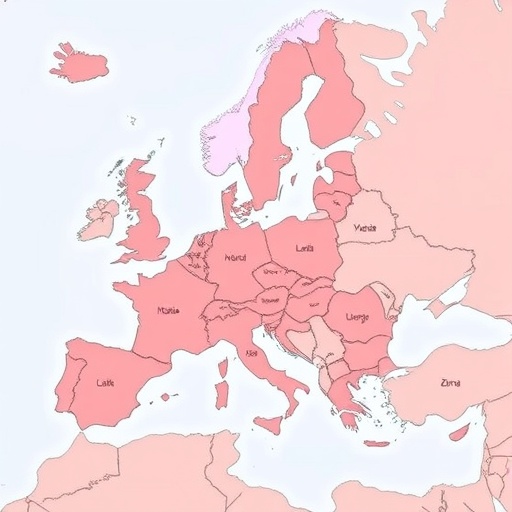
Between 2011 and 2024, researchers identified an aggregate of 662 infections attributable to Salmonella Strathcona distributed across 17 European states. These cases were classified into various levels of confirmation: 469 confirmed, 161 probable, 13 possible, along with 19 sporadic non-outbreak cases. Notably, nearly half—a substantial 306 outbreak-associated cases—occurred during a prominent outbreak episode from 2023 to 2024. Germany bore the brunt of infections, reporting 229 cases (representing 36% of total outbreak cases), followed by Denmark and Austria, with 93 and 77 cases respectively.
The study acknowledges that not all nations reporting Salmonella Strathcona have actively participated in the cross-national investigative collaboration, suggesting that the reported numbers underestimate the true incidence. Mandatory notification protocols in many European countries underpin case identification; however, incomplete surveillance and variable reporting practices likely contribute to under-ascertainment. Intriguingly, preliminary data indicate an additional 29 cases reported in 2025 up until early September, underscoring the pathogen’s persistence and ongoing public health relevance.
Deep genomic analyses employing whole genome sequencing unveil a compelling picture: approximately 95% of isolates analyzed were highly genetically related despite temporal and geographical dispersion. Such genetic clustering strongly implies the presence of a common source or source population underpinning the multi-national outbreaks over this substantial period. The genomic data thus support epidemiological assertions and hint at entrenched contamination points within the food production and distribution network.
Reiterating prior findings from the seminal 2011 investigations, tomatoes remain central to the hypothesized transmission chain. Denmark’s early identification of small tomatoes grown in Sicily as the infection vector remains a cornerstone of the outbreak narrative. This assertion gains further weight from analogous outbreaks involving fresh tomatoes documented in countries such as Sweden, Finland, and the United States, which collectively reinforce fresh tomatoes as a recurrent foodborne vehicle for Salmonella.
A key consideration in these investigations relates to the physiology of tomato plants and pathogen-host interactions. Unlike pathogens restricted to surface contamination, Salmonella can integrate into the internal tissues of tomato plants. This integration compromises conventional food safety practices since thorough washing of tomatoes, a routine preventive measure, may prove insufficient to eradicate internalized bacteria, thus perpetuating transmission risks.
The outbreak analysis highlights the seasonal recurrence of this issue, linking it to repeated exposure to contaminated small tomatoes from a consistent source. This recurrence implies systemic contamination challenges possibly rooted in agricultural or post-harvest handling practices endemic to certain production locales, such as Sicily. Redressing these entrenched contamination vectors demands comprehensive surveillance integrated with targeted mitigation strategies targeting the entire supply chain.
The cross-border collaboration exemplified in this multi-country outbreak investigation sets a benchmark for managing foodborne threats in the contemporary landscape of globalized food distribution. The daunting complexity of tracking dispersed food supply networks and genetically linked pathogen strains calls for enhanced cooperative frameworks. The European Centre for Disease Prevention and Control (ECDC) and European Food Safety Authority (EFSA) are poised as pivotal facilitators in coordinating multi-sectoral and multinational efforts required to unravel and curtail complex outbreaks such as this.
Furthermore, the study underscores the critical role of genomic epidemiology in real-time outbreak response. Whole genome sequencing allows unprecedented resolution in pathogen tracking, enabling precise delineation of outbreak clusters and their sources. This methodology represents a paradigm shift from traditional phenotypic surveillance towards a molecularly informed, data-driven public health response.
Looking ahead, ongoing surveillance and forthcoming rapid outbreak assessments, including for the emergent 2025 case series, are expected to further refine understanding of this persistent public health challenge. The continued vigilance and scientific inquiry into Salmonella Strathcona, particularly its recurrent association with small tomatoes, remain paramount to developing more resilient food safety protocols and reducing the burden of salmonellosis across Europe and potentially beyond.
The accumulated evidence from over a decade of investigations provides a cautionary exemplar of how foodborne pathogens can establish chronic contamination cycles within global food supply chains. It impels a re-examination of agricultural practices, pathogen monitoring, and cross-sector collaboration as core components in safeguarding public health against evolving microbial threats.
News Publication Date: 16 October 2025
Web References: http://dx.doi.org/10.2807/1560-7917.ES.2025.30.41.2500224
References: Brait V et al., “Insights into recurring multi-country outbreaks of Salmonella Strathcona associated with tomatoes, Europe, 2011 to 2024,” Eurosurveillance, 2025; 30(41):pii=2500224.
Cite Scienmag News
Juliet Wilcox. (October 21, 2025). Recurring Salmonella Strathcona Outbreaks in Europe Since 2011 Linked to Common Food Source. Scienmag. https://scienmag.com/recurring-salmonella-strathcona-outbreaks-in-europe-since-2011-linked-to-common-food-source/
Juliet Wilcox. "Recurring Salmonella Strathcona Outbreaks in Europe Since 2011 Linked to Common Food Source." Scienmag, 21 October 2025, https://scienmag.com/recurring-salmonella-strathcona-outbreaks-in-europe-since-2011-linked-to-common-food-source/. Accessed 4 September 2026.
Juliet Wilcox. "Recurring Salmonella Strathcona Outbreaks in Europe Since 2011 Linked to Common Food Source." Scienmag. October 21, 2025. https://scienmag.com/recurring-salmonella-strathcona-outbreaks-in-europe-since-2011-linked-to-common-food-source/


