


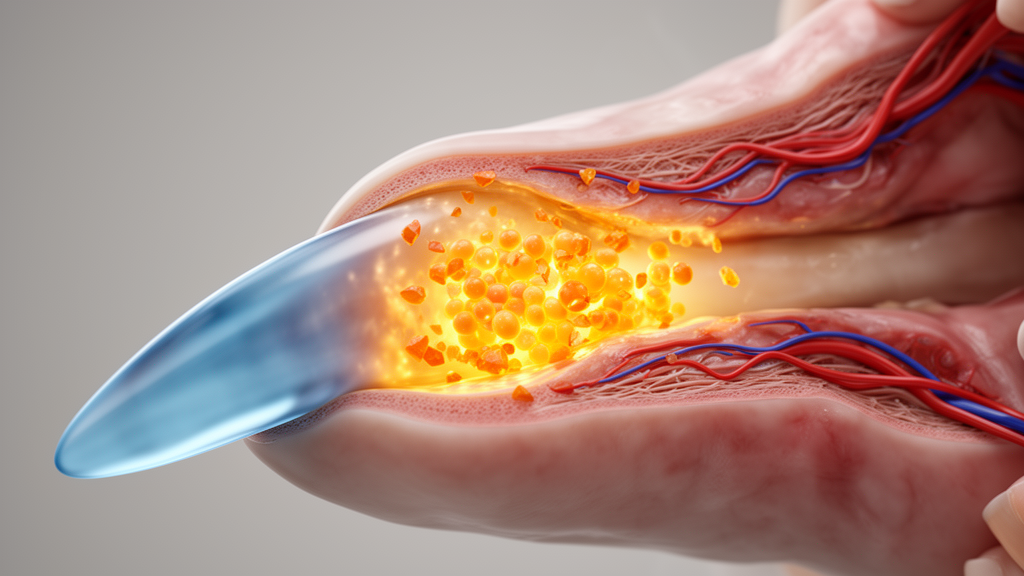
Teeth rarely make headlines in diabetes research, but a new study published in the Journal of Advanced Research argues they should. A team led by Min Guk Kim and Chan Ho Park found that continuously growing rat incisors—so-called elodont teeth that elongate throughout life—slow down measurably when the animals are trapped in a sustained hyperglycemic state. More strikingly, that growth slowdown coincided with molecular signatures of necroptosis, a fiery form of programmed cell death, within the dental pulp. The findings suggest that a rodent’s front teeth may act as a living readout of systemic metabolic stress, offering researchers a minimally invasive window into how chronic high blood sugar damages actively regenerating tissues.
Necroptosis is not the quiet, orderly cell death most people know. Apoptosis, the classical pathway, is caspase-dependent and immunologically silent: cells shrink, package their debris, and are tidily consumed without alarming their neighbors. Necroptosis is the opposite. It is caspase-independent, regulated by the RIPK3–MLKL signaling axis, and ends in plasma membrane rupture. When the phosphorylated executioner protein MLKL oligomerizes and translocates to the cell surface, the membrane disintegrates and releases damage-associated molecular patterns, or DAMPs, into the surrounding tissue. Those DAMPs stoke inflammation, turning individual cell death into a broader alarm signal. Previous work has shown that hyperglycemic oxidative stress can shift cells away from apoptosis and toward this RIPK-dependent necrotic fate, making necroptosis a plausible nexus between high blood sugar and tissue injury.
To test whether that link reaches the dental pulp, the researchers induced type 1 diabetes in male Sprague-Dawley rats using a single high dose of streptozotocin, a compound that alkylates DNA in pancreatic beta cells and rapidly abolishes insulin production. Twenty animals received the toxin while ten controls received phosphate-buffered saline. After 49 days, fifteen of the injected rats had sustained fasting blood glucose levels exceeding 250 milligrams per deciliter—by the study’s endpoint, glucose climbed above 600 milligrams per deciliter—while two animals died and three spontaneously reverted to normoglycemia and were analyzed separately. The hyperglycemic rats gained essentially no weight over seven weeks, in stark contrast to the steady growth of the control group, and blood work revealed the expected systemic fallout: elevated liver enzymes, higher total cholesterol, reduced white blood cell counts, and sharply increased neutrophil-to-lymphocyte and monocyte-to-lymphocyte ratios, both markers of activated systemic inflammation.
The centerpiece of the study was a simple but elegant measurement technique. Early in the experiment, under isoflurane anesthesia, the team cut a small reference notch into each rat’s lower incisor, four millimeters from the interdental papilla, taking care not to injure the pulp. Because rodent incisors grow continuously, the distance between that notch and the cutting edge advances at a rate that reflects the tooth’s elongation. By creating new notches every two to three days and measuring the linear distance between them, the researchers built a longitudinal growth curve for each animal across the entire 49-day experiment.
Those curves told a clear, phase-specific story. During the first twelve days—while the rats were still undergoing skeletal growth—incisor growth rates were statistically indistinguishable between healthy and hyperglycemic animals, with slopes of roughly 0.46 versus 0.44 millimeters per day. A subtle divergence then appeared during a two-day transition window around days 12 to 14, when growth rates first separated, though absolute tooth lengths had not yet noticeably changed. The impairment became dramatic in the final phase, from day 14 onward: healthy rats accelerated to a slope of about 0.59 as their skeletons matured and incisor elongation dominated, whereas diabetic rats remained stuck at roughly 0.41, a difference significant under both the primary Welch’s t-test and a non-parametric sensitivity analysis.
The diagnostic implications were remarkable. In the early phase, incisor growth carried essentially no information about glycemic status, with a receiver operating characteristic area under the curve of just 0.527—no better than a coin flip. During the transition, discrimination improved to an AUC of 0.693. But in the sustained phase, growth kinetics achieved complete empirical separation between the groups: an AUC of 1.000, an average precision of 1.000, and a threshold window between roughly 0.45 and 0.55 millimeters per day in which sensitivity, specificity, and predictive values all reached 1.000 within this dataset. Leave-one-out cross-validation using the individual growth slope correctly classified every animal. The authors are careful to note that a perfect AUC in a small sample reflects separation within this cohort rather than externally validated accuracy, but the signal is undeniably strong.
What makes the slowing teeth biologically interesting is what was happening inside them. Using a split-mouth design, the team examined one mandible histologically and cultured dental pulp cells from the other. Hematoxylin and eosin staining showed no overt disruption of the dentin–pulp architecture in either group—the tissue looked structurally intact. Yet immunohistochemistry told a different molecular story. Hyperglycemic rats displayed far more widespread immunoreactivity for 4-hydroxynonenal, a lipid peroxidation product and canonical marker of oxidative stress, throughout the periodontal ligament and dental pulp. They also showed altered distribution of PGAM5, a mitochondrial stress-associated phosphatase that has been implicated in mitochondrial dynamics and regulated cell-death signaling, notably appearing within the dentin matrix itself.
The cellular analyses reinforced the pattern. Dental pulp cells derived from hyperglycemic rats, when exposed to a standardized lipopolysaccharide challenge, produced significantly higher intracellular reactive oxygen species than cells from healthy controls, as measured with an H2DCFDA fluorescence assay. Enzyme-linked immunosorbent assays and Western blotting showed elevated levels of the core necroptosis machinery—MLKL, phosphorylated MLKL, RIPK3, and phosphorylated RIPK3—along with increased PGAM5, including its cleaved form. Intriguingly, the three rats that spontaneously recovered normoglycemia showed molecular marker levels and incisor growth rates indistinguishable from healthy controls, suggesting that both the biochemical alterations and the growth phenotype track sustained glycemic status rather than a transient early hyperglycemic insult. When growth kinetics from these recovered animals were grouped with healthy rats, complete separation from the persistently hyperglycemic group was retained.
The authors propose a coherent biological framework, while stressing that causality was not directly established. Sustained hyperglycemia drives oxidative stress; oxidative stress favors RIPK-dependent necrosome formation and MLKL recruitment and phosphorylation; PGAM5-related mitochondrial responses may participate in a context-dependent manner; and the resulting pro-inflammatory, membrane-rupturing cell death environment could impair the odontogenic stem and progenitor cell niches that continuously replenish the growing incisor. Because elodont tooth elongation depends on the coordinated activity of apical epithelial and mesenchymal niches, microvascular support, odontoblast differentiation, and dentin mineralization, the incisor is an unusually sensitive integrator of systemic physiological disturbance—an active biological response rather than a passive symptom of a sick animal.
The translational horizon is necessarily modest: continuously growing incisors are rodent-specific, so the growth parameter itself will live in the preclinical world, where it could refine animal monitoring under the 3Rs framework by replacing repeated blood draws with repeated notches. But the mechanistic question it opens is broadly relevant. Diabetes is already associated with pulpal vasculopathy, advanced glycation end-product accumulation, impaired reparative capacity, and more aggressive periapical inflammation. If chronic metabolic dysregulation can push the dental pulp of a growing animal into necroptotic signaling, the same question deserves asking in humans—particularly children with type 1 diabetes, whose dental maturation, eruption timing, and root development might carry fingerprints of their metabolic history. Confirmation in larger cohorts, pathway-specific interventions, and time-resolved molecular sampling will be needed to turn this association into mechanism, but the notion that a notch on a rat’s tooth can reveal the hidden cost of high blood sugar is a compelling start.
Subject of Research: Necroptosis-related signaling and elodont incisor growth retardation in hyperglycemic rats
Article Title: Association between dental pulp necroptosis-related signaling and elodont incisor growth retardation in hyperglycemic rats
Article References: Kim, M. G., Amara, H. B., Thomsen, P., Asa’ad, F., & Park, C. H. (2026). Association between dental pulp necroptosis-related signaling and elodont incisor growth retardation in hyperglycemic rats. Journal of Advanced Research. https://doi.org/10.1016/j.jare.2026.10.027
Image Credits: AI Generated
DOI: Not provided
Keywords: necroptosis, type 1 diabetes, dental pulp, elodont incisor, hyperglycemia, RIPK3, MLKL, PGAM5, oxidative stress, streptozotocin, odontogenesis, biomarker
Cite Scienmag News
Ophelia Keating. (October 16, 2026). Rat Incisors Reveal How Diabetes Drives Inflammatory Cell Death in Teeth. Scienmag. https://scienmag.com/rat-incisors-reveal-how-diabetes-drives-inflammatory-cell-death-in-teeth/
Ophelia Keating. "Rat Incisors Reveal How Diabetes Drives Inflammatory Cell Death in Teeth." Scienmag, 16 October 2026, https://scienmag.com/rat-incisors-reveal-how-diabetes-drives-inflammatory-cell-death-in-teeth/. Accessed 16 October 2026.
Ophelia Keating. "Rat Incisors Reveal How Diabetes Drives Inflammatory Cell Death in Teeth." Scienmag. October 16, 2026. https://scienmag.com/rat-incisors-reveal-how-diabetes-drives-inflammatory-cell-death-in-teeth/


