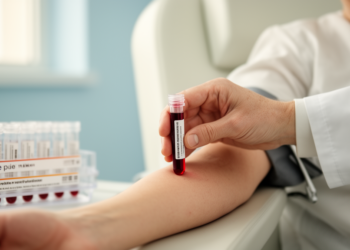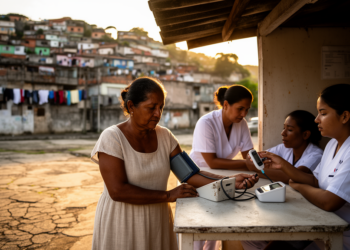
A landmark national survey in Kazakhstan has delivered one of the first population-level portraits of male testosterone health in Central Asia, and its message is stark: the men most likely to have biochemically low testosterone are not simply the oldest, but those carrying excess body fat and disrupted blood sugar control. Drawing on the World Health Organization’s STEPS methodology, researchers measured total testosterone in more than 3,000 men aged 18 to 69 and found that roughly one in twenty fell below the commonly used biochemical threshold of 8 nanomoles per liter. The study, published in BMC Endocrine Disorders, stands out because it moves beyond clinic-based samples, which often overrepresent men already seeking care, and instead captures a nationally representative snapshot of hormone health in the general population.
The research team, led by investigators at S.D. Asfendiyarov Kazakh National Medical University in Almaty, analyzed data from a WHO STEPS survey conducted between May and October 2025. Of 3,198 eligible men, 3,083 had testosterone measurements suitable for analysis, and the investigators applied survey weights, stratification, and clustering to ensure their estimates reflected the true structure of the Kazakh male population. The primary outcome was a total testosterone concentration below 8 nmol/L, a cutoff frequently used to flag biochemical hypogonadism, with additional sensitivity analyses at 10 and 12 nmol/L to test whether the associations held at different thresholds. This design-based approach matters because naive analyses of survey data can produce misleading confidence intervals and prevalence estimates.
The headline numbers are straightforward. The observed proportion of men with testosterone below 8 nmol/L was 5.1 percent, or 156 of 3,083 participants, and after weighting the survey-adjusted prevalence came in at 5.3 percent, with a 95 percent confidence interval of 4.4 to 6.2 percent. That figure is lower than some clinic-based estimates from other regions, a reminder that men who walk into endocrinology clinics are not typical of the population at large. But the raw prevalence tells only part of the story. The heart of the paper lies in its regression models, which disentangle the independent contributions of body size, glycemic status, and age to the probability of low testosterone.
In the primary logistic model, which included 2,959 men and adjusted for age, body mass index, and glycated hemoglobin, or HbA1c, the metabolic signals were strong and consistent. Overweight men had roughly double the odds of low testosterone compared with men of normal weight, with an adjusted odds ratio of 2.05. Men with obesity fared far worse still: their odds were more than four and a half times higher, at 4.58, than those of their lean counterparts. Glycemic status showed a parallel gradient. Men whose HbA1c fell in the prediabetes range had 2.39 times the odds of low testosterone, while those in the diabetes range had 3.49 times the odds. In other words, both the degree of adiposity and the severity of dysglycemia tracked closely with the likelihood of biochemical testosterone deficiency.
When testosterone was analyzed as a continuous variable after logarithmic transformation, the same pattern emerged in proportional terms. Overweight was associated with testosterone levels 15.0 percent lower than in normal-weight men, and obesity with levels 24.8 percent lower. Prediabetes-range HbA1c corresponded to levels 19.0 percent lower, and diabetes-range HbA1c to levels 24.5 percent lower. These continuous estimates are informative because they suggest a dose-response relationship rather than a binary cliff: the worse the metabolic profile, the lower the circulating hormone. Importantly, the associations with obesity and dysglycemia remained positive even when the researchers relaxed the diagnostic threshold to 10 or 12 nmol/L, indicating that the findings are not an artifact of one particular cutoff.
Perhaps the most scientifically intriguing result concerns age. Taken on its own, aging appeared to raise the risk: men aged 60 to 69 had 1.84 times the odds of low testosterone compared with men aged 18 to 29. Yet once body mass index and HbA1c were factored in, the direction of the association flipped, yielding an adjusted odds ratio of 0.65, and the effect was no longer statistically significant. The authors interpret this reversal as evidence that the apparent age-related decline in testosterone within this population may be substantially mediated by metabolic factors. Older men in the survey tended to be heavier and more dysglycemic, and it is those characteristics, rather than chronological age itself, that appear to drive much of the association with low testosterone.
This finding resonates with a broader mechanistic literature on the hypothalamic-pituitary-gonadal axis and metabolism. Adipose tissue, particularly visceral fat, is metabolically active: the enzyme aromatase converts testosterone into estradiol, the hypothalamic-pituitary feedback loop responds by suppressing gonadotropin release, and leptin and inflammatory cytokines secreted by fat cells further dampen gonadal steroidogenesis. Hyperglycemia and insulin resistance compound these effects, and the testosterone-glucose relationship is often described as bidirectional, since low testosterone itself can promote insulin resistance and central fat deposition. The Kazakh data cannot establish causation, being cross-sectional, but the strength and consistency of the adiposity and glycemia signals align closely with what these physiological models predict.
The study carries significant public health implications for Kazakhstan and the wider Central Asian region, where population-based endocrine data have historically been scarce. Funded by Kazakhstan’s Ministry of Healthcare under a grant on epigenetics and non-communicable disease prevention, and registered as clinical trial NCT06953180, the survey demonstrates how the standardized WHO STEPS framework can be extended from its traditional focus on cardiovascular risk factors to hormone health. If excess adiposity and dysglycemia are the dominant modifiable correlates of low testosterone, then strategies targeting obesity and prediabetes prevention may carry hormonal benefits alongside their well-established cardiovascular ones. For a country confronting the global epidemic of metabolic disease, the overlap between these two health burdens is a compelling argument for integrated prevention programs.
The authors are careful to draw a crucial clinical boundary: a biochemical reading below 8 nmol/L is not, by itself, a diagnosis of clinical hypogonadism. True hypogonadism requires compatible symptoms, such as reduced libido, fatigue, or loss of muscle mass, together with confirmatory testing, typically including repeated morning measurements and assessment of the hypothalamic-pituitary axis. Cross-sectional biochemical associations describe the population’s hormonal landscape; they do not tell clinicians which individual men need treatment. This caution is especially important in an era when testosterone testing and therapy are increasingly marketed directly to consumers, and it underscores why large, methodologically rigorous population surveys are needed to ground clinical practice in representative evidence.
As an early-access, open-access publication carrying a permanent DOI, the study invites both replication and extension. Future work could follow men over time to test whether weight loss and glycemic control raise testosterone levels, examine free and bioavailable testosterone rather than total concentrations alone, and probe whether behavioral factors measured in STEPS surveys, such as physical activity and alcohol intake, modify the metabolic associations. For now, the message from Kazakhstan is clear and quantifiable: in a nationally representative sample of men, low circulating testosterone clustered tightly around the two great metabolic risk factors of our time, and age, once those factors were accounted for, lost much of its apparent grip. The study reframes male hormone health not as an inevitable consequence of growing older, but as a mirror of metabolic health, one that may be more malleable than conventional wisdom suggests.
Subject of Research: Metabolic correlates of low total testosterone among men in a national Kazakhstan WHO STEPS survey
Article Title: Metabolic correlates of biochemically low total testosterone among men participating in a national WHO STEPS survey in Kazakhstan
Article References: Gizat, D., Shamsutdinova, A., Ibrayeva, A., Ismoldayev, Y., Alchinbayev, M., Shoranov, M., Tanabayeva, S., & Fakhradiyev, I. (2026). Metabolic correlates of biochemically low total testosterone among men participating in a national WHO STEPS survey in Kazakhstan. BMC Endocrine Disorders. https://doi.org/10.1186/s12902-026-02659-3
Image Credits: AI Generated
DOI: 10.1186/s12902-026-02659-3
Keywords: testosterone, hypogonadism, obesity, dysglycemia, HbA1c, Kazakhstan, WHO STEPS survey, endocrinology, metabolic syndrome, cross-sectional study, men's health, public health
Cite Scienmag News
Daisy Hatcher. (October 16, 2026). Low Testosterone in Kazakh Men Tied to Obesity and Blood Sugar, National Survey Finds. Scienmag. https://scienmag.com/low-testosterone-in-kazakh-men-tied-to-obesity-and-blood-sugar-national-survey-finds/
Daisy Hatcher. "Low Testosterone in Kazakh Men Tied to Obesity and Blood Sugar, National Survey Finds." Scienmag, 16 October 2026, https://scienmag.com/low-testosterone-in-kazakh-men-tied-to-obesity-and-blood-sugar-national-survey-finds/. Accessed 16 October 2026.
Daisy Hatcher. "Low Testosterone in Kazakh Men Tied to Obesity and Blood Sugar, National Survey Finds." Scienmag. October 16, 2026. https://scienmag.com/low-testosterone-in-kazakh-men-tied-to-obesity-and-blood-sugar-national-survey-finds/