


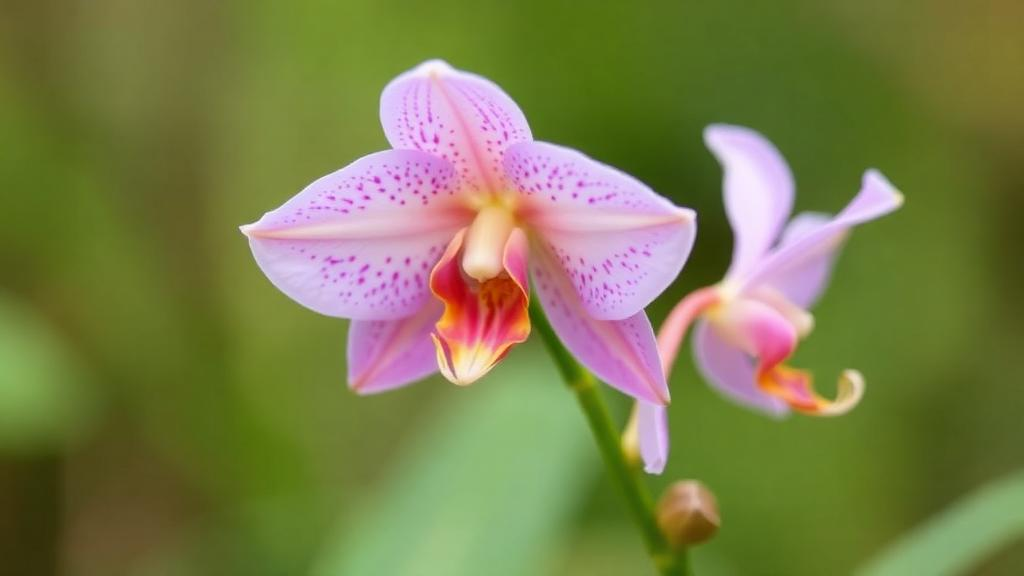
Deep in the grasslands along the Wulong River in China’s Fujian Province, a wild orchid with no name in the regional flora has quietly been growing for years, unnoticed by science. Now, a team of Chinese researchers has confirmed that the plant, Eulophia graminea Lindley, is a newly recorded species for Fujian, and in a study published in Discover Biotechnology, they report that this rare orchid may be far more than a botanical curiosity. Their analysis of the plant’s pseudobulbs, the swollen underground storage organs typical of many orchids, reveals concentrations of medicinally interesting compounds that approach or even match those of established medicinal plants. The finding could transform a vulnerable, little-known wildflower into a candidate for sustainable pharmaceutical development, provided the species can first be rescued from the pressures that threaten its survival.
The story of the discovery begins in May 2015, when Professor Bizhu He identified the plant in Shangjie Town, Minhou County, in the city of Fuzhou, at an altitude of roughly ten meters. Only two small colonies of the species have ever been found in the grasslands along the river, and the researchers emphasize that the population is small and its habitat is highly vulnerable to human disturbance. Through field surveys, phenotypic analysis, literature review, and verification by professional institutions, the team confirmed the plant as Eulophia graminea Lindley, a member of a genus of roughly 250 orchid species found mainly in tropical and subtropical regions. Compared with other Eulophia individuals found in Fujian, the recorded plant displayed distinct phenotypic characteristics, marking it as a new record for the province and adding a piece to the puzzle of orchid distribution, evolution, and diversity in China.
The broader context makes this discovery more urgent than it might first appear. The orchid family, Orchidaceae, is one of the largest families of flowering plants on Earth, comprising nearly 800 genera and around 29,000 species distributed across the globe wherever extreme cold and desert conditions do not prevail. Yet this evolutionary success story masks a conservation crisis. The Convention on International Trade in Endangered Species of Wild Fauna and Flora, known as CITES, places all wild orchids under its protection, and they account for more than ninety percent of the plants the convention aims to conserve. Centuries of collecting for ornamental and medicinal purposes have driven many species to the brink of extinction, which is precisely why the researchers argue that protecting this newly recorded Fujian population is an urgent issue.
Compounding the conservation challenge is the orchid’s own reproductive biology. Eulophia species are typically propagated by seeds or by dividing plants, but natural seed germination rates are low, and natural reproduction is correspondingly slow. For a species represented by only two small colonies, that is a precarious existence. The research team therefore turned to tissue culture, the laboratory technique of growing whole plants from small pieces of tissue under sterile conditions, as a route to rapid propagation and, ultimately, to large-scale cultivation that would relieve pressure on the wild population. Their work provides the first reported tissue culture and rapid propagation protocols for this newly recorded Fujian species, giving conservationists and horticulturists a practical toolkit for the first time.
The technical details of the regeneration systems are where the study’s practical value becomes clear. The researchers worked with seeds and with scapes, the flowering stems, taken from current-year pseudobulbs collected in July 2021. For the seed-based system, near-ripe capsules were surface sterilized using detergent, alcohol, and a sodium hypochlorite solution before the tiny seeds were extracted and placed on a nutrient medium. Within 35 to 40 days, the seeds formed milky-white spheres, which were then transferred to a different medium to induce the formation of clustered buds. After four months of culture under controlled temperature and light, these developed into normal small plants. The scape-based system proved even faster: axillary buds sprouted just five days after inoculation, reached about two centimeters in height within twenty days, and, after transfer to a proliferation medium enriched with banana powder and coconut juice, produced three to five new buds at their bases within three to four weeks.
With a propagation system in hand, the team turned to the central question: does this orchid contain anything worth cultivating at scale? They compared pseudobulbs from two growth stages, current-year and first-year, measuring four classes of biologically active compounds using spectrophotometric methods calibrated against reference standards. The results were striking in their pattern. Total triterpenoids, compounds associated in pharmacological studies with hypoglycemic, hepatoprotective, anti-inflammatory, anti-tumor, and antiviral effects, averaged about 2 milligrams per gram in current-year pseudobulbs, roughly 1.24 times the level found in first-year pseudobulbs. Total flavonoids, linked to cardiovascular protection, antioxidant activity, and immune regulation, showed the opposite trend, averaging about 0.018 milligrams per milliliter in first-year pseudobulbs, 1.64 times the current-year level.
The polysaccharide and sterol measurements were equally revealing. Total polysaccharides averaged 11.75 percent in current-year pseudobulbs, a remarkable 4.09 times higher than the 2.88 percent found in first-year pseudobulbs, with individual values ranging from 1.49 to 16.60 percent. Polysaccharides from plants are known for a wide range of biological activities, including cardiomyocyte protection, anti-tumor, antiviral, anti-inflammatory, and hepatoprotective effects. Total sterols, meanwhile, averaged 9.14 milligrams per gram in first-year pseudobulbs, 1.38 times the current-year figure. Plant sterols such as beta-sitosterol have documented hypolipidemic, anti-inflammatory, anti-ulcer, and anti-edematous effects. The researchers also measured the physical traits of the pseudobulbs, finding that current-year pseudobulbs averaged 13.22 grams fresh weight with a dry matter conversion rate of 7.04 percent, outperforming first-year pseudobulbs on those biological indicators.
What makes these numbers meaningful is how they compare with recognized medicinal plants. The average triterpenoid content of the current-year pseudobulbs, about 2 milligrams per gram, comes close to the standard set by the Chinese Pharmacopoeia for Ganoderma lucidum, the reishi mushroom, whose total triterpene content must not fall below 5 milligrams per gram and which is prized in traditional medicine. The flavonoid level is in the same range as Saxifraga, a medicinal plant whose total flavonoid content ranges from 0.095 to 0.11 milligrams per milliliter. The polysaccharide content of 11.75 percent is comparable to, and in some growth periods greater than, that of Dendrobium officinale, a famous medicinal orchid whose polysaccharide content ranges from 7.9 to 57.4 percent. And the sterol content approaches that of longan, a plant used medicinally for hypertension and hyperlipidemia, whose total sterol content falls between 10.64 and 20.94 milligrams per gram. For a wild orchid that science had barely registered, these are impressive credentials.
The researchers are careful about what these findings do and do not prove. The four classes of compounds they measured are widely recognized for roles in reducing inflammation, alleviating pain, and enhancing immunity, and the levels in Eulophia graminea meet or exceed the standards of recognized medicinal plants, which leads the team to conclude that the species holds considerable medicinal value. But they also acknowledge that the development potential remains largely untapped because in-depth studies are lacking, and that further experiments and clinical trials are required to confirm medicinal efficacy and appropriate dosage. They likewise note limitations in their tissue culture work: the media used were fixed formulations, and comparative analyses of different hormone concentrations and agent combinations have not yet been conducted, leaving room for optimization.
Even so, the study marks a genuine turning point for a species that until now existed at the margins of scientific attention. It establishes a verified new record for Fujian, delivers working protocols for propagating the plant from seeds and scapes, and provides the first quantitative profile of its pharmacologically relevant chemistry. Related Eulophia species offer tantalizing precedents: extracts of Eulophia macrobulbon have shown anti-inflammatory, antioxidant, and potential anticancer activity, while compounds from Eulophia nuda have demonstrated cytotoxic effects against human cancer cells. If the Fujian population of Eulophia graminea can be safeguarded in the wild while laboratory-grown plants are scaled up through tissue culture, the species could one day move from two fragile colonies on a riverbank to a sustainable cultivated source of medicinal compounds, a rare conservation success story in which protecting a plant and developing its value turn out to be the same project.
Subject of Research: Tissue culture propagation and phytochemical analysis of the newly recorded medicinal orchid Eulophia graminea Lindley in Fujian, China
Article Title: Study on the cultivation and potential medicinal value of the newly recorded Eulophia graminea Lindley from Fujian species
Article References: Wang, S., Ye, Q., Wang, P., Guo, Y., Wu, P., He, B., Lin, W., & Guo, L. (2025). Study on the cultivation and potential medicinal value of the newly recorded Eulophia graminea Lindley from Fujian species. Discover Biotechnology, 2(1), Article 7. https://doi.org/10.1007/s44340-025-00013-2
Image Credits: AI Generated
DOI: 10.1007/s44340-025-00013-2
Keywords: Eulophia graminea, orchid conservation, tissue culture, medicinal plants, triterpenoids, flavonoids, polysaccharides, phytosterols, Fujian, plant biotechnology, pseudobulb, new species record
Cite Scienmag News
Margaret Porter. (October 2, 2026). Rare Wild Orchid Found in Fujian Shows Surprising Medicinal Promise. Scienmag. https://scienmag.com/rare-wild-orchid-found-in-fujian-shows-surprising-medicinal-promise/
Margaret Porter. "Rare Wild Orchid Found in Fujian Shows Surprising Medicinal Promise." Scienmag, 2 October 2026, https://scienmag.com/rare-wild-orchid-found-in-fujian-shows-surprising-medicinal-promise/. Accessed 17 October 2026.
Margaret Porter. "Rare Wild Orchid Found in Fujian Shows Surprising Medicinal Promise." Scienmag. October 2, 2026. https://scienmag.com/rare-wild-orchid-found-in-fujian-shows-surprising-medicinal-promise/


