


Every sexually reproducing organism depends on a moment of extraordinary molecular precision. During meiosis, the specialized cell division that produces sperm, eggs, and pollen, chromosomes must be counted, paired, and shuffled with almost perfect accuracy. A new study published in Science Advances reveals that in plants, this delicate choreography relies on a protein complex better known for doing the opposite of what fertility requires: switching genes off. The complex, called DREAM, appears to wake up rather than silence the genes that make sexual reproduction possible, and when it is missing, the plant’s ability to produce seeds collapses.
The research, led by molecular biologist Hasibe Tunçay during her PhD project at the University of Hamburg and continued as a postdoctoral project at the Institute of Science and Technology Austria (ISTA), was carried out in thale cress, Arabidopsis thaliana, the small flowering mustard plant that serves as the workhorse of plant genetics. Working with collaborators at the Université Paris-Saclay, Fudan University, and South China Agricultural University, Tunçay’s team uncovered a role for DREAM that had gone unnoticed despite the complex being a familiar character in cell biology on both sides of the animal and plant kingdoms.
To appreciate why the finding is surprising, it helps to distinguish between the two fundamental modes of cell division. In mitosis, one cell divides to produce two largely identical daughter cells, a process that drives growth, tissue renewal, and everyday maintenance throughout an organism’s body. Meiosis is a different beast entirely. It halves the chromosome number, producing reproductive cells that carry only one copy of each chromosome. The full set is restored only when sperm meets egg at fertilization. This halving is what keeps chromosome numbers stable across generations, and it depends on genes being switched on at exactly the right time so they can be transcribed into RNA, which then serves as the blueprint for the proteins that physically execute meiosis.
Meiosis is a textbook classic, but how it is transcriptionally regulated in plants remains only partially understood. The molecular switches behind the process, known as transcription factors, first need to be identified before the circuitry can be mapped. That was precisely the task Tunçay set out to tackle. It was technically demanding work: meiotic cells sit deep inside the plant’s reproductive tissues and can only be isolated in small quantities, which limits most standard molecular analyses. Despite these constraints, the team succeeded in identifying an important regulator of the process, and it turned out to be a complex with a well-established day job.
The DREAM complex is a transcription-factor assembly that also exists in humans. In somatic cells, the non-reproductive cells that proliferate through mitosis, DREAM usually represses gene expression. It can help stop the cell cycle when errors occur, pausing division so that damage can be repaired before it is passed on. In other words, DREAM is a brake. But brakes, as the new study shows, can sometimes be repurposed as accelerators. In thale cress, DREAM appears to switch on genes during meiosis that are essential for the exchange of genetic material between chromosomes, the very event that makes sexual reproduction genetically meaningful.
Studying mutants, plants in which parts of the DREAM complex are missing, Tunçay found that pollen and seed production did not function properly. That observation made it clear that DREAM is important for plant reproduction, apparently by regulating gene expression during meiosis. Among the genes under DREAM’s control, the team identified MER3, which is activated by the complex. The resulting MER3 protein plays a central role in crossover formation, the process by which homologous chromosomes, one inherited from the maternal parent and one from the paternal parent, physically exchange segments of DNA.
Crossovers do more than generate genetic diversity, Tunçay explains. They also keep chromosomes physically connected, allowing them to be distributed correctly to daughter cells during the first meiotic division. In mutants where the DREAM complex does not function properly, MER3 is not transcribed sufficiently. Crossover formation is impaired as a result: chromosomes fail to remain connected for long enough and instead appear as individual chromosomes, known as univalents. These univalent chromosomes can then be distributed incorrectly or randomly among daughter cells, producing reproductive cells with an unbalanced number of chromosomes, and ultimately leading to fertility problems.
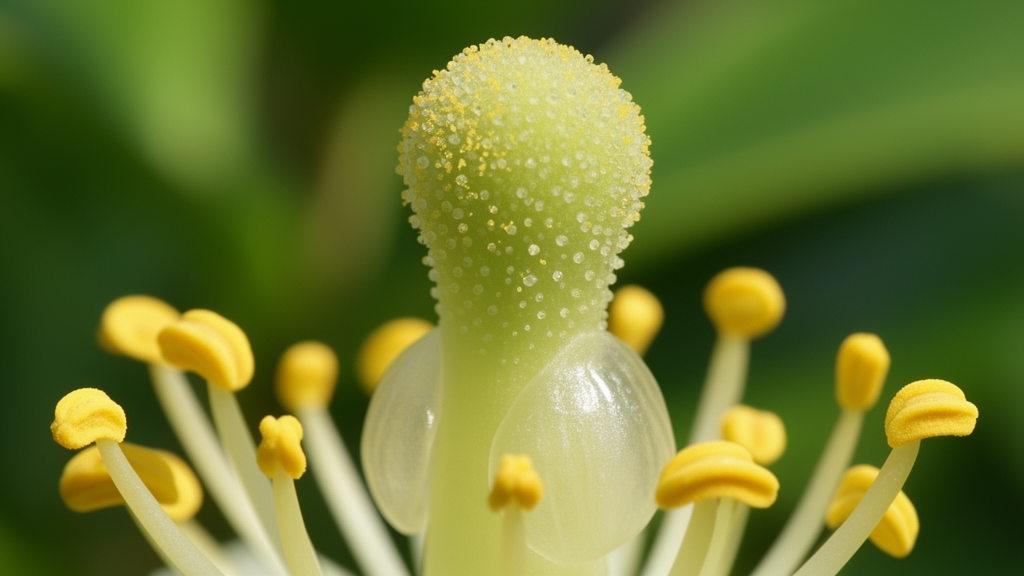
The consequences for the plant are measurable in ways that are both elegant and revealing. Arabidopsis is a self-fertilising hermaphroditic species, meaning both male stamens and the female pistil are found within the same flower. After fertilisation, the ovary develops into a long, slender fruit called a silique, in which the seeds grow. Whether mutations affect reproduction can be assessed by examining pollen and seeds directly. Dipping the flower into a solution releases pollen grains, which can then be stained and examined under a microscope to determine whether they are viable. Opening the silique and assessing the seeds inside provides a second readout: undeveloped or aborted seeds indicate sterility and problems with reproduction.
Using these methods, the team found a clear dose-dependent relationship between DREAM integrity and fertility. In some mutants where only a single DREAM complex component was disrupted, seed production was severely reduced but the plants remained fertile. Mutants carrying disruptions in multiple components produced no seed at all, indicating complete sterility. This pattern suggests that the complex acts as a coordinated unit, with partial loss producing partial defects and total loss producing total reproductive failure. It also implies that the amount of functional DREAM available during meiosis directly determines how many viable offspring a plant can produce.
Perhaps the most far-reaching implication of the study lies in what it suggests about conservation across kingdoms. Related DREAM complexes also influence reproduction in animals, and the new results point to the possibility that fertility may be regulated by an evolutionarily conserved mechanism spanning a wide range of organisms. If a complex that silences genes in dividing body cells can be redeployed to activate them in dividing germ cells, and if that redeployment is preserved from plants to animals, then the molecular logic of fertility may be far older and more unified than previously appreciated. For a process as fundamental as the production of the next generation, that kind of deep conservation is exactly what one might expect, and exactly what makes this discovery resonate far beyond the mustard plant in which it was found.
Subject of Research: Cell Biology
Article Title: No DREAM, No Offspring: Protein complex may play key role in plant fertility
Article References: No DREAM, No Offspring: Protein complex may play key role in plant fertility. Original publication (Bibliographic details unavailable.)
Image Credits: AI Generated
DOI: Not provided
Keywords: DREAM complex, meiosis, plant fertility, Arabidopsis thaliana, crossover formation, gene regulation, DREAM, Offspring, Protein, complex, play, role
Cite Scienmag News
Juliet Wilcox. (October 17, 2026). Gene-Braking Protein Complex Turns Out to Be a Fertility Switch in Plants. Scienmag. https://scienmag.com/gene-braking-protein-complex-turns-out-to-be-a-fertility-switch-in-plants/
Juliet Wilcox. "Gene-Braking Protein Complex Turns Out to Be a Fertility Switch in Plants." Scienmag, 17 October 2026, https://scienmag.com/gene-braking-protein-complex-turns-out-to-be-a-fertility-switch-in-plants/. Accessed 17 October 2026.
Juliet Wilcox. "Gene-Braking Protein Complex Turns Out to Be a Fertility Switch in Plants." Scienmag. October 17, 2026. https://scienmag.com/gene-braking-protein-complex-turns-out-to-be-a-fertility-switch-in-plants/


