

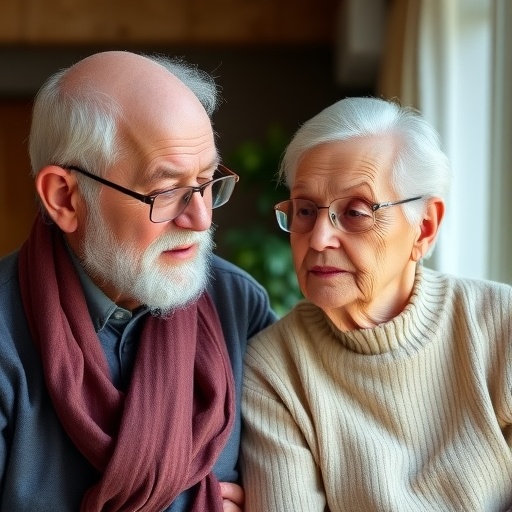
A groundbreaking study has uncovered that the secret to a high quality of life in our later years is not a single magic bullet, but a distinct constellation of psychological strengths, social connections, and cognitive abilities that cluster together in the population. Researchers have identified at least three unique profiles among community-dwelling older adults, each associated with dramatically different trajectories of healthy aging. The findings, published in BMC Geriatrics, move beyond simple checklists of risk factors to reveal how these elements interact at the individual level, offering a blueprint for precision medicine approaches to geriatric care.
The research team, led by Seonah Lee, employed a sophisticated statistical technique known as latent profile analysis on a large cohort of older adults living independently. Unlike traditional methods that examine variables in isolation, this person-centered approach groups individuals based on shared patterns across multiple dimensions simultaneously. The model sifted through a rich tapestry of data including cognitive performance scores, levels of depression and anxiety, perceived social support, loneliness, and self-efficacy. The algorithm identified naturally occurring subgroups, each defined by a specific fusion of these psychosocial and cognitive assets and deficits.
Three distinct profiles emerged from the analysis with striking clarity. The largest group, which the authors labeled as the “psychosocially and cognitively resilient,” displayed robust cognitive function, low emotional distress, high social engagement, and a strong sense of personal mastery over their lives. These individuals reported the highest health-related quality of life (HRQoL) scores across physical, mental, and social domains. The second profile, termed “cognitively vulnerable with moderate psychosocial resources,” was characterized by notable deficits in memory and executive function but relatively intact emotional well-being and moderate social support. The third and most concerning profile, the “psychosocially distressed and cognitively frail,” exhibited a compounding of risks: poor cognitive performance layered with high depression, crippling loneliness, and a profound lack of social support.
The gulf in healthy aging outcomes between these profiles was not just statistically significant; it was a chasm of lived experience. Members of the resilient group were not merely surviving—they were thriving, with active social calendars, effective management of daily tasks, and a subjective sense of vitality. In contrast, those in the distressed and frail cluster faced a cascade of challenges. Their low self-efficacy meant that minor health setbacks often spiraled into a perceived loss of independence, while their isolation deprived them of the practical and emotional buffering that can mitigate cognitive decline. The study demonstrated that cognitive vulnerability alone, as seen in the second profile, did not automatically doom someone to a poor quality of life if their psychosocial scaffolding remained strong.
This revelation underscores the powerful neuroprotective loop between our social brains and our thinking brains. The researchers hypothesize that consistent social interaction provides a form of cognitive reserve, constantly challenging the brain with novel conversations and problem-solving, which in turn reinforces synaptic pathways. Conversely, the chronic stress of loneliness and low self-worth elevates cortisol levels, which can be directly neurotoxic to the hippocampus, a region critical for memory. The latent profile approach captures this feedback loop in a way that studying depression or memory as separate entities never could, revealing a dynamic system in which a breakdown in one node can accelerate deterioration across the entire network.
From a technical standpoint, the statistical fit indices of the model, including lower BIC values and high entropy, provided robust confidence that these three profiles are a genuine reflection of the underlying population heterogeneity and not an artifact of the analysis. This methodological rigor matters because it transforms the profiles into reliable clinical targets. For instance, screening older adults into these categories could soon be as routine as checking their blood pressure. A simple batch of validated questionnaires on mood, loneliness, and a brief cognitive battery could assign a patient to a profile, immediately highlighting whether the primary intervention need is cognitive training, social prescribing to combat isolation, or a psychotherapeutic approach to recalibrate self-efficacy.
The clinical translation of this research points toward a future of modular, profile-matched interventions. An individual in the cognitively vulnerable but psychosocially steady group might benefit most from targeted computerized memory exercises and dietary adjustments to support brain metabolism, without the added burden of unnecessary mental health therapy. In stark contrast, someone in the distressed and frail cluster requires a more intensive, wrap-around strategy. Their care plan must first dismantle the psychological barriers—perhaps through cognitive behavioral therapy for late-life depression—and rebuild social connectivity through structured community link worker programs, because without that foundational stabilization, any attempt at cognitive training is likely to fail.
Furthermore, the findings sound an urgent alarm for public health systems worldwide facing the silver tsunami of aging populations. The profiles suggest that interventions delivered in isolation, like a weekly game of bingo to address loneliness or a pamphlet on memory loss, are wildly insufficient for the most vulnerable. What is needed are integrated care hubs where geriatricians, neuropsychologists, and social workers collaborate on a single, holistic treatment plan derived from the patient’s profile assignment. This could fundamentally alter the economics of aged care by preventing the rapid healthcare utilization and institutionalization that result from unaddressed psychosocial-cognitive syndemics.
While the study is cross-sectional, meaning it cannot yet prove that a given profile causes a specific decline, it lays the essential groundwork for longitudinal tracking. The next step is to follow these groups over a decade to map how individuals transition between profiles—whether a resilient elder falls into the distressed group after losing a spouse, or whether an intervention can propel someone from the frail cluster into the resilient one. For now, the message is revolutionary: healthy aging is a tapestry, not a thread, and the time has come for medicine to weave its treatments accordingly.
Subject of Research: Psychosocial and cognitive profiles associated with health-related quality of life and healthy aging among community-dwelling older adults.
Article Title: Psychosocial and cognitive profiles associated with health-related quality of life and healthy aging among community-dwelling older adults: a latent profile analysis.
Article References:
Lee, S., Cho, Y. & Song, R. Psychosocial and cognitive profiles associated with health-related quality of life and healthy aging among community-dwelling older adults: a latent profile analysis.
BMC Geriatr (2026). https://doi.org/10.1186/s12877-026-07939-0
Image Credits: AI Generated
DOI: 10.1186/s12877-026-07939-0
Keywords: Healthy aging, health-related quality of life, latent profile analysis, psychosocial factors, cognitive function, older adults, person-centered approach.


