


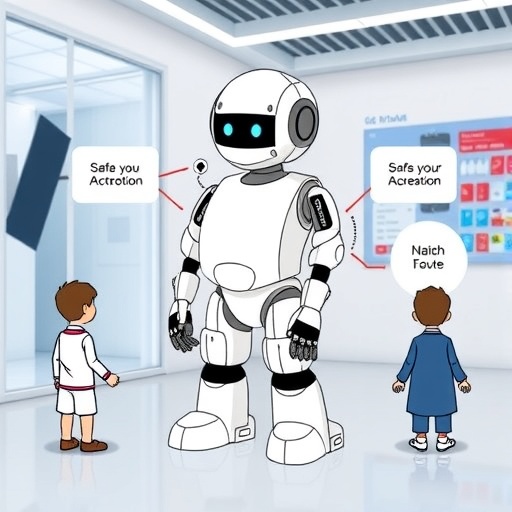
In an increasingly aging society, the integration of technology into healthcare services has emerged as a crucial focal point. The recent study conducted by Tosaka, Funada, and Goto provides a comprehensive analysis of the organization-level factors that play a pivotal role in the adoption of care robots within long-term care facilities in Japan. As the demand for elder care escalates, understanding the barriers and facilitators that influence the deployment of robotic aides is essential for innovative policy-making and effective healthcare delivery.
The introduction of robotics into the elderly care sector is not merely about technological advancement, but rather reflects a response to the demographic shifts occurring in many nations. Japan is particularly illustrative of this trend; with one of the highest life expectancies globally, the pressure to sustain a viable care system has intensified. The study sheds light on various organizational factors that are correlated with the embracing of care robots, uncovering insights that could be applied elsewhere, as nations grapple with similar issues of an aging populace.
The implications of the findings from this three-year pooled cross-sectional study are significant. One of the clear trends observed is the willingness of care providers to invest in robotic technologies as a means of alleviating some of the operational burdens associated with long-term care. The analysis reveals that organizations that possess a strong commitment to innovation are more likely to adopt care robots. This alignment between an organization’s vision and the incorporation of advanced technologies is crucial for propelling forward the evolution of care delivery.
Notably, the study identifies leadership engagement as a determining factor in the decision-making process for adopting care robots. When leadership demonstrates a proactive approach and dedication to exploring innovative solutions, organizations are more likely to allocate resources toward the integration of robotic aids. This finding underscores the importance of top-down support when it comes to the successful implementation of new technologies within the healthcare framework.
Another significant factor to consider is the training and education of staff members. Care robots, while designed to facilitate improved care delivery, require specialized skills and knowledge to operate effectively. The research indicates that organizations with robust training protocols in place tend to achieve higher levels of robot adoption. This highlights the necessity for healthcare facilities not only to focus on acquiring technology but also to invest in the continuous education and development of their workforce.
The study further reveals that the socio-economic context in which a care provider operates can influence the adoption of care robots. Facilities situated in urban environments with higher funding opportunities appear more likely to adopt such technologies. These organizational disparities pave the way for a broader discussion regarding equitability in access to technological innovations in healthcare. Facilities in rural or economically disadvantaged areas may struggle to keep pace, thus exacerbating existing inequalities in care quality.
Moreover, collaboration with technology developers is indicated as a beneficial approach for organizations looking to adopt care robots. Active partnerships allow for the tailoring of robotic features to meet the specific needs of care providers, facilitating smoother integration and potentially alleviating apprehensions related to new technology adoption. The study lays the groundwork for further exploration into how such collaborations can be optimized to yield positive outcomes for all stakeholders involved in the care process.
The perception of care robots amongst both staff and residents is pivotal in forecasting adoption rates. Factors such as acceptance and trust must be addressed to ensure the seamless incorporation of robotic technology into care settings. The researchers emphasize the necessity for initiatives aimed at promoting positive attitudes towards robotic assistants, mitigating fears that may arise from misconceptions or biases against robotics in healthcare.
Additionally, the interplay between organizational culture and technology adoption stands out as a key theme in the findings. A culture that encourages experimentation and acceptance of change is integral to the successful implementation of care robotics. Organizations that prioritize adaptability and openness to novel concepts are better positioned to leverage advancements in technology for the benefit of their residents.
As the results of this study circulate within the academic and healthcare communities, a key question arises regarding the broader implications for health policy. Policymakers must take into account the diverse factors influencing technology adoption highlighted in this research. Creating an environment that nurtures innovation, prioritizes workforce training, and promotes equity in access to new technologies will be essential in driving forward the use of care robots in long-term care.
In conclusion, the comprehensive insights provided by Tosaka, Funada, and Goto serve as a valuable resource for understanding the complexities surrounding the adoption of care robots in long-term care contexts. As the societal need for effective elder care escalates, the lessons derived from this research may serve as a guiding framework for organizations around the globe contemplating similar technological integrations. The study ultimately underscores that the future of elder care may very well hinge upon a harmonious partnership between human care providers and robotic aides.
The exploration of organization-level factors associated with care robot adoption reflects the need for continuous research and dialogue among all stakeholders in the healthcare ecosystem. As we move forward, it will be critical to monitor evolving trends, share best practices, and adapt strategies that ensure the optimal use of technology in meeting the diverse needs of aging populations.
Tosaka, Y., Funada, S. & Goto, R. Organization-level factors associated with the adoption of care robots in long-term care providers: insights from a 3-year pooled cross-sectional study in Japan.
BMC Health Serv Res (2026). https://doi.org/10.1186/s12913-026-14082-4
Cite Scienmag News
Denise Maddox. (January 23, 2026). Organizational Influences on Care Robot Adoption in Japan. Scienmag. https://scienmag.com/organizational-influences-on-care-robot-adoption-in-japan/
Denise Maddox. "Organizational Influences on Care Robot Adoption in Japan." Scienmag, 23 January 2026, https://scienmag.com/organizational-influences-on-care-robot-adoption-in-japan/. Accessed 4 September 2026.
Denise Maddox. "Organizational Influences on Care Robot Adoption in Japan." Scienmag. January 23, 2026. https://scienmag.com/organizational-influences-on-care-robot-adoption-in-japan/


