


In a groundbreaking new initiative, researchers at Northumbria University have secured a substantial £4 million funding package aimed at decoding the enigmatic behavior of Earth’s radiation belts. These belts, which envelop the planet and trap highly energetic particles within the geomagnetic field, remain one of the most dynamic and least predictable components of near-Earth space. Understanding their complex behavior is not merely an academic pursuit; it carries profound implications for the safety and longevity of satellites and the accuracy of space weather forecasting systems that underpin modern communications, navigation, and weather prediction technologies.
Earth’s radiation belts, also known as the Van Allen belts, consist of two distinct zones of energetically charged particles—primarily electrons and protons—that are captured and confined by the planet’s magnetic field. These belts exist in a harsh, invisible realm where particles can accelerate to velocities approaching the speed of light. Yet, despite extensive observation, the radiation belts exhibit extreme variability in intensity and spatial extent, undergoing rapid expansions, contractions, and flux changes often in response to solar activity. The underlying physics dictating these phenomena remains stubbornly elusive, making accurate predictions a formidable challenge for space physicists.
The new project, spearheaded by Northumbria’s Professor Clare Watt, aims to bridge this critical knowledge gap by integrating extensive datasets from a multitude of international spacecraft with state-of-the-art computational models. Over a five-year timeline, the international team will embark on a multifaceted study to unravel the mechanisms controlling energy transfer within Earth’s magnetosphere—the magnetic shield that deflects solar wind particles—and how this energy feeds into and modulates the radiation belts. Their goal is to parse out the intricate relationship between solar wind variations and the belts’ responses, discerning order amid apparent chaos.
Central to this initiative is the problem of energy transfer efficiency through the magnetosphere. When the supersonic solar wind, a stream of charged particles emanating from the Sun, encounters Earth’s magnetic environment, it is forced to slow abruptly at a boundary known as the bow shock. This deceleration transforms kinetic energy into heat and triggers complex plasma interactions throughout the magnetospheric system. Despite decades of satellite missions from entities like NASA, the variability observed in the radiation belts defies current predictive models, leaving scientists uncertain whether the unpredictability stems from gaps in the theoretical framework or arises from innate chaotic behavior at fundamental scales.
Professor Watt emphasizes the urgency of this investigation: “Our radiation belts are a unique laboratory where high-energy astrophysical phenomena can be studied in situ. However, the inability to forecast their rapid intensification or decay poses risks to satellite operators who rely on stable space environments. Deepening our understanding will be pivotal not only for theoretical advances but also for practical applications such as shielding valuable infrastructure from damaging space weather events.”
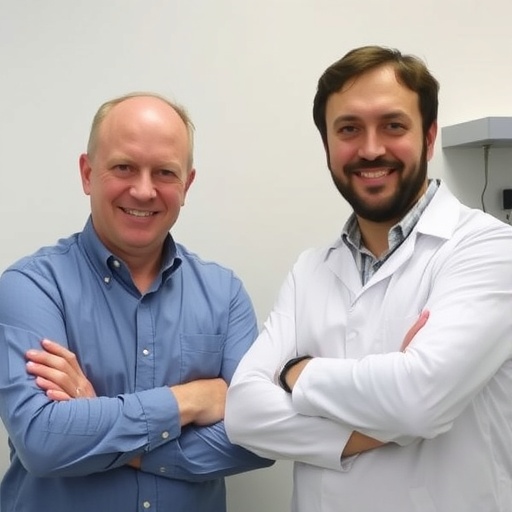
The research team comprises a diverse group of experts, including Professor Jonny Rae and Dr. Sarah Bentley from Northumbria University, alongside Dr. Oliver Allanson from the University of Birmingham and Dr. Ravindra Desai of the University of Warwick. This coalition is geared towards tackling the challenge from multiple scientific angles, employing data assimilation, magnetospheric physics, and advanced numerical simulations. Dr. Allanson notes the profound scale disparity involved: “It’s remarkable that subatomic particle dynamics occurring within milliseconds can engender global magnetospheric phenomena spanning hundreds of thousands of kilometers, influencing the radiation environment that satellites must navigate.”
A primary objective is to refine space weather forecasting models by introducing probabilistic approaches using ensemble modeling and real-time data streams. This strategy seeks to forecast not deterministic outcomes but likelihoods, acknowledging the sensitive dependence on initial conditions that characterizes space plasma systems. Such an approach promises to enhance operational tools employed by governmental and commercial space agencies responsible for satellite mission planning and risk mitigation.
Northumbria University’s Solar and Space Physics research group, internationally recognized for its cutting-edge contributions, anchors this project. The university also plays a vital role in the UK’s national Space Weather Instrumentation, Measurement, Modelling, and Risk (SWIMMR) programme, a £20 million collaboration supporting the Met Office’s space weather forecasting capabilities. This partnership underscores the project’s significance in national security and technological resilience.
Moreover, the research aligns closely with Northumbria’s broader ambition exemplified by the forthcoming North East Space Skills and Technology Centre (NESST). Funded through a £50 million investment involving the UK Space Agency and Lockheed Martin UK, NESST aims to catalyze innovation and industrial growth in the UK space economy. The center is poised to foster academic-industry collaboration, generate over 350 skilled jobs, and deliver an economic boost exceeding £260 million, further embedding space research as a strategic national priority.
Additionally, the project benefits from advances in artificial intelligence driven by Dr. Andy Smith and colleagues at Northumbria, who have pioneered physics-inspired machine learning applications to forecast space weather events. These models, now operational within the UK Met Office, illustrate how interdisciplinary methodologies can enhance predictive capabilities in complex systems like the radiation belts.
Understanding Earth’s radiation environment and developing reliable forecasts are imperative for safeguarding satellites that perform vital services such as GPS positioning, telecommunications, and meteorological monitoring. As solar activity continues to fluctuate on cyclical and sporadic timescales, the space community’s capacity to anticipate and mitigate adverse effects will be crucial in protecting our increasingly space-dependent infrastructure.
In summary, this ambitious research program promises transformative insights into the behavior of Earth’s radiation belts by leveraging interdisciplinary expertise, cutting-edge modeling, and vast observational data. The outcome will not only elevate scientific understanding of fundamental space plasma processes but also equip society with the tools to navigate and protect the satellite systems integral to modern life and global communication networks.
News Publication Date: Not specified
Web References:
– Northumbria University Solar and Space Physics: https://www.northumbria.ac.uk/research/1/our-peaks-of-excellence/solar-and-space-physics/
– Science and Technology Facilities Council (STFC): https://www.ukri.org/councils/stfc/
– UK SWIMMR Programme: https://www.ralspace.stfc.ac.uk/Pages/SWIMMR.aspx
– North East Space Skills and Technology Centre (NESST): https://www.northumbria.ac.uk/business-services/research-and-consultancy/space/nesst/
Keywords
Earth radiation belts, Van Allen belts, space weather, magnetosphere, solar wind, radiation belt forecasting, satellite protection, space physics, Northumbria University, space weather modeling, magnetospheric dynamics, solar-terrestrial interactions
Cite Scienmag News
Grant Pearson. (April 14, 2026). Northumbria University Researchers Land Major Grant to Unlock Space Radiation Secrets. Scienmag. https://scienmag.com/northumbria-university-researchers-land-major-grant-to-unlock-space-radiation-secrets/
Grant Pearson. "Northumbria University Researchers Land Major Grant to Unlock Space Radiation Secrets." Scienmag, 14 April 2026, https://scienmag.com/northumbria-university-researchers-land-major-grant-to-unlock-space-radiation-secrets/. Accessed 6 September 2026.
Grant Pearson. "Northumbria University Researchers Land Major Grant to Unlock Space Radiation Secrets." Scienmag. April 14, 2026. https://scienmag.com/northumbria-university-researchers-land-major-grant-to-unlock-space-radiation-secrets/


