


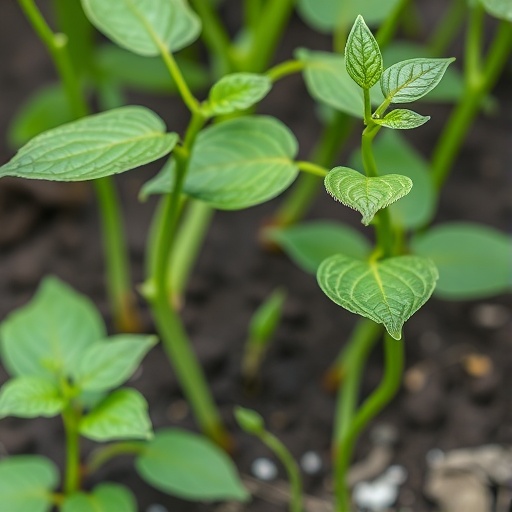
Recent research has illuminated the intricate relationship between nitric oxide (NO) and drought tolerance in plants, focusing particularly on the common bean (Phaseolus vulgaris L.). Conducted by a team of researchers led by Rehaman, Asgher, and Khan, this groundbreaking study sheds light on the multifaceted ways NO enables plants to withstand arid conditions. This work is crucial, as drought stress is increasingly becoming a significant limiting factor in agricultural productivity worldwide. With climate change looming ever larger, discovering mechanisms that bolster plant resilience is more imperative than ever.
The research posits that nitric oxide acts as a signaling molecule, facilitating a range of responses that include morphological changes, physiological adaptations, biochemical reactions, and metabolomic adjustments. Each of these components plays a role in how beans, a staple food for millions, can adapt to insufficient water. The study reveals that the application of NO can tweak various parameters in the plant, enhancing both its growth and survival rates under drought conditions.
Morphologically, the common bean displays certain adaptations thanks to the influence of nitric oxide. The researchers found that NO was able to modify root architecture, promoting deeper root growth. This change allows the plant to tap into more moisture deep underground, which is critical during periods of drought. Thicker and more extensive roots were observed in NO-treated plants, suggesting a mechanism that directly correlates to improved water uptake efficiency. Such adaptations could enhance not only survival rates but also overall yields, which is crucial given the staggering global demand for food.
Physiologically, nitric oxide enhances the efficiency of photosynthesis even under drought stress. By modulating stomatal conductance, the study found that NO helps balance water loss with gas exchange, thereby optimizing photosynthetic rates. Enhanced photosynthesis leads to increased energy availability for the plant, which can be pivotal during stress conditions. Furthermore, the mitigation of oxidative stress through NO was noted, allowing the plants to maintain cellular integrity and function during crucial drought periods.
The biochemical pathways influenced by nitric oxide include the regulation of reactive oxygen species (ROS). The research demonstrates how NO enhances the activity of antioxidant enzymes, such as superoxide dismutase and catalase, to counteract oxidative damage that typically escalates during water scarcity. By fortifying the bean plants against these oxidative stresses, NO contributes to their overall resilience. Increased antioxidant activity was consistently noted in treated plants, marking a significant biochemical response attributed to nitric oxide’s role.
In the realm of metabolomics, the study introduces the concept of metabolite profiling in relation to nitric oxide treatment. This approach revealed a shift in the metabolite composition of the beans subjected to drought stress. When treated with NO, these plants showcased elevated levels of osmoprotectants—such as proline and soluble sugars—known for their protective roles in osmotic stress. Essentially, these compounds help to stabilize cellular structures and mitigate the negative impacts of drought at a molecular level.
This sophisticated interplay between nitric oxide and drought resilience challenges previous notions surrounding plant stress responses. It suggests that enhancing nitric oxide pathways could become a focal point for biotechnological approaches to improve crop performance under extreme conditions. The findings advocate for potential agricultural applications where NO or NO donors could be used to enhance drought resistance in significant crops, presenting a sustainable avenue towards achieving food security.
In conducting their analyses, the researchers employed advanced techniques, including transcriptomic and proteomic profiling, which highlighted the complexity of the pathways involved. The comprehensive nature of this approach ensures that multiple layers of responses are considered, leading to a more holistic understanding of plant adaptation mechanisms. This multifaceted analysis has broad implications, as it showcases the potential for utilizing biochemical signals to drive agricultural improvements.
The authors stress the importance of further investigation into nitric oxide’s role across various species and under different environmental stressors. As climate variability continues to pose a challenge, expanding our understanding of such signaling molecules could revolutionize agricultural practices. The insights derived from this research may not only inform breeding programs but could also guide the development of new agronomic techniques to enhance crop resilience in the face of climate change.
Moreover, the societal implications are vast. By improving drought resistance, this research could directly impact food security, especially in regions where water scarcity is prevalent. The common bean serves as an essential food source in many developing countries; thus, enhancing its cultivation under drought conditions could alleviate nutritional challenges and economic burdens.
In summation, the exploration of nitric oxide’s function in drought tolerance within the common bean presents a promising frontier in plant science. The integration of morphological, physiological, biochemical, and metabolomic factors underlines the complexity of plant responses and opens up multiple avenues for future exploration. As scientists continue to unveil the mysteries of plant resilience, it becomes increasingly clear that leveraging natural signaling pathways may provide the solutions we need to sustain agricultural productivity in an uncertain future.
This study not only enriches the existing literature on plant stress responses but also sets the stage for practical applications aimed at improving drought resilience through innovative agricultural techniques. The knowledge gained can potentially aid farmers and policymakers in developing effective strategies to mitigate the impacts of climate change on food systems worldwide. Through continued research into the role of signaling molecules like nitric oxide, we can strive towards a more sustainable agricultural paradigm that ensures food security for generations to come.
Rehaman, A., Asgher, M. & Khan, N.A. Nitric oxide confers drought tolerance through integrated morphological, physiological, biochemical and metabolomic responses in common bean (Phaseolus vulgaris L.).
Discov. Plants 2, 321 (2025). https://doi.org/10.1007/s44372-025-00409-8
Cite Scienmag News
Alan Morgan. (November 12, 2025). Nitric Oxide Enhances Drought Tolerance in Bean Plants. Scienmag. https://scienmag.com/nitric-oxide-enhances-drought-tolerance-in-bean-plants/
Alan Morgan. "Nitric Oxide Enhances Drought Tolerance in Bean Plants." Scienmag, 12 November 2025, https://scienmag.com/nitric-oxide-enhances-drought-tolerance-in-bean-plants/. Accessed 5 September 2026.
Alan Morgan. "Nitric Oxide Enhances Drought Tolerance in Bean Plants." Scienmag. November 12, 2025. https://scienmag.com/nitric-oxide-enhances-drought-tolerance-in-bean-plants/


