


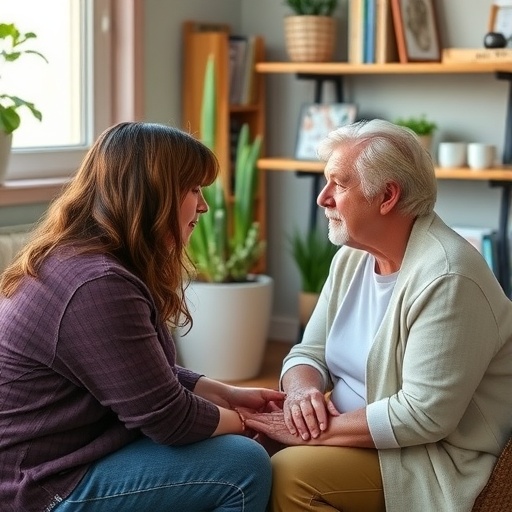
“I need to talk, to talk to people.” For one woman in her forties living with a schizophrenia-spectrum disorder, that simple statement captured something that no prescription could provide. Medication kept her symptoms in check, she explained, but it was human contact that made her feel well. Her words now form the title of a new qualitative study, published in the Community Mental Health Journal, that asks a deceptively simple question: what does social functioning actually mean to the people living with schizophrenia and to the family members who care for them? The answer, the researchers report, may require a fundamental rethinking of how clinicians measure, talk about, and support the social lives of people with severe mental illness.
The study, led by Maria Long of City St George’s, University of London and University College London, together with colleagues including psychiatrist Joanna Moncrieff and nurse researcher Nathan Davies of Queen Mary University of London, comes at a moment when the scale of the problem is becoming impossible to ignore. Recent estimates cited by the authors suggest that around 63 percent of people with severe mental health disorders experience social isolation, a figure with serious consequences. Prior research has shown that isolation worsens psychotic symptoms, is associated with poorer physical functioning, and may even increase the risk of premature mortality. Schizophrenia-spectrum conditions affect roughly one percent of the population and account for between 1.5 and 3 percent of healthcare costs in developed countries, yet the concept of social functioning that dominates clinical assessment remains stubbornly narrow, typically counting jobs held, households managed, and hours spent in company rather than asking whether people feel that they belong.
To understand what matters to people themselves, the team conducted semi-structured interviews with twelve service users and eight informal carers, all recruited through secondary care mental health services from a single public healthcare trust in England serving urban and suburban communities. The sample was deliberately diverse: clinicians classified potential service user participants as having low, mid-range, or high social functioning, ensuring that the study captured experiences across the full spectrum of social circumstances. Participants were assessed with the Objective Social Outcomes Index, a six-item measure that aggregates objective indicators such as housing, employment, and relationships, and interviews lasted on average 65 minutes. The researchers adopted a critical realist framework and analysed the anonymised transcripts using reflexive thematic analysis, with two coders independently working through the first five transcripts and a multidisciplinary team, including a carer with lived experience, helping to refine the emerging themes. Data collection ran from April 2019 to December 2021, straddling the COVID-19 pandemic, with twelve interviews conducted before national restrictions and eight after their final lifting in July 2021.
What emerged from the analysis was strikingly coherent. Across accounts from people with very different levels of social functioning, one overarching theme dominated: fitting in and being accepted. Whether participants described holding down a job, cooking their own meals, or simply chatting in the lounge of a residential home, their understanding of social functioning revolved around integration and belonging rather than any single observable outcome. Both service users and carers, the authors found, implicitly compared the person’s social life against perceived social norms of what counts as a normal life, and for many the most potent symbol of that normality was employment.
Around this central idea, four supporting themes took shape. The first concerned the quiet dignity of everyday independence. For service users facing the greatest challenges, being able to cook, shop, clean, and look after one’s appearance was not trivial housekeeping but a meaningful form of social functioning in its own right, a way of signifying personal productivity in the absence of structured occupation. One man in his thirties put it plainly: despite a psychotic diagnosis that can make everyday life difficult, he was still going out every day, cooking and cleaning. Carers, meanwhile, described providing intensive behind-the-scenes support with bills and daily logistics, work that carried constant anxiety about homelessness and the loss of welfare support, and which sometimes forced them to revise their expectations of independence downward.
The second theme concerned communication and sociability as a connection to the world, an area the researchers found to be underpinned by six distinct elements: social ability and communication skills, opportunity, interest and motivation, confidence in the self, trust in others, and clear thinking. Psychotic symptoms undermine exactly these faculties, and the interviews revealed a self-reinforcing cycle in which paranoia and fear of interaction breed isolation, which in turn erodes self-esteem and further limits sociability. Carers described walking on eggshells, gauging whether a conversation might trigger distress or withdrawal. Yet the study also documented a widely embraced coping strategy that has, until now, been largely invisible to measurement science: digital communication. Most service users, across age and gender groups, used messaging apps, social media, and online forums as a low-pressure means of staying connected, and several reported that this online contact protected their mental health and may even have helped prevent relapse. Some carers, however, questioned whether text-message friendships could substitute for the real thing, worrying about vulnerability to exploitation and a false sense of connection.
The third theme explored close relationships, which participants viewed as both a marker of good social functioning and a route to achieving it. Service users with partners cherished the stability those relationships provided, while many single participants, notably across age groups, had reached a resigned acceptance that they would remain alone. Younger service users described abandoning online dating as pressurised, impersonal, and unsafe, a finding with broader significance given that online dating has become the predominant way couples meet in the general population. Notably, the study found cultural variation: British South Asian and Muslim participants placed particular weight on marriage and family formation, with one man in his fifties describing with raw sadness the bachelor life he had never chosen. Parental carers, for their part, expressed ambivalence, mingling vague hopes with grief for an imagined future, and occasionally voicing painful assumptions about whether anyone would accept a partner with a mental disability.
The fourth theme captured what the authors call the paradox of work: employment was rated by nearly all participants as the single most important indicator of social functioning, yet it was out of reach for many, and for some it was actively feared. Younger participants and carers of younger people expressed cautious aspirations, typically for modest jobs with limited responsibility. But others described a genuine dilemma: workplace stress was perceived as a threat to fragile mental stability, a potential trigger for relapse, and some felt their medication and condition were simply incompatible with holding a job. Those in work prized the routine, identity, and sense of purpose it conferred, but worried about performance, progression, and disclosing their diagnosis to colleagues. Volunteering emerged as a mixed blessing, highly valued when placements matched aspirations and offered genuine social contact, but experienced as a dead end when it involved unpaid cleaning tasks that never led anywhere.
Crucially, the study found that service users and carers broadly shared the same priorities, with telling exceptions. Carers were more likely to worry about the re-emergence of disordered or antisocial behaviour, likely reflecting fear of relapse, and they expressed more sadness than service users about unattained romantic relationships. Many service users, by contrast, had adapted by revising their expectations, valuing basic independence and finding in it a genuine sense of integration, a recalibration the authors suggest may reflect both the realities of the illness and the corrosive effects of self-stigma and discrimination, which previous meta-analytic work has shown to be common in this population.
The implications for measurement are perhaps the most technically significant. Existing rating scales of social functioning typically anchor their scores to objective capacity and outcomes: the number of activities, time spent, employment and relationship status. This study suggests such instruments may miss what people find most meaningful, namely the subjective psychological experience of feeling accepted and fitting in, and they almost universally neglect digital communication, a primary social channel for many service users. Because subjective social outcomes predict quality of life and are more strongly associated with mortality risk than objective ones, the authors argue that optimal assessment must be multidimensional, blending objective indicators with measures of perceived connectedness, and must be updated to capture the digital mediums through which social life is now conducted.
The findings also carry practical weight for services. They align with the recovery-oriented approach of psychiatric rehabilitation, which evidence links to higher rates of successful transition to independent living, and they underline that helping people maintain basic daily living skills can generate pride and belonging even when more ambitious goals remain out of reach. Carers, the researchers add, are key partners in this work and should be supported to assist with daily activities and decision-making without being crushed by the burden of caregiving. The authors call for future research into dating attitudes and behaviour in representative samples, into whether digital interaction translates into broader social gains, and into the barriers and facilitators of positive volunteering, as well as studies including people not taking antipsychotic medication. For a condition where social isolation is the rule rather than the exception, listening to what people actually want from their social lives may prove the most important intervention of all.
Cite Scienmag News
Glenn Wilkins. (September 5, 2026). Talking with people matters most in schizophrenia social functioning, say service users and carers. Scienmag. https://scienmag.com/talking-with-people-matters-most-in-schizophrenia-social-functioning-say-service-users-and-carers/
Glenn Wilkins. "Talking with people matters most in schizophrenia social functioning, say service users and carers." Scienmag, 5 September 2026, https://scienmag.com/talking-with-people-matters-most-in-schizophrenia-social-functioning-say-service-users-and-carers/. Accessed 5 September 2026.
Glenn Wilkins. "Talking with people matters most in schizophrenia social functioning, say service users and carers." Scienmag. September 5, 2026. https://scienmag.com/talking-with-people-matters-most-in-schizophrenia-social-functioning-say-service-users-and-carers/


