

Friday, September 4, 2026
Science
No Result
View All Result
  • Login
  • HOME
  • SCIENCE NEWS
  • CONTACT US
  • HOME
  • SCIENCE NEWS
  • CONTACT US
No Result
View All Result
Scienmag
No Result
View All Result
Home Science News Medicine

New technique could lead to more organs being available for transplant

June 27, 2024
in Medicine
Ophelia Keating
By Ophelia Keating Scienmag Editorial Profile - Health Services Research
Reading Time: 2 mins read
0
New technique could lead to more organs being available for
66
SHARES
597
VIEWS
Share on FacebookShare on Twitter
ADVERTISEMENT

LONDON, ON – A team at Lawson Health Research Institute is the first in Canada to perform a transplant using a technique called abdominal normothermic regional perfusion (A-NRP), which could lead to more organs being available for transplant. The technique was used to optimize organs from two donors in April 2024 at London Health Sciences Centre (LHSC), resulting in the successful transplantation of two kidneys and two livers to four patients. 

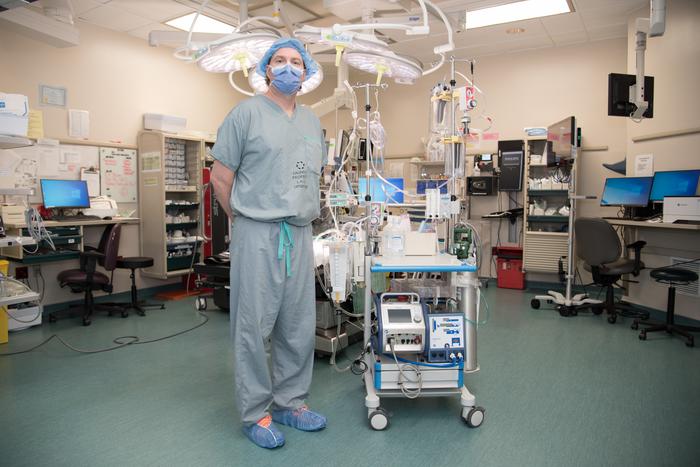
Dr. Anton Skaro

Credit: London Health Sciences Centre

LONDON, ON – A team at Lawson Health Research Institute is the first in Canada to perform a transplant using a technique called abdominal normothermic regional perfusion (A-NRP), which could lead to more organs being available for transplant. The technique was used to optimize organs from two donors in April 2024 at London Health Sciences Centre (LHSC), resulting in the successful transplantation of two kidneys and two livers to four patients. 

“Organ donation after circulatory death (when the heart stops beating) has historically been less reliable than organ donation after brain death,” explained Dr. Anton Skaro, Associate Scientist at Lawson and Surgical Director of Liver Transplantation at LHSC. “This is because there is a higher risk of organ damage after circulatory death since oxygen and blood flow stop.” 

Dr. Skaro and his team at LHSC were the first in Canada to use A-NRP, which has the potential to protect abdominal organs after circulatory death in a donor by using a special pump to selectively restore blood flow to the organs. A-NRP could increase the likelihood of a successful transplantation, ensuring donor wishes are fulfilled and enhancing patient outcomes. 

“Unfortunately, we do not have enough donated organs to match the number of patients waiting for transplantation,” said Dr. Skaro. “By protecting the quality of organs after circulatory death, A-NRP could help significantly increase the number of available donor organs to save more lives.”  

The research team led by Dr. Skaro is currently studying the use of A-NRP to ensure it is safe for donors. The team plans to include 20 to 30 donors in the study. 

Dr. Skaro notes there is an immense amount of potential in A-NRP. Once this study has been completed, Dr. Skaro’s team hopes to expand the use of this technique to other transplant centres throughout Canada.  

“This work would not be possible without the collaborative efforts of a multidisciplinary team who have expertise in neurocritical care, perfusion, critical care, ethics, donation and transplant,” said Dr. Skaro. “It would also not be possible without the help of numerous partners, including Ontario Health (Trillium Gift of Life Network), and the generosity of the community and donors” 

The research was generously funded by The Move for Life Foundation, London Health Science Foundation, Academic Medical Organization of Southwestern Ontario (AMOSO), and the Canadian Donation and Transplantation Research Innovation Grant. 


Subject of Research

People

Subject of Research: Medicine

Article Title: New technique could lead to more organs being available for transplant

Article References: Original research article

Image Credits: AI Generated

DOI: Not provided

Keywords: Not provided

Cite Scienmag News

Ophelia Keating. (June 27, 2024). New technique could lead to more organs being available for transplant. Scienmag. https://scienmag.com/new-technique-could-lead-to-more-organs-being-available-for-transplant/

Ophelia Keating. "New technique could lead to more organs being available for transplant." Scienmag, 27 June 2024, https://scienmag.com/new-technique-could-lead-to-more-organs-being-available-for-transplant/. Accessed 4 September 2026.

Ophelia Keating. "New technique could lead to more organs being available for transplant." Scienmag. June 27, 2024. https://scienmag.com/new-technique-could-lead-to-more-organs-being-available-for-transplant/

Share26Tweet17
Previous Post

Only 4% of teen football academy prospects make top tier

Next Post

Female heart patients less likely to have additional problems fixed during surgery

Related Posts

Variational autoencoders detect coronary artery disease in SPECT images
Medicine

Variational autoencoders detect coronary artery disease in SPECT images

September 4, 2026
VESALIUS-REAL study reveals lipid treatment gaps in high-risk patients lacking prior cardiovascular events
Medicine

VESALIUS-REAL study reveals lipid treatment gaps in high-risk patients lacking prior cardiovascular events

September 4, 2026
GFRAL mediates metabolic responses to mitochondrial stress in brown fat
Medicine

GFRAL mediates metabolic responses to mitochondrial stress in brown fat

September 4, 2026
Vasospasm and Delayed Ischemia After Aneurysmal Rupture With Hemorrhage
Medicine

Vasospasm and Delayed Ischemia After Aneurysmal Rupture With Hemorrhage

September 3, 2026
Graph-Based White Matter Tractometry: Methods, Applications, and Validation Paths
Medicine

Graph-Based White Matter Tractometry: Methods, Applications, and Validation Paths

September 3, 2026
Managing Everyday Life in Double Exposure: Frail Older People’s Experiences During a Pandemic
Medicine

Managing Everyday Life in Double Exposure: Frail Older People’s Experiences During a Pandemic

September 3, 2026
Next Post
Female heart patients less likely to have additional problems fixed

Female heart patients less likely to have additional problems fixed during surgery

  • Mothers who receive childcare support from maternal grandparents show more optimized

    Mothers who receive childcare support from maternal grandparents show more parental warmth, finds NTU Singapore study

    27656 shares
    Share 11059 Tweet 6912
  • University of Seville Breaks 120-Year-Old Mystery, Revises a Key Einstein Concept

    1061 shares
    Share 424 Tweet 265
  • Bee body mass, pathogens and local climate influence heat tolerance

    682 shares
    Share 273 Tweet 171
  • Researchers record first-ever images and data of a shark experiencing a boat strike

    546 shares
    Share 218 Tweet 137
  • Groundbreaking Clinical Trial Reveals Lubiprostone Enhances Kidney Function

    531 shares
    Share 212 Tweet 133
Science

Embark on a thrilling journey of discovery with Scienmag.com—your ultimate source for cutting-edge breakthroughs. Immerse yourself in a world where curiosity knows no limits and tomorrow’s possibilities become today’s reality!

RECENT NEWS

  • Groundwater extraction drives dispossession across India’s Kaveri Delta
  • Satellite data and climate models reveal Arabian Gulf warming trends
  • Coastal forest soils respond differently to repeated flooding and changing water chemistry
  • Deep Learning Enables Multi-Step Streamflow Forecasts Under RCP 4.5 and 8.5

Categories

  • Agriculture
  • Anthropology
  • Archaeology
  • Athmospheric
  • Biology
  • Biotechnology
  • Blog
  • Bussines
  • Cancer
  • Chemistry
  • Climate
  • Earth Science
  • Editorial Policy
  • Marine
  • Mathematics
  • Medicine
  • Pediatry
  • Policy
  • Psychology & Psychiatry
  • Science Education
  • Social Science
  • Space
  • Technology and Engineering

Subscribe to Blog via Email

Enter your email address to subscribe to this blog and receive notifications of new posts by email.

Join 5,151 other subscribers

© 2025 Scienmag - Science Magazine

Welcome Back!

Login to your account below

Forgotten Password?

Retrieve your password

Please enter your username or email address to reset your password.

Log In
No Result
View All Result
  • HOME
  • SCIENCE NEWS
  • CONTACT US

© 2025 Scienmag - Science Magazine

Discover more from Science

Subscribe now to keep reading and get access to the full archive.

Continue reading