


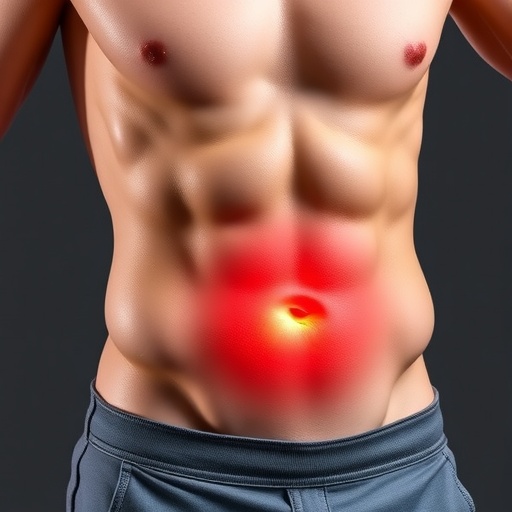
A groundbreaking new study emerging from McMaster University exposes the insidious role of hidden fat stores deep within the human body—specifically visceral adipose tissue and hepatic fat—in damaging arterial health long before any outward signs of disease become apparent. This emerging evidence, published on October 17, 2025, in the prestigious journal Communications Medicine, challenges the conventional obesity metric of Body Mass Index (BMI) and shifts the scientific focus toward a more nuanced understanding of cardiovascular risk emanating from these metabolically active fat depots.
For decades, BMI has been the primary clinical tool for gauging obesity-related health risks, relying essentially on external body measurements. However, BMI fails to account for where fat is distributed across the body. This study reveals that fat stored in the visceral compartment—surrounding vital organs—and fat accumulated within the liver play a far more insidious role in predisposing individuals to vascular pathologies than previously realized. Unlike subcutaneous fat, visceral and liver fat are metabolically dynamic, secreting pro-inflammatory molecules and lipid byproducts that accelerate vascular injury.
Utilizing sophisticated magnetic resonance imaging (MRI) techniques, researchers performed an extensive analysis of fat distribution patterns coupled with vascular assessments of over 33,000 middle-aged adults enrolled in two large cohort studies: the Canadian Alliance for Healthy Hearts and Minds (CAHHM) and the UK Biobank. These imaging datasets permitted precise quantification of visceral fat deposits and hepatic steatosis alongside detailed characterization of carotid artery health, specifically focusing on carotid intima-media thickness and plaque accumulation—key indicators of atherosclerotic cardiovascular disease.
The results were stark: an unequivocal association emerged linking increased visceral fat volumes with thickening and plaque development in the carotid arteries. These arteries, vital conduits supplying oxygenated blood to the brain, exhibited changes indicative of early atherosclerosis. Hepatic fat, while showing a somewhat weaker correlation, also independently contributed to vascular degeneration. Crucially, these associations persisted even after adjusting for traditional cardiovascular risk variables such as cholesterol levels, blood pressure, glucose metabolism, and lifestyle factors, underscoring the unique and direct impact of these fat depots on arterial health.
Dr. Russell de Souza, co-lead author and associate professor at McMaster’s Department of Health Research Methods, Evidence, and Impact, emphasized that such findings disrupt previous assumptions which primarily confined adiposity risk assessments to external body measures. “Our data indicate that hidden fat reserves are stealthily contributing to arterial injury, undetected by standard obesity metrics,” Dr. de Souza highlighted. This phenomenon implies that many individuals deemed ‘healthy’ or ‘normal weight’ by BMI standards may still harbor heightened cardiovascular risk due to their internal fat composition.
Further elucidating these insights, vascular medicine expert Dr. Sonia Anand, corresponding author and professor at McMaster’s Department of Medicine, remarked on the metabolic activity of these fat stores. Unlike inert tissue, visceral and hepatic adipose tissues are hormonally active and release substances that promote systemic inflammation, endothelial dysfunction, and oxidative stress—pathophysiological processes central to atherosclerosis. This biochemical assault occurs silently, even among those without overt obesity signs, reframing how clinicians might strategize risk evaluations.
The methodological rigor underpinning this research rested on integrating large-scale epidemiological cohorts with advanced imaging modalities. The MRI scans provided unparalleled clarity, enabling differentiation between subcutaneous and deeper fat layers and their vascular consequences. Through complex statistical modeling, the researchers isolated the effects of these fat depots on carotid arterial pathology, confirming their independent contribution beyond lifestyle influences like diet, exercise, and smoking.
These findings compel a paradigm shift in cardiovascular risk assessment. Health professionals are urged to transcend reliance on BMI or waist circumference alone and to incorporate imaging-based evaluations that can detect visceral and hepatic fat accumulation. This approach promises more accurate identification of individuals at elevated risk for heart attack and stroke, facilitating earlier intervention strategies potentially capable of mitigating vascular damage.
Beyond clinical implications, this study strengthens the imperative for public awareness regarding the hidden dangers of visceral and liver fat. Traditional perceptions of health based solely on visible body weight inadequately reflect true cardiovascular risk. The stealth nature of these fat stores demands educational campaigns to enhance understanding of “metabolically obese normal weight” individuals—those whose internal fat burden belies their outward physique.
The supporting infrastructure of this study was multi-institutional and interdisciplinary. Funding and resources were provided by the Canadian Partnership Against Cancer, the Heart and Stroke Foundation of Canada, and the Canadian Institutes of Health Research, among others. Collaborative efforts involved the Population Health Research Institute, Montreal Heart Institute, and Sunnybrook Health Sciences Centre, whose in-kind MRI support and Bayer AG’s IV contrast provisioning were pivotal. Additionally, data from the Canadian Partnership for Tomorrow’s Health and the PURE Study enriched this research framework.
As this landmark study disseminates within the scientific and medical communities, it underscores the imperative to reconsider how obesity and cardiovascular disease are conceptualized and assessed. It is a clarion call for innovation in both clinical diagnostics and preventative medicine, advocating for nuanced biomarkers that unveil the hidden threats lurking beneath the surface.
The revelation that visceral and liver fat contribute significantly to carotid artery disease transforms the landscape of cardiometabolic research. It opens avenues for new therapies aimed at these specific fat depots and presents an urgent need for technological integration of imaging tools in routine clinical settings to better predict and prevent cardiovascular events.
In conclusion, McMaster University’s research crystallizes a profound truth about body fat—a reminder that weight seen externally tells only part of the story. The silent, internal fat within us may well hold the keys to unlocking earlier, life-saving interventions against atherosclerosis and related cardiovascular disorders.
News Publication Date: October 17, 2025
Web References:
https://dx.doi.org/10.1038/s43856-025-01123-y
Cite Scienmag News
Ophelia Keating. (October 17, 2025). New McMaster Study Reveals ‘Skinny Fat’ May Cause Hidden Artery Damage. Scienmag. https://scienmag.com/new-mcmaster-study-reveals-skinny-fat-may-cause-hidden-artery-damage/
Ophelia Keating. "New McMaster Study Reveals ‘Skinny Fat’ May Cause Hidden Artery Damage." Scienmag, 17 October 2025, https://scienmag.com/new-mcmaster-study-reveals-skinny-fat-may-cause-hidden-artery-damage/. Accessed 4 September 2026.
Ophelia Keating. "New McMaster Study Reveals ‘Skinny Fat’ May Cause Hidden Artery Damage." Scienmag. October 17, 2025. https://scienmag.com/new-mcmaster-study-reveals-skinny-fat-may-cause-hidden-artery-damage/


