


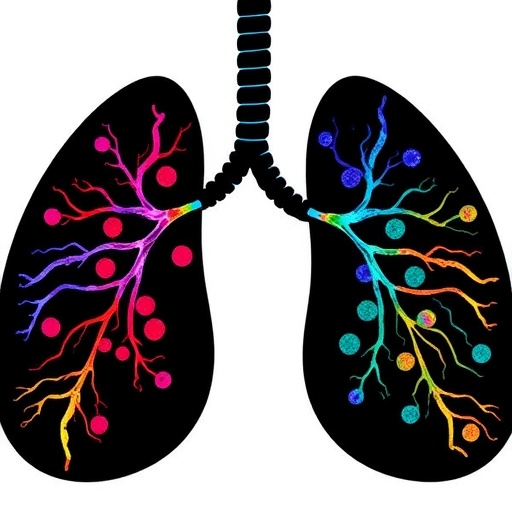
A previously unrecognized population of cancer-associated fibroblasts appears to act as a spatial organizer for immune suppression in lung cancer, according to a study published in Nature Immunology. Rather than functioning merely as structural cells embedded in the tumor matrix, these fibroblasts coordinate the arrival and positioning of regulatory T cells, or Tregs, that are unusually effective at suppressing anti-tumor immunity. The findings from O.R. Ringham, M. Rivera, L.F. Loffredo and colleagues identify a cellular partnership that may help explain why immune responses fail even when tumors contain large numbers of immune cells. The work places the physical architecture of the tumor microenvironment at the center of cancer immunology, suggesting that the location and functional state of immune cells can be as important as their abundance.
Cancer-associated fibroblasts, commonly abbreviated as CAFs, are connective-tissue cells that become reprogrammed within tumors. They produce extracellular-matrix proteins, growth factors and signaling molecules that influence blood-vessel formation, tumor-cell behavior and immune-cell movement. CAFs are not a uniform population. Different subsets can have distinct, and sometimes opposing, effects on tumor progression and treatment response. Some may support immune infiltration, while others create barriers that exclude immune cells from malignant tissue. The new study focuses on a CAF population associated with the recruitment and localization of highly suppressive Tregs in lung cancer, revealing that stromal cells can shape immunity through coordinated cellular positioning rather than through generalized immune suppression alone.
Tregs are essential under normal conditions because they prevent excessive immune activation and help maintain tolerance to the body’s own tissues. They are characterized by the transcription factor FOXP3 and frequently express molecules such as CD25, the high-affinity receptor for interleukin-2. In tumors, however, Tregs can become a powerful brake on the immune response. They suppress cytotoxic T cells, natural killer cells and antigen-presenting cells through several mechanisms, including inhibitory receptor signaling, consumption of interleukin-2, secretion of immunoregulatory cytokines and direct cell-to-cell contact. A tumor enriched in Tregs may therefore remain protected from immune attack even when cancer-specific T cells are present. The study’s emphasis on “hyper-suppressive” Tregs points to a further layer of complexity: not every Treg in a tumor has the same capacity to restrain immunity.
The researchers’ central observation is that the newly described CAF population helps bring these potent Tregs into particular regions of lung tumors and supports their retention there. This distinction matters because immune cells do not act in isolation. A Treg positioned next to an activated dendritic cell, a cancer-reactive T cell or a tumor-associated macrophage can exert a very different influence from one located elsewhere in the tissue. By arranging cellular neighborhoods, CAFs may create local immunological “hotspots” where suppression is concentrated. The result is not simply a tumor containing more Tregs, but a tumor in which the most functionally suppressive Tregs are placed where they can most effectively interfere with anti-tumor immune activity.
The findings also underscore the importance of studying tumors in space. Conventional analyses often measure the number of fibroblasts or immune cells in a bulk tissue sample, averaging together cells that may occupy very different microenvironments. Spatial approaches can reveal whether a particular CAF subset lies near blood vessels, tumor nests, lymphoid aggregates or immune-cell interfaces. In this context, the biological message is architectural: the CAF population appears to establish or maintain a local niche that favors Treg recruitment and specialization. Such a niche could involve chemokines that guide Treg migration, adhesion molecules that promote cellular retention, extracellular-matrix structures that define movement routes, or cytokines that reinforce suppressive activity. The precise molecular components remain critical targets for further investigation.
This work may help resolve a longstanding puzzle in lung-cancer immunology. Immune-checkpoint inhibitors can produce striking and durable responses in some patients, yet many tumors either fail to respond or eventually develop resistance. Therapies targeting PD-1, PD-L1 or CTLA-4 are designed to release inhibitory signals on immune cells, but they may be less effective when the tumor microenvironment simultaneously concentrates highly suppressive Tregs around vulnerable immune interactions. A stromal niche that recruits and organizes these cells could therefore contribute to primary resistance, acquired resistance or incomplete responses. The discovery raises the possibility that blocking immune checkpoints may need to be paired with strategies that disrupt the fibroblast-guided organization of suppressive immune cells.
Importantly, the study does not suggest that all CAFs should simply be eliminated. Fibroblasts are involved in wound repair, tissue integrity and normal immune regulation, and broad depletion could damage healthy organs or produce unintended effects. The therapeutic challenge will be to distinguish the disease-associated CAF population from beneficial stromal cells and to interfere with the signals that specifically sustain Treg accumulation or suppressive programming. Potential approaches could include antibodies or small molecules directed against subset-specific surface proteins, inhibitors of chemokine pathways, interventions that remodel abnormal extracellular matrix, or treatments designed to reprogram CAFs into a less immunosuppressive state. Each strategy would require careful testing because stromal cells can change their behavior in response to treatment, inflammation and tumor evolution.
The study also highlights why Treg biology should be evaluated functionally rather than through cell counts alone. A modest population of highly suppressive Tregs may have a greater effect than a larger population with limited activity. Identifying these cells could require a combination of transcriptional profiling, protein analysis, functional suppression assays and spatial mapping. Such measurements may eventually yield biomarkers that predict which lung-cancer patients are most likely to benefit from therapies targeting the CAF–Treg axis. If the relevant fibroblast signature can be detected in biopsies or imaging-linked tissue samples, clinicians might be able to identify tumors whose immune resistance is driven by stromal organization rather than by a lack of tumor-reactive lymphocytes.
As with any study of the tumor microenvironment, the findings will need to be evaluated across diverse patient groups, lung-cancer subtypes and treatment histories. Tumors differ according to their genetic drivers, smoking status, anatomical location and previous exposure to chemotherapy, radiation or immunotherapy. These variables can reshape both fibroblast states and Treg behavior. It will also be important to determine whether the same CAF population operates in other cancers, whether it emerges early or late during tumor development, and whether its activity changes after immune-checkpoint blockade. Nevertheless, the study provides a compelling conceptual advance: lung tumors may exploit a specialized stromal cell population to turn immune suppression into a precisely organized local system. By revealing how fibroblasts recruit and position hyper-suppressive Tregs, the research opens a new route toward therapies that do not merely activate immune cells, but also dismantle the cellular neighborhoods that keep them under control.
Cite Scienmag News
Nathaniel Bowman. (August 25, 2026). New CAF Population Directs Highly Suppressive Regulatory T Cells in Lung Tumors. Scienmag. https://scienmag.com/new-caf-population-directs-highly-suppressive-regulatory-t-cells-in-lung-tumors/
Nathaniel Bowman. "New CAF Population Directs Highly Suppressive Regulatory T Cells in Lung Tumors." Scienmag, 25 August 2026, https://scienmag.com/new-caf-population-directs-highly-suppressive-regulatory-t-cells-in-lung-tumors/. Accessed 3 September 2026.
Nathaniel Bowman. "New CAF Population Directs Highly Suppressive Regulatory T Cells in Lung Tumors." Scienmag. August 25, 2026. https://scienmag.com/new-caf-population-directs-highly-suppressive-regulatory-t-cells-in-lung-tumors/


