


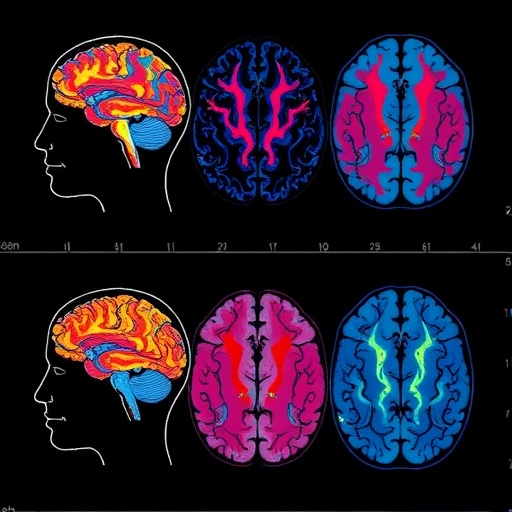
In a groundbreaking study poised to transform the understanding of major depressive disorder (MDD), Luo, Li, Xu, and colleagues have unveiled distinctive neurophenotypes through the application of advanced normative modeling of regional homogeneity. Published in Translational Psychiatry in 2026, their work pushes the boundaries of psychiatric neuroscience, highlighting how subtle, region-specific brain activity deviations underlie the complex clinical presentations of depression. This pioneering approach opens new vistas for personalized diagnostics and targeted therapies in mental health.
Historically, major depressive disorder has been a notoriously heterogeneous condition, manifesting a broad spectrum of symptoms that challenge one-size-fits-all diagnostic criteria and treatment plans. Traditional neuroimaging studies, while valuable, often fall short in parsing this heterogeneity due to their reliance on group comparisons that obscure individual variability. The innovative methodology introduced by Luo et al. addresses this limitation by deploying normative models to quantify regional homogeneity — a measure of synchronized neural activity within localized brain regions — thereby capturing the neurobiological diversity inherent in MDD.
Regional homogeneity (ReHo) is a metric derived from resting-state functional magnetic resonance imaging (fMRI), reflecting the temporal consistency of neural activity among neighboring voxels. In healthy individuals, certain brain areas exhibit highly synchronized activity patterns, indicative of functional integration essential for mood regulation and cognition. Disruptions in ReHo can signify aberrant regional interactions contributing to depressive symptomatology. By establishing normative reference models from large-scale neuroimaging datasets, the researchers could pinpoint how individual patients with MDD deviate from typical ReHo patterns, revealing unique neurophenotypic signatures.
The study leveraged a robust sample encompassing thousands of neuroimaging scans, ensuring that normative models accounted for demographic variables such as age, sex, and scanner differences. This rigorous statistical framework enabled the isolation of true neurobiological anomalies from noise and confounding factors. Luo and colleagues were thus able to identify distinct clusters of regional homogeneity abnormalities that aligned with clinically meaningful subtypes of depression, forging a link between brain network dysfunction and phenotypic variability.
Strikingly, the normative model approach revealed that not all depressed individuals share the same neural disturbances. Some exhibited pronounced hypo-synchrony in fronto-limbic circuits, regions implicated in emotion processing and regulation, whereas others showed hyper-synchrony in default mode network areas often linked to rumination and self-referential thought. These divergent patterns underscore the need to reconceptualize MDD beyond symptomatic descriptions toward neurobiologically grounded classifications.
The implications for therapeutic innovation are profound. Current pharmacological and psychotherapeutic interventions frequently suffer from trial-and-error application, with remission rates stagnating despite decades of research. By characterizing neurophenotypes with precision, clinicians could tailor treatments to the underlying neural circuitry dysfunctions, enhancing efficacy. For example, patients with fronto-limbic hypoconnectivity may benefit from interventions targeting emotion regulation pathways, such as neuromodulation techniques, whereas default mode network alterations might respond better to cognitive restructuring therapies.
Beyond individual treatment, this normative model framework fosters early detection and intervention strategies. Subclinical deviations from normative ReHo profiles might signal emerging risk for depression before overt symptom manifestation. This opens avenues for preemptive measures and monitoring, essential for mitigating disease burden and preventing chronicity.
Moreover, the study’s methodology holds promise for unraveling comorbidity conundrums. Depression frequently co-occurs with anxiety, bipolar disorder, and other psychiatric conditions, complicating both diagnosis and management. The ability to delineate distinct neurophenotypes within heterogeneous populations could clarify overlapping and discrete pathophysiologies, paving the way for refined diagnostic taxonomies and co-treatment protocols.
Luo et al.’s research also exemplifies the power of cross-disciplinary synergy, integrating computational neuroscience, clinical psychiatry, and data science. Their normative modeling approach capitalizes on machine learning algorithms that handle high-dimensional neuroimaging data with granularity and scalability far exceeding traditional statistics. This facilitates the extraction of subtle neurodynamic signatures previously obscured.
Importantly, the study highlights the brain’s regional coherence as a dynamic biomarker—one that can be longitudinally assessed to track disease progression and treatment response. Future investigations employing similar normative models could investigate how neurophenotypes shift with psychotherapy, medication, or neuromodulatory approaches, enabling real-time optimization of personalized care.
The ethical considerations embedded in using neuroimaging biomarkers for psychiatric disorders are also crucial. Luo and colleagues emphasize the importance of privacy, informed consent, and avoiding stigma by underscoring that neurophenotypes reflect biological vulnerability rather than deterministic pathology. Such responsible science communication helps bridge the gap between cutting-edge neuroscience and public understanding.
Looking forward, the integration of normative modeling with genetic, behavioral, and environmental data promises a holistic portrait of depression as a biopsychosocial phenomenon. Multi-omics and longitudinal cohort studies could leverage this paradigm to unpack causal mechanisms and resilience factors that modulate neurophenotypic expression.
In sum, Luo et al.’s landmark study marks a paradigm shift in the quest to decipher depression’s neural underpinnings. By unveiling the heterogeneity masked by conventional analyses and mapping individualized brain activity landscapes, their research lays foundational stones for precision psychiatry. As the field advances, these insights herald a future where mental health care transcends symptomatic treatment, embracing biology-informed, adaptive interventions that restore well-being at the neural circuit level.
Their work not only enriches scientific knowledge but also offers hope for millions grappling with depression worldwide—a testament to how innovative neuroimaging analytics can transform despair into discernible, treatable brain states. As the neuroscience community builds upon these normative models, the prospect of truly personalized mental health care moves from aspiration to tangible reality.
Cite Scienmag News
Glenn Wilkins. (April 9, 2026). Neurophenotypes of Depression Revealed by Brain Patterns. Scienmag. https://scienmag.com/neurophenotypes-of-depression-revealed-by-brain-patterns/
Glenn Wilkins. "Neurophenotypes of Depression Revealed by Brain Patterns." Scienmag, 9 April 2026, https://scienmag.com/neurophenotypes-of-depression-revealed-by-brain-patterns/. Accessed 3 September 2026.
Glenn Wilkins. "Neurophenotypes of Depression Revealed by Brain Patterns." Scienmag. April 9, 2026. https://scienmag.com/neurophenotypes-of-depression-revealed-by-brain-patterns/


