


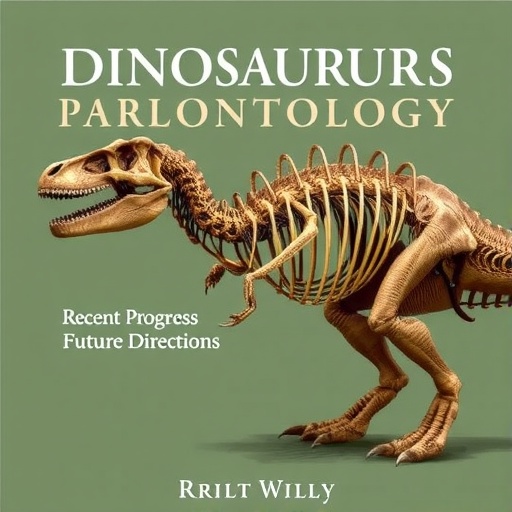
For nearly two centuries, dinosaurs have moved from the margins of natural history into the center of one of science’s most dynamic research fields. What began with the description of a handful of spectacular fossil bones has become a multidisciplinary effort to reconstruct ancient ecosystems, test evolutionary theories and understand how biological communities respond to environmental change. A new review by Xu, Upchurch, Zanno and colleagues presents dinosaur palaeontology as a data-driven science increasingly connected to ecology, developmental biology, geochemistry, biomechanics, statistics and artificial intelligence. Its central message is both exciting and cautionary: dinosaurs can reveal extraordinary details about the history of life, but only when researchers combine multiple forms of evidence and remain alert to the limitations of the fossil record.
The review examines how scientists extract biological information from fossils that are often fragmentary, distorted or separated from the soft tissues that once defined the living animal. Dinosaur bones can preserve clues about growth, movement, metabolism, reproduction and behavior, but those clues must be interpreted through quantitative analysis. Digital three-dimensional models allow researchers to measure bone shape and compare anatomical variation across species. Geometric morphometrics, for example, converts landmarks on fossils into numerical datasets that can be used to investigate changes in skull form, limb proportions or body architecture. Phylogenetic methods then place those anatomical patterns into an evolutionary framework, helping researchers distinguish traits inherited from common ancestors from features that evolved independently.
One of the most powerful advances in dinosaur research has been the integration of fossil anatomy with information from living animals. Modern birds are the surviving dinosaur lineage, while crocodilians provide an important comparative reference among living reptiles. Their skeletons, respiratory systems, muscles, growth patterns and behaviors offer biological models for interpreting extinct species. Scientists can test whether a proposed dinosaur feature is consistent with known relationships between anatomy and function in living organisms. For example, the shape of a limb may be analyzed alongside data from birds, mammals and reptiles to estimate locomotor performance, while bone microstructure can be compared with living species to investigate growth rates and life-history strategies. These comparisons do not produce perfect reconstructions, but they create testable hypotheses rather than relying solely on visual impressions.
The fossil record also contains chemical evidence capable of transforming dinosaur biology into a form of geological detective work. Stable isotopes preserved in teeth, bones and surrounding sediments can provide information about diet, water sources, temperature and movements through ancient landscapes. Carbon and oxygen isotopes may help identify feeding relationships or environmental conditions, while other geochemical signals can connect fossils to particular habitats and climatic regimes. Researchers can combine these measurements with sedimentology and the distribution of associated plants and animals to reconstruct food webs. Such analyses are especially important because dinosaur communities were not isolated collections of species. They were parts of ecosystems shaped by rainfall, vegetation, seasonality, volcanism, sea-level change and competition with other organisms.
The review emphasizes that dinosaur palaeontology is increasingly focused on communities rather than famous individual species. Scientists are asking how many species lived together, how body sizes were distributed, which animals occupied particular ecological roles and how those structures changed through time. Quantitative approaches such as diversity curves, disparity analyses and ecological network modeling help address these questions. Taxonomic diversity measures the number of recognized species, whereas morphological disparity measures the range of body forms or anatomical designs. The two can rise or fall independently: a community may contain many species that occupy similar forms, or fewer species with unusually broad anatomical diversity. Distinguishing between these patterns is essential for understanding how ecosystems evolved and how dinosaurs responded to environmental disruptions.
Yet every dinosaur dataset is shaped by sampling bias. Fossils are more likely to be preserved in some environments than others, and researchers have not explored every continent or geological interval equally. Rocks that formed in floodplains may yield different fossil communities from those deposited in deserts, coastal environments or volcanic landscapes. Large, robust bones are generally more likely to survive than delicate skeletons, while fossils from accessible regions are more likely to be discovered and studied. These distortions can create apparent changes in biodiversity that partly reflect geology, collection history or research attention rather than genuine biological events. The review therefore highlights statistical methods that account for uneven sampling, including techniques designed to compare fossil assemblages while controlling for rock availability, geographic coverage and the probability that a species will be detected.
Macroevolutionary studies use these corrected datasets to investigate some of the biggest questions in dinosaur science. Researchers can examine how body size evolved, whether major anatomical innovations appeared gradually or in bursts, and how extinction and diversification affected different lineages. Evolutionary rate models can estimate when changes in morphology accelerated or slowed, while ancestral-state reconstructions infer the characteristics of extinct common ancestors. These methods are powerful, but they depend on the quality of the phylogenetic trees and the fossil data on which they are based. A newly named species, a revised fossil identification or a different interpretation of a fragmentary specimen can alter evolutionary conclusions. Cross-testing, in which independent datasets are used to evaluate the same hypothesis, is therefore becoming increasingly important.
Technology is expanding the kinds of evidence that can be recovered from fossils. High-resolution computed tomography can reveal internal bone structures without damaging specimens, exposing features such as air spaces, vascular channels and braincase anatomy. Synchrotron imaging and other advanced scanning methods can investigate microscopic tissues and traces of original biological compounds. Artificial intelligence may accelerate the collection of these data by identifying anatomical landmarks, classifying microstructures and detecting patterns in large imaging datasets. Machine-learning systems could help researchers compare thousands of fossil specimens or quantify subtle changes in bone tissue that would be difficult to record manually. The review presents these tools as ways to enlarge the scale of palaeontological research, while also implying that automated results must be tested against specimen quality, geological context and expert interpretation.
These techniques may eventually allow scientists to investigate dinosaur-dominated terrestrial ecosystems with unprecedented detail. A combination of body-size data, tooth wear, isotope chemistry, bone histology, plant fossils and sedimentary evidence could reveal how energy moved through ancient food webs and how species divided environmental resources. Researchers may also be able to examine whether shifts in climate or habitat were associated with changes in dinosaur biodiversity, body form or geographic distribution. Such questions matter beyond dinosaurs. Their evolutionary history offers a deep-time laboratory for studying resilience, ecological turnover and the consequences of environmental instability—processes that also affect living ecosystems today. At the same time, modern conservation biology and ecology provide concepts and analytical tools that can be adapted to the fossil record.
The review ultimately argues that the future of dinosaur palaeontology will depend on integration rather than on any single spectacular discovery. Fossils remain the foundation of the discipline, and no imaging system or statistical model can replace the need for new specimens and reliable geological context. Vast regions of the world and entire intervals of geological time remain poorly sampled, leaving major gaps in knowledge about dinosaur diversity and ecosystem structure. Fieldwork in data-poor areas is therefore as important as laboratory innovation. By combining carefully collected fossils with anatomy, geochemistry, computational modeling, biological comparisons and emerging artificial-intelligence tools, researchers can move beyond isolated reconstructions toward a more rigorous understanding of how dinosaurs lived, evolved and shaped ancient worlds. The result is a science that is not merely reviving the past, but using it to test how life changes across deep time.
Cite Scienmag News
Violet Maxwell. (August 13, 2026). Dinosaur Paleontology: Recent Progress and Future Directions. Scienmag. https://scienmag.com/dinosaur-paleontology-recent-progress-and-future-directions/
Violet Maxwell. "Dinosaur Paleontology: Recent Progress and Future Directions." Scienmag, 13 August 2026, https://scienmag.com/dinosaur-paleontology-recent-progress-and-future-directions/. Accessed 3 September 2026.
Violet Maxwell. "Dinosaur Paleontology: Recent Progress and Future Directions." Scienmag. August 13, 2026. https://scienmag.com/dinosaur-paleontology-recent-progress-and-future-directions/


