


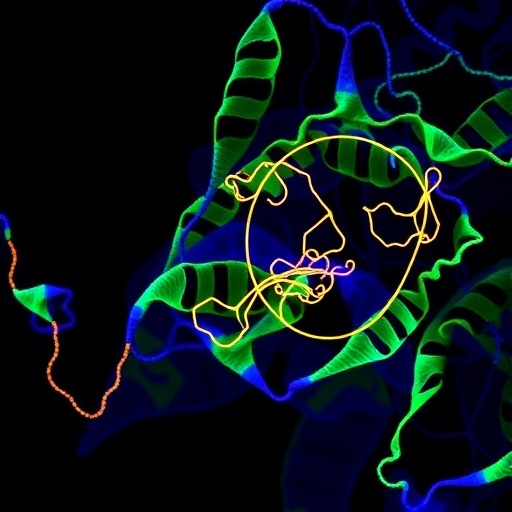
In a groundbreaking discovery poised to reshape the understanding of hepatocellular carcinoma (HCC) metastasis, researchers have unveiled the pivotal role of the protein ARHGAP21 in promoting cancer spread by modulating the ubiquitination of filamin A. This novel mechanistic insight presents promising new avenues for therapeutic intervention in one of the most lethal forms of liver cancer, which remains a leading cause of cancer-related mortality worldwide.
Hepatocellular carcinoma is notorious for its aggressive nature and poor prognosis, largely attributed to its high metastatic potential. Despite advances in surgical techniques and systemic therapies, the underlying molecular drivers facilitating HCC dissemination have remained elusive. The recent study led by Yao, H., Xie, Z., Tao, X., and their team sheds light on the sophisticated interplay between cellular signaling pathways and the cytoskeletal remodeling machinery that governs tumor cell invasiveness.
Central to this discovery is ARHGAP21, a Rho GTPase-activating protein that traditionally functions as a regulator of actin cytoskeleton dynamics. The team demonstrated that ARHGAP21 exerts a critical oncogenic role by inhibiting the ubiquitination process of filamin A, a multifaceted actin-binding protein essential for maintaining cellular architecture and mechanotransduction. Ubiquitination typically tags proteins for degradation, a regulatory mechanism essential for cellular homeostasis. By preventing filamin A’s ubiquitination, ARHGAP21 effectively stabilizes filamin A within cancer cells, thereby enhancing their motility and invasive potential.
The methodology employed combined advanced proteomic analysis with functional assays that meticulously tracked changes in ubiquitination patterns and corresponding effects on filamin A stability. This comprehensive approach allowed the researchers to delineate the precise molecular cascade triggered by ARHGAP21 upregulation, revealing its capacity to skew intracellular protein turnover in favor of aggressive metastatic behavior.
Importantly, the study dissects the downstream consequences of filamin A stabilization. Filamin A is known to crosslink actin filaments and anchor various signal transduction molecules, orchestrating the dynamic remodeling of the cytoskeleton necessary for cell migration. With its degradation suppressed, filamin A accumulates, facilitating enhanced cellular adhesion, formation of invadopodia-like structures, and ultimately promoting the epithelial-to-mesenchymal transition (EMT) — a cornerstone event in cancer metastasis.
Perhaps the most compelling aspect of this research lies in its translational implications. Targeting ARHGAP21 directly, or modulating the ubiquitination pathways regulating filamin A, could represent a paradigm shift in therapeutic strategies. Current treatments for HCC are limited by resistance phenomena and side effects, underscoring the urgent need for novel drug targets. The ARHGAP21-filamin A axis emerges as a high-value target for disrupting metastatic progression.
Additionally, the findings hold potential utility in the realm of diagnostics. Elevated ARHGAP21 expression or aberrant filamin A stabilization could serve as biomarkers to stratify patients at greater risk of metastasis, allowing for personalized medicine approaches that optimize treatment timelines and modalities.
Beyond liver cancer, this molecular pathway may have broader oncological relevance. Filamin A deregulation and Rho GTPase signaling are implicated in multiple tumor types, suggesting the universality of this mechanism. Future studies expanding on this axis may yield insights into the metastatic processes across a spectrum of solid tumors.
Delving further into the biochemical underpinnings, the study identified that ARHGAP21 interferes with the E3 ubiquitin ligase machinery responsible for marking filamin A for proteasomal degradation. By competing or altering the ligase’s activity, ARHGAP21 effectively creates a protective niche for filamin A, circumventing normal proteostasis controls and promoting oncogenesis.
The cellular context investigated extended to both in vitro cultured hepatoma cell lines and in vivo models recapitulating tumor metastasis. Remarkably, ARHGAP21 overexpression correlated with increased dissemination to secondary organs, confirming the clinical relevance of the molecular findings. Correspondingly, knockdown experiments attenuated metastatic burden, highlighting the therapeutic leverage points within this pathway.
This integrative analysis underscores the necessity of targeted molecular therapies that transcend traditional cytotoxic approaches. By focusing on the stability of cytoskeletal proteins via ubiquitination modulation, researchers are opening a new frontier in cancer treatment—one that is precise, mechanism-based, and potentially less toxic.
Moreover, the interplay between ARHGAP21 and filamin A offers intriguing insights into how cancer cells hijack normal regulatory processes to facilitate their malignant agenda. The cytoskeleton, often viewed merely as structural support, emerges as a dynamic regulator with profound implications for cell signaling, adhesion, and movement in tumor biology.
As the research community digests these findings, questions arise regarding the potential existence of other similar regulatory mechanisms involving ARHGAP family members or different substrates. The proteostasis landscape in cancer cells is complex, and ARHGAP21’s role may represent just one facet of a broader network of ubiquitination-based control points.
In conclusion, the elucidation of ARHGAP21’s role in enhancing metastasis by inhibiting filamin A ubiquitination represents a milestone in cancer biology. This discovery not only unravels a novel oncogenic signaling axis but also provides a tangible target for therapeutic intervention, with wide-reaching implications for improving outcomes in hepatocellular carcinoma and potentially other malignancies.
Future investigations are anticipated to focus on developing small molecules or biologics capable of modulating ARHGAP21 activity or restoring filamin A ubiquitination. Concurrently, clinical studies assessing ARHGAP21 expression in patient cohorts could validate its utility as a prognostic biomarker, thus bridging the gap from bench to bedside.
As the battle against metastatic HCC intensifies, this breakthrough offers renewed hope and a promising path toward curbing the spread of this formidable cancer, underscoring the power of molecular medicine in transforming patient care.
Cite Scienmag News
Nathaniel Bowman. (April 9, 2026). ARHGAP21 Boosts Liver Cancer Spread by Protecting Filamin A. Scienmag. https://scienmag.com/arhgap21-boosts-liver-cancer-spread-by-protecting-filamin-a/
Nathaniel Bowman. "ARHGAP21 Boosts Liver Cancer Spread by Protecting Filamin A." Scienmag, 9 April 2026, https://scienmag.com/arhgap21-boosts-liver-cancer-spread-by-protecting-filamin-a/. Accessed 3 September 2026.
Nathaniel Bowman. "ARHGAP21 Boosts Liver Cancer Spread by Protecting Filamin A." Scienmag. April 9, 2026. https://scienmag.com/arhgap21-boosts-liver-cancer-spread-by-protecting-filamin-a/


