


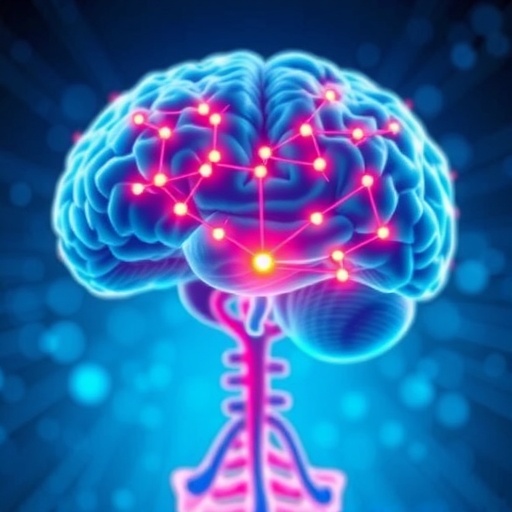
In the realm of adolescent mental health, one of the most formidable challenges remains the intricate heterogeneity underlying major depressive episodes (MDE) in youth. Traditional precision medicine has grappled with this complexity, often yielding inconsistent therapeutic outcomes. In a groundbreaking advancement poised to reshape treatment landscapes, researchers have unveiled a neurobiomarker-guided neuromodulation strategy tailored to the unique neurobiological subtypes of young individuals experiencing MDE. This innovative approach, harnessing the power of neuroimaging and tailored repetitive transcranial magnetic stimulation (rTMS), emerged from an ambitious study encompassing data from thousands and culminating in a rigorously designed double-blind randomized controlled trial.
Central to this paradigm-shifting research was the exploitation of a vast multicenter dataset comprising resting-state functional magnetic resonance imaging (rs-fMRI) scans from 2,328 youths. Through sophisticated analytic techniques, the study illuminated a functional imbalance along what is known as the sensorimotor–association axis, a critical brain organizational gradient that differentiates two distinct neurobiological subtypes: archetypal and atypical. The identification of these neurosubtypes represents a pivotal step toward understanding the divergent neurophysiological mechanisms driving depressive symptomatology in youth, highlighting that depressive episodes are not monolithic but rather embedded within discrete neural circuitry configurations.
Building upon this foundational discovery, the investigators embarked on the next phase: a double-blind randomized controlled trial conducted from August 2022 to January 2024, enrolling 219 young participants diagnosed with MDE. These individuals were first classified into the previously delineated neurosubtypes using validated biomarker criteria, ensuring stratification that recognized the underlying neurobiological diversity. Subjects were then randomly assigned to receive either subtype-specific active rTMS or sham stimulation, representing a meticulously controlled approach to discern the therapeutic efficacy attributable to the biomarker-guided intervention versus placebo effects.
The primary endpoint of the trial was the quantifiable improvement in depressive symptoms, assessed through the gold-standard 17-item Hamilton Depression Rating Scale (HDRS-17). The results compellingly demonstrated that active rTMS conferred a statistically significant advantage over sham, with an adjusted mean difference of -2.34 points on the HDRS-17 scale—a margin underscored by a robust 95% confidence interval and a highly significant p-value of 0.002. Notably, this therapeutic benefit was observed across both neurosubtypes, affirming the broad applicability of the biomarker-informed neuromodulation paradigm.
Despite the encouraging primary outcome, the magnitude of clinical efficacy unveiled was moderate, prompting a nuanced interpretation. Among the subdomains of depressive symptomatology explored, it was the anxiety and somatization factor that stood out, exhibiting meaningful increases in partial response and full response rates following active rTMS. These findings hint at the complexity of depression’s symptom architecture and suggest that certain clinical dimensions may be more amenable to modulation via targeted neuromodulatory approaches.
Delving deeper into neurobiological responses, researchers assessed secondary outcomes rooted in functional magnetic resonance imaging metrics. Intriguingly, the archetypal subtype, distinguished by its particular functional network configuration, displayed a marked increase in fluctuation amplitude within the visual cortex subsequent to active rTMS. This neurophysiological alteration met the prespecified secondary endpoint criteria, reinforcing the mechanistic underpinnings of the therapeutic intervention in this subgroup. Conversely, the atypical subtype exhibited no significant neurobiological changes post-treatment, suggesting a differential sensitivity or alternative pathophysiological substrates that may require tailored strategies.
Of paramount interest was the observed association between symptom amelioration and alterations in functional activity along the sensorimotor–association axis. This gradient, capturing a cerebral hierarchy from primary sensory/motor regions to association cortex domains, appears integral to the refinement of depression therapies. The study suggests that modulating this axis through rTMS could recalibrate dysfunctional neural dynamics underpinning depressive symptoms, offering a neuroscientifically grounded framework for future interventions.
This research not only delineates a proof of concept for biologically driven, precision neuromodulation in youth suffering from MDE but also underscores the exigency of integrating neuroimaging biomarkers into clinical trial designs. By anchoring treatment to neurobiological subtypes, this strategy promises to transcend traditional symptom-based classifications, which have historically limited therapeutic specificity and efficacy. It shifts the narrative from a one-size-fits-all approach toward a nuanced model that respects individual neurobiological heterogeneity.
Moreover, the insights garnered from this trial provide a scaffold for iterative enhancement of neuromodulation protocols. The differential response patterns between the archetypal and atypical subtypes highlight the need for deepening our understanding of neurophysiological endophenotypes within depressive disorders. Such knowledge could catalyze innovations in targeting parameters, stimulation sites, and adjunctive therapeutic combinations, ultimately optimizing outcomes in this vulnerable population.
The broader implications of this study resonate profoundly across psychiatry and neuroscience, heralding an era where neurobiomarker-guided interventions become a cornerstone of personalized medicine. This paradigm offers hope not only for youth grappling with MDE but potentially extends to myriad psychiatric conditions characterized by neural circuit dysfunction. The convergence of advanced neuroimaging, computational analytics, and neuromodulation technologies portends transformative therapeutic avenues.
Importantly, the trial’s design—double-blind and randomized—fortifies the credibility of the findings, minimizing bias and enhancing reproducibility. The multicenter approach enriches generalizability, ensuring that the results are not idiosyncratic to a single cohort or site. These methodological strengths provide a robust platform for subsequent larger-scale studies, regulatory considerations, and eventual clinical translation.
Looking ahead, the journey toward fully realizing the potential of neuromodulation in psychiatry necessitates concerted efforts in biomarker validation, neurobiological mechanistic elucidation, and longitudinal assessment of clinical durability. Furthermore, ethical frameworks and accessibility considerations must evolve in tandem to ensure equitable dissemination of these novel interventions among diverse youth populations worldwide.
In conclusion, this pioneering study presents compelling evidence that a neurobiomarker-guided rTMS approach offers a viable, scientifically grounded, and mechanistically informed avenue to address the heterogeneity inherent in youth major depressive episodes. By bridging the gap between neural circuit abnormalities and targeted neuromodulatory therapies, it shines a beacon of precision psychiatry that could profoundly alter the treatment trajectory for millions of young people battling depression.
Cite Scienmag News
Glenn Wilkins. (June 24, 2026). Neurobiomarker-Guided Neuromodulation Treats Youth Depression. Scienmag. https://scienmag.com/neurobiomarker-guided-neuromodulation-treats-youth-depression/
Glenn Wilkins. "Neurobiomarker-Guided Neuromodulation Treats Youth Depression." Scienmag, 24 June 2026, https://scienmag.com/neurobiomarker-guided-neuromodulation-treats-youth-depression/. Accessed 4 September 2026.
Glenn Wilkins. "Neurobiomarker-Guided Neuromodulation Treats Youth Depression." Scienmag. June 24, 2026. https://scienmag.com/neurobiomarker-guided-neuromodulation-treats-youth-depression/


