


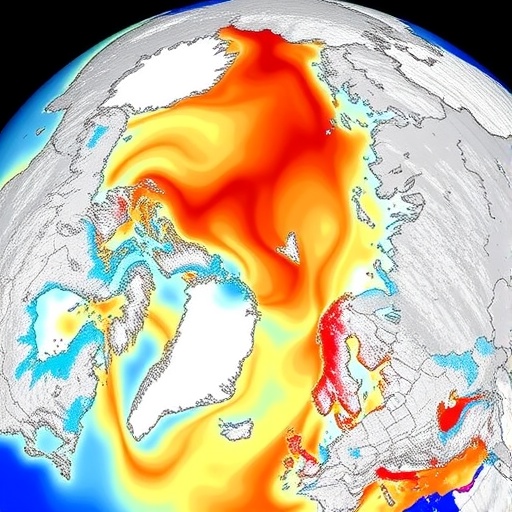
The Arctic Ocean may remain chemically altered long after humanity succeeds in removing large amounts of carbon dioxide from the atmosphere, according to a new study published in Nature Climate Change. The research, led by E. E. Köhn, L. Kwiatkowski and J. Mignot, warns that negative emissions could cool the climate and lower atmospheric CO₂ while failing to quickly restore the Arctic’s original carbonate chemistry. The finding challenges a widely held assumption that reversing global warming will automatically reverse every major consequence of carbon pollution on the same timescale.
Ocean acidification occurs when seawater absorbs carbon dioxide from the atmosphere. The gas reacts with water to form carbonic acid, which releases hydrogen ions and lowers pH. It also reduces the concentration of carbonate ions, a crucial building block used by organisms such as pteropods, clams, corals and some plankton to construct shells and skeletons. In cold regions, these chemical reactions are especially significant because cold water can absorb more CO₂ than warm water. The Arctic therefore acts as one of the planet’s most sensitive laboratories for observing the consequences of rising carbon dioxide.
Negative emissions describe technologies and land-management practices that remove CO₂ from the atmosphere. These include reforestation, restoring ecosystems, direct air capture, bioenergy with carbon capture and storage, and enhanced weathering. In principle, removing carbon should reduce the amount of CO₂ entering the ocean and eventually allow seawater pH to recover. But the new study indicates that the Arctic response is not a simple mirror image of the original acidification process. Once the ocean has absorbed carbon and its circulation has been reshaped, chemical recovery can lag substantially behind atmospheric improvement.
The central reason is the ocean’s carbonate system, which distributes carbon among dissolved CO₂, bicarbonate and carbonate ions. Removing CO₂ from the atmosphere primarily changes the balance of these forms; it does not instantly restore the alkalinity that controls how seawater neutralizes acid. Alkalinity is a measure of the water’s capacity to absorb acids, and it changes much more slowly than atmospheric carbon dioxide. As a result, surface waters can experience declining atmospheric CO₂ while remaining depleted in carbonate ions. For shell-forming organisms, that distinction may matter more than the headline pH value alone.
The Arctic’s physical environment can lengthen the delay. Sea ice limits direct contact between seawater and the atmosphere for part of the year, while seasonal melting adds large volumes of relatively fresh water to the upper ocean. Freshwater has lower buffering capacity than seawater, meaning that a given amount of dissolved carbon can produce a stronger chemical response. At the same time, stratification—the formation of layers with different densities—can isolate surface waters from deeper reservoirs. These processes can trap an acidified chemical signature near the surface even as global carbon dioxide levels begin to fall.
Ocean circulation adds another layer of complexity. Water entering the Arctic from the North Atlantic and the Pacific carries distinct temperatures, salinities and carbon concentrations. As currents shift under climate change, they can transport carbon-rich water into polar regions or alter the rate at which carbon is exchanged between the surface and the deep ocean. The study’s results show why a global average recovery cannot be used as a reliable guide to regional conditions. The Arctic may remain out of chemical balance with the rest of the ocean, creating prolonged exposure for ecosystems already stressed by warming, sea-ice loss and habitat disruption.
The consequences could reach beyond individual species. Low carbonate-ion concentrations reduce the saturation state of minerals such as aragonite and calcite, making it more difficult for marine organisms to build and maintain calcium-carbonate structures. When aragonite saturation falls below a critical threshold, shells can become more vulnerable to dissolution, especially during early life stages. Pteropods, for example, are tiny swimming snails that form an important link in polar food webs. Changes affecting them could propagate upward to fish, seabirds and marine mammals. Acidification can also influence metabolism, reproduction and behavior, although the severity varies among species.
The study does not suggest that negative emissions are ineffective or unnecessary. Removing atmospheric CO₂ remains essential for limiting long-term warming, reducing the frequency of extreme climate conditions and eventually easing pressure on the ocean. Instead, the research highlights a crucial difference between climate recovery and ecosystem recovery. A cooler atmosphere does not guarantee an immediately healthier ocean. Even after temperatures stabilize or decline, the chemical consequences of earlier emissions may persist because the ocean stores carbon, circulates slowly and responds through several interacting reservoirs.
That lag has direct implications for climate policy. Carbon-removal strategies are often evaluated by how many tonnes of CO₂ they remove and how much warming they prevent. The new findings suggest that assessments should also track regional ocean chemistry, carbonate-ion availability and aragonite saturation over decades to centuries. Protecting Arctic ecosystems may require sustained emissions reductions, carefully managed carbon removal and expanded chemical monitoring. The region’s future will depend not only on the speed of atmospheric cleanup, but also on whether ocean circulation and alkalinity can eventually rebuild the conditions that marine life evolved to withstand.
The Arctic Ocean is therefore emerging as a warning about the uneven pace of planetary repair. Human societies may be able to lower atmospheric carbon dioxide within a defined policy horizon, but the ocean will continue processing the legacy of past emissions on its own physical and chemical timetable. The study’s message is both urgent and scientifically precise: negative emissions can help reverse climate change, yet they cannot be treated as an instant reset button for acidification. In the Arctic, recovery may arrive slowly, unevenly and only after the most visible signs of atmospheric improvement have already appeared.
Cite Scienmag News
Serena Rutledge. (August 6, 2026). Arctic Ocean Acidification Persists Despite Negative Emissions. Scienmag. https://scienmag.com/arctic-ocean-acidification-persists-despite-negative-emissions/
Serena Rutledge. "Arctic Ocean Acidification Persists Despite Negative Emissions." Scienmag, 6 August 2026, https://scienmag.com/arctic-ocean-acidification-persists-despite-negative-emissions/. Accessed 3 September 2026.
Serena Rutledge. "Arctic Ocean Acidification Persists Despite Negative Emissions." Scienmag. August 6, 2026. https://scienmag.com/arctic-ocean-acidification-persists-despite-negative-emissions/


