


Redistricting is often described as a contest between political parties, but its consequences are experienced one voter at a time. A new framework proposed by political scientists Christopher McCartan and Christopher T. Kenny seeks to change how those consequences are measured. Instead of asking only whether a party gained or lost seats, the researchers focus on whether individual voters were denied an electoral outcome that another districting plan could have produced. Their concept, called “harm,” is designed to offer a more flexible way to evaluate the effects of electoral maps.
The framework arrives as redistricting continues to shape political power across the United States. District boundaries determine which voters are grouped together, which candidates can realistically win, and how communities are represented. Existing measures of partisan bias can estimate whether a plan systematically favors one party over another, but they are often difficult to apply outside traditional two-party elections. They may also be poorly suited to local contests, nonpartisan elections, or situations in which the relevant group is defined by race, class, language, region or another social characteristic.
McCartan and Kenny define a voter as harmed when the candidate they chose does not win under the current districting plan, but would win under a different possible plan. This definition introduces a counterfactual question at the center of redistricting analysis: What would have happened if the boundaries had been drawn differently? Rather than treating districts as abstract geometric units or focusing exclusively on aggregate vote shares, the approach tracks the relationship between individual voting choices and the outcomes generated by alternative maps.
That shift is technically important because a single election result can conceal very different experiences among voters. Two districting plans might produce the same number of seats for a party while affecting entirely different groups of people. One plan could prevent a particular community from electing its preferred candidate, while another could alter the boundaries in a way that gives that community a realistic opportunity to do so. By linking voters’ choices to hypothetical district plans, the harm framework attempts to capture these distinctions directly.
The researchers also distinguish between individual harm and differential harm. Individual harm concerns whether a specific voter’s chosen candidate would have been elected under another plan. Differential harm examines whether that risk is distributed unevenly across groups. The groups could be partisan, racial, socioeconomic or geographic, depending on the question being studied. This makes the framework potentially useful for investigating whether a redistricting plan disproportionately deprives one population of electoral opportunities, even when the plan does not produce an obvious partisan imbalance.
Estimating harm requires more than examining one adopted map. The researchers discuss using redistricting simulations, which generate large numbers of legally and geographically plausible alternative plans. Analysts can compare the election outcomes under the enacted map with outcomes under these simulated maps, while holding voting data and candidate choices constant. If a voter’s preferred candidate wins across many alternative plans but not under the current one, the current map may be associated with a substantial amount of harm for that voter. If the same pattern appears disproportionately within a particular group, researchers can estimate differential harm.
Simulation-based analysis also makes it possible to quantify uncertainty. No alternative districting plan is automatically fair simply because it differs from the enacted map, and not every mathematically possible map is politically or legally realistic. A credible analysis therefore depends on the rules used to generate simulations, including requirements related to population equality, geographic contiguity, compactness, existing political boundaries and other constraints. The framework does not eliminate these choices; instead, it provides a way to connect them to measurable consequences for voters.
The concept could be especially valuable in settings where conventional partisan metrics have limited meaning. A local school-board election may have no formal party labels. A municipal contest may involve several candidates rather than two opposing parties. A community may want to know whether a new map weakens the electoral influence of a racial, linguistic or rural population, even when that population is not aligned with a single party. Because harm is defined around voters, candidates and alternative plans, it can be adapted to these contexts without assuming that party competition is the primary source of inequality.
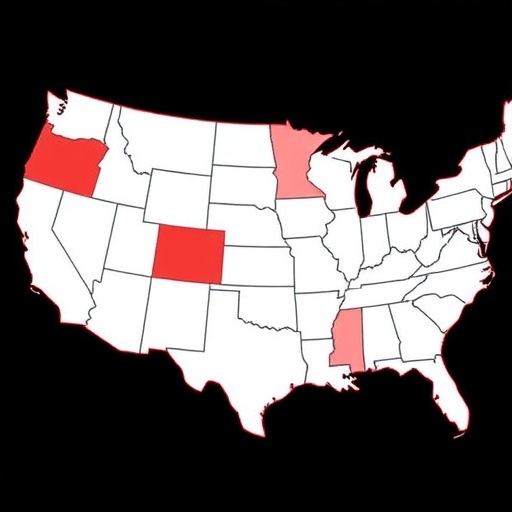
McCartan and Kenny demonstrate the utility of the framework through three applications to US redistricting. The supplied study description does not detail the specific jurisdictions or numerical results, but it indicates that the applications show how harm can be used to examine individual impacts and group-level differences in practice. The broader implication is that redistricting debates could move beyond broad claims that a map is “fair” or “biased” and toward more precise questions: Which voters lost an opportunity, how often could another map have changed the result, and which communities experience those effects most frequently?
The proposed framework does not turn redistricting into a simple calculation, since conclusions still depend on election data, simulation methods and assumptions about plausible maps. Its contribution is to provide a common language for evaluating electoral boundaries across political and social settings. By placing counterfactual outcomes and individual voters at the center of analysis, “harm” offers a potentially powerful tool for measuring how district lines shape representation—and for making the hidden consequences of redistricting visible.
Cite Scienmag News
Glenn Wilkins. (August 6, 2026). Redistricting Causes Unequal Harm to Individuals and Communities. Scienmag. https://scienmag.com/redistricting-causes-unequal-harm-to-individuals-and-communities/
Glenn Wilkins. "Redistricting Causes Unequal Harm to Individuals and Communities." Scienmag, 6 August 2026, https://scienmag.com/redistricting-causes-unequal-harm-to-individuals-and-communities/. Accessed 5 September 2026.
Glenn Wilkins. "Redistricting Causes Unequal Harm to Individuals and Communities." Scienmag. August 6, 2026. https://scienmag.com/redistricting-causes-unequal-harm-to-individuals-and-communities/


