


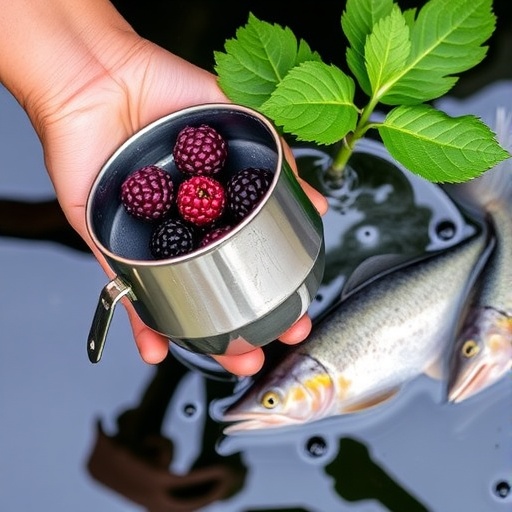
A groundbreaking study has unveiled a novel approach to enhancing aquaculture sustainability by incorporating biochar derived from mulberry branches into the diet of largemouth bass (Micropterus salmoides). This innovative strategy not only promotes intestinal health but also significantly improves water quality in intensive fish farming systems.
The research team produced biochar through the pyrolysis of discarded mulberry branches at 550 °C under oxygen-limited conditions, transforming agricultural waste into a functional feed additive. Mulberry trees commonly grow near aquaculture ponds in southern China, rendering their branches an abundant and cost-effective resource.
In a controlled 42-day trial, juvenile largemouth bass were fed diets supplemented with 0, 10, 20, or 40 grams of biochar per kilogram of feed. While growth metrics such as body weight and survival rates remained unaffected, fish receiving 20 and 40 grams per kilogram demonstrated enhanced intestinal digestive enzyme activities, specifically trypsin and amylase, indicating improved protein and carbohydrate digestion.
On a molecular level, lower to moderate biochar inclusion boosted the expression of genes crucial for maintaining intestinal integrity and antioxidant defense. Notably, the antioxidant enzyme gene sod and tight junction protein gene Occludin were upregulated, with the 10-gram biochar dose also elevating the anti-inflammatory cytokine IL-10. These changes suggest strengthened gut barrier function and reduced inflammatory responses.
Microbial community analyses revealed a significant rise in intestinal bacterial diversity following biochar supplementation. The microbiome composition shifted toward an increased abundance of Actinobacteriota, a phylum associated with nutrient metabolism and immune modulation. Concurrently, potentially pathogenic genera such as Plesiomonas and Mycoplasma decreased, highlighting biochar’s role in fostering a healthier gut environment.
Beyond fish physiology, water quality benefits were profound. Ammonia nitrogen concentrations decreased by over 60% in the 10-gram biochar group and nearly 50% in the 20-gram group compared to controls. Similarly, nitrite nitrogen levels plummeted substantially, with a striking 91.78% reduction observed at the 10-gram treatment. These outcomes mitigate the toxic accumulation of nitrogenous waste, a pervasive issue in intensive aquaculture.
However, the highest biochar concentration (40 grams/kg) elicited adverse effects, including diminished fish condition factors, elevated pro-inflammatory TNF-α gene expression, and increased microbiome variability. These findings indicate that excessive biochar may disrupt nutrient absorption or gut microbial balance, underscoring the need for precise dosing.
The study’s findings illuminate a dual-function approach: utilizing mulberry branch biochar to simultaneously enhance fish intestinal health and maintain cleaner aquaculture waters. This sustainable practice exemplifies a circular economy model by valorizing agricultural residues and reducing environmental impacts of fish farming.
Published in Biochar X, this pioneering research signals a promising avenue for advancing aquaculture sustainability by integrating waste-derived biochar as a functional feed component, with implications for global food security and ecosystem health.
Cite Scienmag News
Alan Morgan. (July 10, 2026). Mulberry Biochar Boosts Fish Gut Health and Aquaculture Water Quality. Scienmag. https://scienmag.com/mulberry-biochar-boosts-fish-gut-health-and-aquaculture-water-quality/
Alan Morgan. "Mulberry Biochar Boosts Fish Gut Health and Aquaculture Water Quality." Scienmag, 10 July 2026, https://scienmag.com/mulberry-biochar-boosts-fish-gut-health-and-aquaculture-water-quality/. Accessed 3 September 2026.
Alan Morgan. "Mulberry Biochar Boosts Fish Gut Health and Aquaculture Water Quality." Scienmag. July 10, 2026. https://scienmag.com/mulberry-biochar-boosts-fish-gut-health-and-aquaculture-water-quality/


