

Friday, July 31, 2026
Science
No Result
View All Result
  • Login
  • HOME
  • SCIENCE NEWS
  • CONTACT US
  • HOME
  • SCIENCE NEWS
  • CONTACT US
No Result
View All Result
Scienmag
No Result
View All Result
Home Science News Medicine

Journal of Nuclear Medicine Early Release Highlights July 10, 2026

July 10, 2026
in Medicine
Reading Time: 2 mins read
0
Journal of Nuclear Medicine Early Release Highlights July 10, 2026

Journal of Nuclear Medicine Early Release Highlights July 10, 2026

65
SHARES
587
VIEWS
Share on FacebookShare on Twitter
ADVERTISEMENT

Cutting-Edge Advances in Prostate Cancer Detection and Treatment Emerge from PSMA-Targeted Nuclear Medicine Research

Prostate cancer remains one of the most prevalent cancers among men worldwide, driving an urgent need for improved diagnostic and therapeutic strategies. A series of groundbreaking studies published ahead of print in The Journal of Nuclear Medicine highlight significant progress in leveraging molecular imaging and theranostics to revolutionize prostate cancer management.

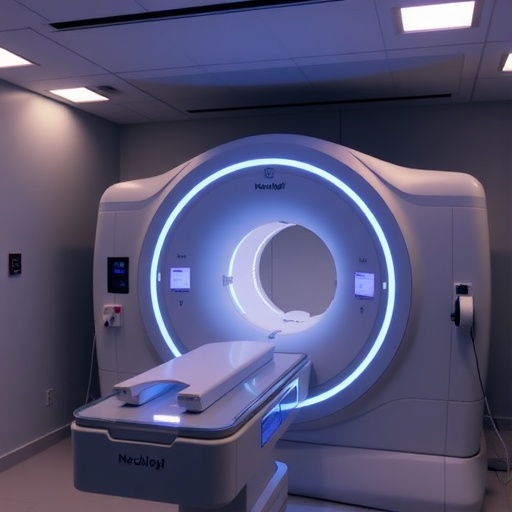
One compelling advancement involves the integration of multiparametric magnetic resonance imaging (MRI) with ^18F-flotufolastat positron emission tomography (PET). This combined imaging technique significantly enhances the detection of clinically significant prostate cancer, surpassing the accuracy of MRI or PET when used independently. By effectively stratifying patients into high and low risk for aggressive disease before biopsy, this approach promises to refine patient selection and mitigate unnecessary invasive procedures.

Further refining diagnostic precision, PSMA PET/CT-guided targeted biopsies have demonstrated superior performance compared to standard systematic biopsies in men with inconclusive MRI findings. The utilization of PET metrics such as maximum standardized uptake value (SUVmax) alongside dynamic imaging data enables better discrimination of aggressive cancers. This advances the paradigm of personalized medicine by allowing clinicians to more accurately identify and target suspicious lesions that may otherwise be overlooked.

Beyond diagnostics, the fight against metastatic castration-resistant prostate cancer, a particularly devastating stage, benefits from novel radioligand therapies targeting the prostate-specific membrane antigen (PSMA). A real-world clinical study involving 140 patients compared two ^177Lu-labeled PSMA radiotherapies—^177Lu-PSMA-617 and ^177Lu-PSMA I&T—within routine care settings. Despite similar overall survival outcomes, distinct biochemical response patterns and hematological side effect profiles were observed between the treatments. These insights provide crucial guidance on therapeutic personalization and managing toxicity.

Collectively, these studies underscore the transformative potential of molecular imaging coupled with theranostics in delivering precision oncology for prostate cancer patients. By facilitating early and accurate detection, tailored biopsies, and optimized radionuclide therapies, nuclear medicine approaches promise to improve prognosis and quality of life.

The Society of Nuclear Medicine and Molecular Imaging continues to be at the forefront of these innovations, championing research that harnesses the unique capabilities of nuclear medicine. These advances exemplify the power of combining functional and anatomical imaging to meet the growing global demand for individualized cancer care.

Nuclear medicine’s fusion of cutting-edge imaging technology with targeted therapeutics stands poised to redefine standard clinical practice. As these promising techniques move closer to routine implementation, the prospects for reducing prostate cancer morbidity and mortality grow ever brighter.

Subject of Research: Molecular imaging and theranostics in prostate cancer
Article Title: PET/MRI Combination and PSMA-Targeted Evaluations Enhance Prostate Cancer Diagnosis and Radioligand Therapy Outcomes
News Publication Date: July 10, 2026
Web References:
– https://doi.org/10.2967/jnumed.125.271916
– https://doi.org/10.2967/jnumed.126.272108
– https://doi.org/10.2967/jnumed.126.272415
Keywords: Molecular imaging, Positron emission tomography, Prostate cancer, PSMA, Personalized medicine, Radioligand therapy, Theranostics

Tags: ^18F-flotufolastat PETadvanced prostate cancer managementemerging nuclear medicine techniques for prostate cancerimproving biopsy accuracy with PET imagingmolecular imaging in prostate cancermultiparametric MRI and PET fusionnon-invasive prostate cancer stagingpersonalized prostate cancer diagnosisprostate cancer detectionPSMA PET/CT-guided biopsiesPSMA-targeted imagingtheranostics in prostate cancer
Share26Tweet16
Previous Post

Mulberry Biochar Boosts Fish Gut Health and Aquaculture Water Quality

Next Post

UCSF Study Finds Rapid Rise in Breast Cancer Among Asian American Women

Related Posts

Representations of the intrinsic value of information in mouse orbitofrontal cortex
Medicine

Representations of the intrinsic value of information in mouse orbitofrontal cortex

July 30, 2026
Ferroptotic propagation: from single-cell execution to tissue-scale death programs
Medicine

Ferroptotic propagation: from single-cell execution to tissue-scale death programs

July 30, 2026
Residential proximity to major roadways and prevalent diabetes in older adults: a cross-sectional study based on CLHLS
Medicine

Residential proximity to major roadways and prevalent diabetes in older adults: a cross-sectional study based on CLHLS

July 30, 2026
Overestimations in the cyclization efficiency of small, restriction enzyme-digested DNA fragments
Medicine

Overestimations in the cyclization efficiency of small, restriction enzyme-digested DNA fragments

July 30, 2026
Sulfated polysaccharides target RANK Lys97 to inhibit osteoclast differentiation and reverse osteoporosis
Medicine

Sulfated polysaccharides target RANK Lys97 to inhibit osteoclast differentiation and reverse osteoporosis

July 30, 2026
Regulation of RNA transcript elongation in metazoans and its relevance to disease
Medicine

Regulation of RNA transcript elongation in metazoans and its relevance to disease

July 30, 2026
Next Post
UCSF Study Finds Rapid Rise in Breast Cancer Among Asian American Women

UCSF Study Finds Rapid Rise in Breast Cancer Among Asian American Women

  • Mothers who receive childcare support from maternal grandparents show more

    Mothers who receive childcare support from maternal grandparents show more parental warmth, finds NTU Singapore study

    27656 shares
    Share 11059 Tweet 6912
  • University of Seville Breaks 120-Year-Old Mystery, Revises a Key Einstein Concept

    1061 shares
    Share 424 Tweet 265
  • Bee body mass, pathogens and local climate influence heat tolerance

    682 shares
    Share 273 Tweet 171
  • Researchers record first-ever images and data of a shark experiencing a boat strike

    546 shares
    Share 218 Tweet 137
  • Groundbreaking Clinical Trial Reveals Lubiprostone Enhances Kidney Function

    531 shares
    Share 212 Tweet 133
Science

Embark on a thrilling journey of discovery with Scienmag.com—your ultimate source for cutting-edge breakthroughs. Immerse yourself in a world where curiosity knows no limits and tomorrow’s possibilities become today’s reality!

RECENT NEWS

  • Ancient DNA reveals Ice Age humans preferred female mammoths
  • Public research and development money unlocks private investment and lasting economic growth
  • Satellite mapping reveals global inequities in lake water quality: over one-third of lakes fail to meet good water quality standards
  • One million euros allocated to six EUniWell study programmes on the way towards the Joint European Degree Label

Categories

  • Agriculture
  • Anthropology
  • Archaeology
  • Athmospheric
  • Biology
  • Biotechnology
  • Blog
  • Bussines
  • Cancer
  • Chemistry
  • Climate
  • Earth Science
  • Editorial Policy
  • Marine
  • Mathematics
  • Medicine
  • Pediatry
  • Policy
  • Psychology & Psychiatry
  • Science Education
  • Social Science
  • Space
  • Technology and Engineering

Subscribe to Blog via Email

Success! An email was just sent to confirm your subscription. Please find the email now and click 'Confirm Follow' to start subscribing.

Join 5,147 other subscribers

© 2025 Scienmag - Science Magazine

Welcome Back!

Login to your account below

Forgotten Password?

Retrieve your password

Please enter your username or email address to reset your password.

Log In
No Result
View All Result
  • HOME
  • SCIENCE NEWS
  • CONTACT US

© 2025 Scienmag - Science Magazine
