


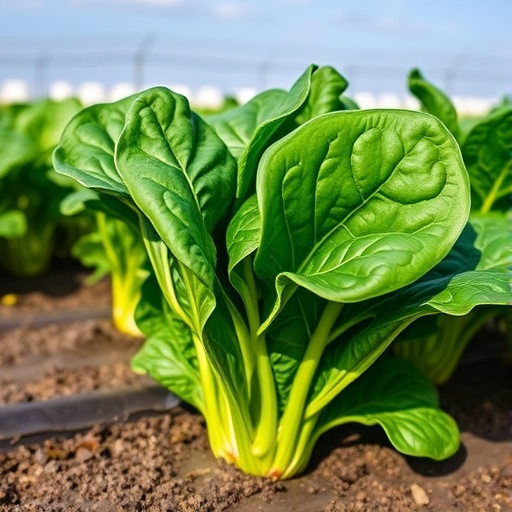
A citrus greening treatment developed from antimicrobial peptides found in spinach has received unconditional registration from the U.S. Environmental Protection Agency, clearing the way for commercial use in the United States. The product, registered by Maryland-based Silvec Biologics Inc., is designed to help citrus trees withstand Huanglongbing, or HLB, a destructive disease that has severely reduced citrus production in Florida and threatened orchards in other regions. The treatment is the result of more than 15 years of research involving Texas A&M AgriLife Research, the University of Florida, Southern Gardens Citrus and other public and private partners. Growers in Florida are expected to begin gaining access to the product in late 2026 through field-development programs.
The scientific foundation for the treatment was established at the Texas A&M AgriLife Research and Extension Center at Weslaco, where Kranthi K. Mandadi, Ph.D., and collaborators investigated naturally occurring plant defense molecules known as defensins. These small antimicrobial peptides are produced by plants as part of their innate immune systems and can interfere with pathogens by damaging microbial membranes or disrupting essential cellular processes. Mandadi’s team discovered that defensins derived from spinach could protect citrus tissues from the biological processes associated with HLB. The work followed an earlier collaboration with Erik Mirkov, Ph.D., a plant pathologist at the Weslaco center, and expanded through partnerships with Bill Dawson, Ph.D., emeritus professor at the University of Florida, and Choaa El-Mohtar, Ph.D., a research scientist at the University of Florida’s Citrus Research and Education Center.
HLB, commonly called citrus greening, is associated with bacteria that move through the vascular system of infected trees, interfering with the transport of water, minerals and sugars. Diseased trees often develop blotchy leaves, produce small or misshapen fruit and gradually decline in productivity. Once established, the disease is exceptionally difficult to control because its bacterial agent is spread by the Asian citrus psyllid and can remain throughout the tree. Conventional approaches, including insect management, nutritional support and removal of infected trees, have provided only partial protection. The spinach defensin strategy takes a different approach by equipping citrus trees with a continuing source of an antimicrobial peptide rather than relying solely on external sprays or repeated chemical treatments.
The commercial therapy uses a modified, naturally non-transmissible strain of citrus tristeza virus, or CTV, as a delivery system. CTV is already widespread in Florida citrus, and the strain used in the treatment has been engineered to carry genetic instructions for producing the spinach defensin peptide. The viral vector is not intended to alter the citrus tree’s genome. Instead, a small piece of plant material from a specially developed source tree is grafted onto an established citrus tree. Once the graft takes, the benign CTV moves through the plant’s tissues and directs citrus cells to produce the defensin. In this way, the virus functions as a biological delivery platform, providing sustained peptide production inside the tree.
The approach has been compared to an immunization because it prepares the tree to express a protective molecule before or during exposure to disease pressure. Unlike a conventional vaccine in animals, however, the treatment does not train an adaptive immune system. Its effect depends on the continuous production of the spinach-derived defensin and the peptide’s ability to inhibit bacteria associated with HLB. The CTV vector is also designed to remain non-transmissible, an important characteristic for limiting environmental spread. Because the therapy is delivered through grafting and does not introduce a permanent genome edit into the citrus plant, researchers describe it as a targeted biological treatment rather than a genetically modified citrus variety.
The EPA registration represents a major regulatory milestone because it permits the product to be sold commercially without a tolerance limit. Under the Federal Insecticide, Fungicide and Rodenticide Act, registration requires evaluation of a product’s intended use and available safety information. In this case, the designation reflects years of toxicological, environmental and field data assembled by the research and development partnership. A lack of a tolerance limit does not mean that regulatory review was unnecessary; rather, it indicates that the registered use does not require a defined residue tolerance for the defensin-based treatment. The product’s approval now moves the technology beyond experimental trials and into the stage of structured deployment with commercial citrus producers.
The path from discovery to registration involved coordinated research across universities, government agencies and the citrus industry. Early studies were supported by Texas A&M AgriLife Research, the Foundation for Food and Agricultural Research and Southern Gardens Citrus, a subsidiary of U.S. Sugar. Additional support came through the U.S. Department of Agriculture’s National Institute of Food and Agriculture, including its Emergency Citrus Disease Research and Extension Program, as well as AgriLife Research’s Insect Vectored Diseases program and Texas A&M University funding intended to advance discoveries toward the market. The combined effort generated patents covering the spinach defensin technology and the CTV delivery system. The Texas A&M University System holds rights to the defensin technology, while the University of Florida holds rights to the CTV platform.
Southern Gardens Citrus helped move the technology through sponsored research, field development and commercialization activities. Patent rights to both components were licensed to the company and later sublicensed to Silvec Biologics, which pursued regulatory registration and plans to commercialize the treatment. The collaboration illustrates how a crop-protection technology can require several distinct stages before reaching growers: identifying a candidate molecule, confirming its biological activity, developing a delivery mechanism, testing performance under field conditions, addressing environmental and food-safety questions, securing intellectual property rights and completing federal review. The final product is therefore the result not of a single experiment, but of an integrated research pipeline extending across multiple institutions and more than a decade.
Researchers and citrus industry representatives describe the registration as a potential turning point, while emphasizing that growers will still need to manage HLB through integrated strategies. Dale Murden, president of Texas Citrus Mutual, said the treatment could provide a sustainable way to keep trees productive under disease pressure. Silvec chief executive Rafael Simon said the company expects to begin working with growers in late 2026 through the Florida CRAFT, or Citrus Research and Field Trial, program. The initial deployment will provide additional information about performance across orchards, varieties and disease conditions. Commercial access also will allow researchers to assess how consistently grafted trees produce the defensin and how long the protection persists under real-world conditions.
The research team is already exploring whether spinach defensins can be adapted to other crop diseases, including zebra chip disease in potatoes and additional agricultural biothreats. Future work may focus on combining different peptides, refining viral delivery systems and extending the platform to crops affected by bacterial or insect-vectored pathogens. For citrus growers facing a disease that has reshaped production economics across the United States, the registration offers a new biological tool based on a plant defense molecule and a carefully engineered viral carrier. It does not eliminate HLB, but it marks the transition of a laboratory discovery into a regulated field technology—and demonstrates how viral vectors can be repurposed to deliver protective proteins directly inside crop plants.
News Publication Date: August 19, 2026
Web References: Texas A&M AgriLife Research; Texas A&M AgriLife Research and Extension Center at Weslaco; U.S. Environmental Protection Agency; Silvec Biologics Inc.; University of Florida Citrus Research and Education Center; Federal Insecticide, Fungicide and Rodenticide Act.
References: Mandadi et al., “Naturally occurring antimicrobial peptides from spinach,” Plant Biotechnology Journal, DOI: https://onlinelibrary.wiley.com/doi/10.1111/pbi.70013
Cite Scienmag News
Alan Morgan. (August 20, 2026). Spinach-Derived Peptide Discovery Points Toward Treatment for Citrus Greening Disease. Scienmag. https://scienmag.com/spinach-derived-peptide-discovery-points-toward-treatment-for-citrus-greening-disease/
Alan Morgan. "Spinach-Derived Peptide Discovery Points Toward Treatment for Citrus Greening Disease." Scienmag, 20 August 2026, https://scienmag.com/spinach-derived-peptide-discovery-points-toward-treatment-for-citrus-greening-disease/. Accessed 4 September 2026.
Alan Morgan. "Spinach-Derived Peptide Discovery Points Toward Treatment for Citrus Greening Disease." Scienmag. August 20, 2026. https://scienmag.com/spinach-derived-peptide-discovery-points-toward-treatment-for-citrus-greening-disease/


