

Tuesday, October 20, 2026
Science
No Result
View All Result
  • Login
  • HOME
  • SCIENCE NEWS
  • CONTACT US
  • HOME
  • SCIENCE NEWS
  • CONTACT US
No Result
View All Result
Scienmag
No Result
View All Result
Home Science News Biology

Molecular mechanisms of programmed cell death in aortic dissection and advances in clinical translation

October 20, 2026
in Biology
Drew Townsend
By Drew Townsend Scienmag Editorial Profile - Cell Biology
Reading Time: 2 mins read
0
How Programmed Cell Death Drives Aortic Dissection—and What It Means for New Treatments

How Programmed Cell Death Drives Aortic Dissection—and What It Means for New Treatments

65
SHARES
587
VIEWS
Share on FacebookShare on Twitter
ADVERTISEMENT

A 2026 review reports that multiple forms of programmed cell death are associated with the progression of aortic dissection, linking cellular regulation to structural injury in the aortic wall. The review’s abstract describes these death programs as part of a mutually reinforcing network involving oxidative stress, mitochondrial dysfunction, immune-cell infiltration and matrix metalloproteinase activation. It concludes that clinical evidence for precision therapies directed at particular cell-death pathways remains limited.

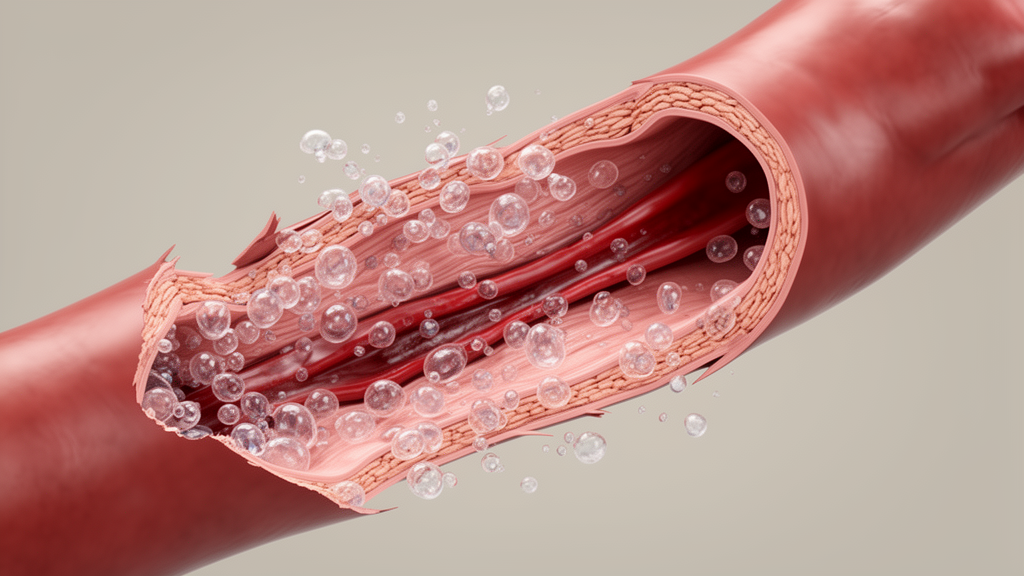
Aortic dissection is an acute cardiovascular emergency in which an intimal tear allows blood to enter the medial layer and form a false lumen. The abstract associates this process with destabilization of the aortic wall, impaired organ perfusion and an increased risk of rupture. It further characterizes the disease as a complex pathological process rather than solely a consequence of hemodynamic injury, with vascular smooth muscle cell loss, phenotypic remodeling, extracellular matrix degradation, inflammatory amplification and redox imbalance identified as important features.

The available abstract states that the publication is a review summarizing the mechanistic roles of programmed cell death in aortic dissection and integrating those insights with emerging strategies for early diagnosis and precision treatment. The authors attribute the broader understanding of disease initiation and progression to continued advances in multi-omics sequencing technologies. The supplied evidence is limited to the abstract, so it does not provide enough detail to assess the full review’s included studies, specific molecular pathways, proposed biomarkers or the development status of individual therapeutic strategies.

According to the abstract, current clinical management of aortic dissection centers on rapid imaging-based diagnosis and timely standardized intervention. It lists intensive control of blood pressure and heart rate, open surgical repair and endovascular repair as central components of care. Although mechanistic evidence has advanced, the review identifies a gap between this research and clinical translation. The abstract supports the conclusion that targeted approaches addressing defined cell-death pathways remain an emerging research area, but it does not report completed clinical trials or establish that such interventions improve outcomes in patients.

Subject of Research: A review of programmed cell death mechanisms and clinical translation in aortic dissection

Article Title: Molecular mechanisms of programmed cell death in aortic dissection and advances in clinical translation

Article References: Pan, Q., Gao, Y., Xu, C., & Xu, Z. (2026). Molecular mechanisms of programmed cell death in aortic dissection and advances in clinical translation. Molecular Biology Reports, 53(1), Article 1560. https://doi.org/10.1007/s11033-026-12538-8

Image Credits: AI Generated

DOI: 10.1007/s11033-026-12538-8

Keywords: aortic dissection, programmed cell death, vascular smooth muscle cells, extracellular matrix, oxidative stress, mitochondrial dysfunction, matrix metalloproteinases, precision medicine, clinical translation, Molecular, mechanisms, programmed

Cite Scienmag News

Drew Townsend. (October 20, 2026). Molecular mechanisms of programmed cell death in aortic dissection and advances in clinical translation. Scienmag. https://scienmag.com/molecular-mechanisms-of-programmed-cell-death-in-aortic-dissection-and-advances-in-clinical-translation/


Drew Townsend. "Molecular mechanisms of programmed cell death in aortic dissection and advances in clinical translation." Scienmag, 20 October 2026, https://scienmag.com/molecular-mechanisms-of-programmed-cell-death-in-aortic-dissection-and-advances-in-clinical-translation/. Accessed 20 October 2026.

Drew Townsend. "Molecular mechanisms of programmed cell death in aortic dissection and advances in clinical translation." Scienmag. October 20, 2026. https://scienmag.com/molecular-mechanisms-of-programmed-cell-death-in-aortic-dissection-and-advances-in-clinical-translation/

Tags: advances in clinical translation for aortic dissectionaortic dissectioncellular remodeling in aortic dissectionclinical translationearly diagnosis of aortic dissection using multi-omicsextracellular matriximmune-cell infiltration in aortic diseasematrix metalloproteinase activation and extracellular matrix degradationmatrix metalloproteinasesmechanismsmitochondrial dysfunctionmitochondrial dysfunction and vascular injurymolecularmolecular mechanisms of aortic wall degenerationOxidative stressoxidative stress in aortic dissectionPrecision medicineprecision therapies targeting cell death pathwaysprogrammedprogrammed cell deathprogrammed cell death in aortic dissectionredvascular smooth muscle cell loss and phenotypic remodelingvascular smooth muscle cells
Share26Tweet16
Previous Post

Qualitative evaluation identifies support and implementation challenges for integrated care for asylum-seeking youth

Next Post

Cross-sectional study identifies seven predictors of stated willingness to accept TB preventive treatment among Xinjiang close contacts

Related Posts

Methylation signatures in cell-free DNA promise earlier ovarian cancer detection
Biology

Review finds DNA methylation promising, but not ready for ovarian cancer screening

October 20, 2026
Research report: An updated checklist of the Cantharidae and Lycidae of Switzerland ( Coleoptera , Elateroidea )
Biology

Research report: An updated checklist of the Cantharidae and Lycidae of Switzerland ( Coleoptera , Elateroidea )

October 20, 2026
Bacteria, NETs and Matrix-Cutting Enzymes Emerge as Hidden Drivers of Gallstone Formation
Biology

Review links bacterial inflammation, NETs and MMP activation to gallstone formation

October 20, 2026
Natural products converge on survival pathways in salivary gland mucoepidermoid carcinoma cells
Biology

Systematic review of 14 in vitro studies links natural products to apoptosis in salivary gland mucoepidermoid carcinoma

October 20, 2026
Liver Stellate Cells Reshape Tumor Spheroids and Blunt Sorafenib Sensitivity in 3D Model
Biology

LX-2 hepatic stellate cells alter 3D HepG2 hepatocellular carcinoma spheroids and are associated with lower sorafenib sensitivity

October 20, 2026
How Low-Risk HPV Builds Benign Skin Warts and What New Therapies May Finally Clear Them
Biology

Review maps molecular pathways and management strategies for low-risk HPV skin warts

October 20, 2026
Next Post
Why Some People Say Yes to Tuberculosis Preventive Treatment and Others Refuse

Cross-sectional study identifies seven predictors of stated willingness to accept TB preventive treatment among Xinjiang close contacts

  • Mothers who receive childcare support from maternal grandparents show more optimized

    Mothers who receive childcare support from maternal grandparents show more parental warmth, finds NTU Singapore study

    27656 shares
    Share 11059 Tweet 6912
  • University of Seville Breaks 120-Year-Old Mystery, Revises a Key Einstein Concept

    1061 shares
    Share 424 Tweet 265
  • Bee body mass, pathogens and local climate influence heat tolerance

    682 shares
    Share 273 Tweet 171
  • Researchers record first-ever images and data of a shark experiencing a boat strike

    546 shares
    Share 218 Tweet 137
  • Groundbreaking Clinical Trial Reveals Lubiprostone Enhances Kidney Function

    531 shares
    Share 212 Tweet 133
Science

Embark on a thrilling journey of discovery with Scienmag.com—your ultimate source for cutting-edge breakthroughs. Immerse yourself in a world where curiosity knows no limits and tomorrow’s possibilities become today’s reality!

RECENT NEWS

  • DETR-CLIP study evaluates detection, semantics and creativity scoring in 5,000 children’s drawings
  • Spin fluctuations linked to superconductivity in electron-doped cuprate
  • Triggered Methylselenol Donors Enable Light- and Enzyme-Controlled Delivery
  • Survey of 392 urban Indian consumers links environmental concern to sustainable purchase intentions

Categories

  • Agriculture
  • Anthropology
  • Archaeology
  • Athmospheric
  • Biology
  • Biotechnology
  • Blog
  • Bussines
  • Cancer
  • Chemistry
  • Climate
  • Earth Science
  • Editorial Policy
  • Marine
  • Mathematics
  • Medicine
  • Pediatry
  • Policy
  • Psychology & Psychiatry
  • Science Education
  • Science News
  • Social Science
  • Space
  • Technology and Engineering

Subscribe to Blog via Email

Enter your email address to subscribe to this blog and receive notifications of new posts by email.

Join 5,150 other subscribers

© 2025 Scienmag - Science Magazine

Welcome Back!

Login to your account below

Forgotten Password?

Retrieve your password

Please enter your username or email address to reset your password.

Log In
No Result
View All Result
  • HOME
  • SCIENCE NEWS
  • CONTACT US

© 2025 Scienmag - Science Magazine

Discover more from Science

Subscribe now to keep reading and get access to the full archive.

Continue reading