


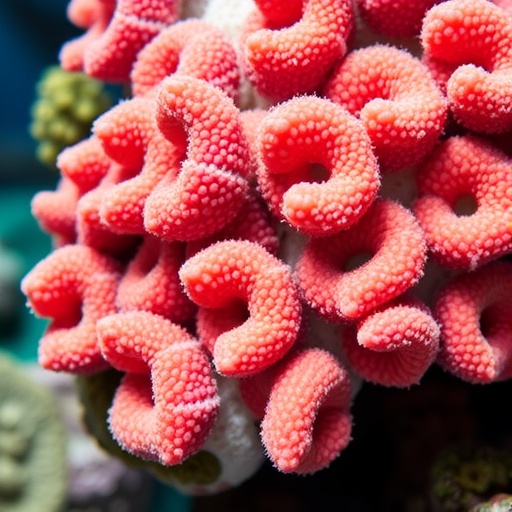
In an unprecedented revelation that promises to reshape our understanding of coral reef ecosystems, researchers have uncovered the intricate ways in which nutrient stress cascades through microbial networks to precipitate disease outbreaks among reef corals. This groundbreaking study elucidates the complex interplay between environmental pressures and microscopic communities that underpin the health and resilience of coral reefs, signaling a critical shift in how marine biologists and ecologists approach coral conservation. As global climate change accelerates and anthropogenic impacts intensify, this research offers a sobering glimpse into vulnerabilities previously veiled beneath the ocean’s shimmering surface.
Coral reefs, often dubbed the “rainforests of the sea,” harbor a staggering diversity of life, playing pivotal roles in coastal protection, fisheries, and tourism. Yet, their survival hinges on a delicate balance maintained not only by the coral animals themselves but also by their symbiotic relationships with microbial communities. These microbes, consisting of bacteria, archaea, fungi, and viruses, form complex networks that regulate nutrient cycling, pathogen defense, and overall coral physiology. The study highlights how perturbations in nutrient availability—particularly excess nitrogen and phosphorus—disrupt these microbial networks, thereby undermining coral health and accelerating disease susceptibility.
Nutrient stress arises when corals are exposed to elevated levels of nutrients, often sourced from agricultural runoff, sewage discharge, and other anthropogenic inputs. While nutrients are fundamentally essential for biological processes, their overabundance creates an environmental paradox: instead of fueling growth, they foster microbial imbalances that favor opportunistic pathogens over beneficial symbionts. The study meticulously charts how these nutrient imbalances fracture the cohesive microbial assemblages underpinning coral immune defenses, leading to network fragmentation that leaves corals vulnerable to a litany of diseases.
Employing a combination of high-throughput sequencing, metabolomics, and network analysis, the researchers dissected the microbial community structures across multiple coral species subjected to varying nutrient conditions. Their integrative approach revealed that nutrient enrichment prompts a marked shift in microbial composition, characterized by the proliferation of putative pathogenic taxa and a concurrent decline in symbiotic taxa essential for coral health. This restructuring of microbial networks was not a random occurrence but demonstrated predictable patterns of breakdown—all tied to nutrient-induced stress responses within the coral holobiont.
One of the study’s focal points was identifying the causal links between microbial network degradation and disease onset. By monitoring corals over time, the researchers observed that disruptions in microbial connectivity closely preceded visible disease symptoms, such as tissue necrosis and bleaching. This temporal association underscores the potential for microbial network integrity as a predictive biomarker for coral health, opening new frontiers in early disease detection and intervention. Furthermore, the findings challenge traditional disease paradigms that isolate pathogens as sole culprits, instead framing disease as an emergent property of ecosystem-wide microbial dysbiosis.
Delving deeper, the researchers explored the mechanistic underpinnings of nutrient-driven microbial shifts. Nutrient excess alters the metabolic landscape within the coral’s microenvironment, enhancing growth conditions for heterotrophic microbes capable of degrading coral tissues. Simultaneously, nutrient enrichment suppresses autotrophic symbionts that provide critical photosynthates to the coral host, tipping the metabolic balance and triggering stress responses. This metabolic cascade is reflected in the disrupted gene expression profiles that govern immune competence and microbial community regulation, thereby opening ecological niches for pathogenic invasion.
Importantly, the study underscores the non-linear dynamics governing microbial communities within coral ecosystems. Network analyses demonstrated that even modest nutrient elevations can precipitate threshold effects, beyond which microbial networks rapidly transition from stable to fragmented states. This tipping point phenomenon is emblematic of broader ecological fragility and signals the presence of early warning indicators. Harnessing these insights, conservation efforts might prioritize monitoring of microbial network stability as a novel approach to preemptively address coral disease outbreaks before irreversible damage occurs.
The implications of these findings extend beyond coral reefs, offering parallels to microbial dysbiosis observed in terrestrial and human health contexts. The conceptual framework developed here—wherein environmental stress integrates with host-microbe interactions to drive disease emergence—resonates with broader biological principles. This convergence highlights the necessity of interdisciplinary research that bridges marine biology, microbiology, and ecological network theory, underscoring the universality of microbial community balance in maintaining organismal health.
From a practical standpoint, this research advocates for stringent management of nutrient pollution in coastal waters. Current reef conservation policies often prioritize temperature regulation and physical protection, but the microbial dimensions elucidated here compel a re-evaluation. Mitigating nutrient inputs could preserve microbial network cohesion, sustaining coral immunity and resilience. Restoration projects might also incorporate microbial inoculants or probiotic interventions designed to reinforce healthy microbial consortia as a frontline defense against nutrient-induced stress.
Moreover, the study’s methodological innovations set a new standard for marine microbial ecology. Their integration of multi-omics datasets with ecological network modeling provides a powerful toolkit for unraveling microbial complexity at unprecedented scales and resolutions. This approach can be adapted to monitor other marine ecosystems undergoing stress, presenting opportunities for early intervention strategies informed by microbial ecology. It also fosters a predictive science paradigm where ecological health can be gauged through microbial signals long before phenotypic decline becomes apparent.
Beyond immediate conservation and scientific impacts, this research touches on the socio-economic stakes bound to coral reef resilience. Healthy reefs support fisheries, protect shorelines from storm surges, and attract tourism, thereby underpinning livelihoods worldwide. Disease outbreaks linked to nutrient stress jeopardize these benefits, potentially triggering cascading economic and social consequences. By illuminating the microbial pathways driving degradation, this work equips policymakers, stakeholders, and local communities with actionable knowledge to advocate for sustainable nutrient management and holistic reef stewardship.
The interplay between microbial networks and host health as described emphasizes the coral holobiont as a functional unit shaped by dynamic feedbacks. The microbial networks do not merely coexist with corals but actively mediate responses to environmental fluctuations. As nutrient stress damages network structure, it destabilizes these feedback loops, precipitating ecosystem-level shifts. Recognizing corals as metaorganisms, with health contingent on holistic network integrity, represents a paradigm shift in coral biology and ecology, promoting integrative strategies that consider the full spectrum of biological interactions.
Furthermore, the study raises critical questions about coral adaptability and evolutionary trajectories amid ongoing environmental change. Do microbial networks harbor sufficient plasticity to reassemble following stress, or does repeated disruption lead to permanent degradation? How might selective pressures shape microbial community composition in future ocean scenarios marked by complex stress regimes? Addressing these questions will be paramount in crafting long-term conservation strategies resilient to the mounting challenges posed by climate change and human activity.
In the realm of disease ecology, this research challenges reductionist pathogen-centric views and advocates for network-centric perspectives that embrace microbial community complexity. Diseases emerge not from isolated microbial agents but through the destabilization of entire ecological networks. This shift has profound implications for disease management, directing attention toward sustaining or restoring microbial network interactions rather than solely targeting pathogenic species. With coral diseases intensifying globally, such network-focused tactics may prove vital in halting or reversing disease trajectories.
The authors’ work ultimately spotlights the urgency of addressing nutrient stress alongside other environmental threats to coral reefs. Nutrient pollution is often overshadowed by the more visible manifestations of climate change, yet this study demonstrates how subtler water quality issues can silently erode reef resilience by fracturing the microbial foundations of coral health. As global initiatives seek to protect coral reefs, incorporating nutrient management as a central tenet can enhance the efficacy of conservation outcomes and sustain reef ecosystems in a rapidly changing world.
In summation, this pioneering study delivers transformative insights into how nutrient-driven disruptions of microbial networks compromise coral health and promote disease. It pioneers a new understanding of coral disease as an emergent ecological phenomenon rooted in microbial network integrity, reshaping the scientific and conservation paradigms surrounding coral reef ecosystems. The fusion of cutting-edge molecular techniques with network ecology heralds a new era of marine research, with profound implications for preserving one of the planet’s most vital and vulnerable ecosystems.
Cite Scienmag News
Morgan Morrow. (May 5, 2026). Microbial Networks Link Nutrient Stress to Coral Disease. Scienmag. https://scienmag.com/microbial-networks-link-nutrient-stress-to-coral-disease/
Morgan Morrow. "Microbial Networks Link Nutrient Stress to Coral Disease." Scienmag, 5 May 2026, https://scienmag.com/microbial-networks-link-nutrient-stress-to-coral-disease/. Accessed 4 September 2026.
Morgan Morrow. "Microbial Networks Link Nutrient Stress to Coral Disease." Scienmag. May 5, 2026. https://scienmag.com/microbial-networks-link-nutrient-stress-to-coral-disease/


