


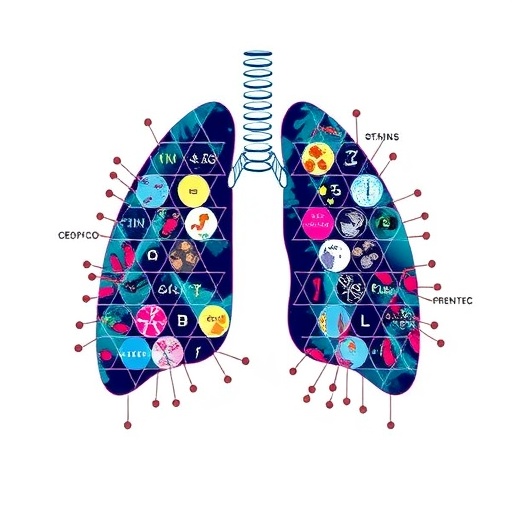
In a groundbreaking study published in the Journal of Translational Medicine, a team of researchers led by Zhou et al. has unveiled a revolutionary approach to understanding bacterial pathogens responsible for pneumonia through strain-level characterization, employing cutting-edge metagenomic sequencing technologies. This innovative study heralds a new era in the realm of infectious disease diagnostics, emphasizing the pressing need for advanced methodologies in accurately identifying pathogen strains in clinical settings. The implications are profound, not just for pneumonia treatment but for the broader landscape of microbial pathogenesis.
Metagenomic sequencing, a technique that enables the comprehensive analysis of genomic material recovered directly from environmental samples, has emerged as an invaluable tool in the field of microbiology. Traditionally, the identification of pathogens relied heavily on culture-based methods, which are often time-consuming and can yield inconclusive results. Zhou and his colleagues have taken a bold step forward by leveraging the power of metagenomics to decipher the genetic makeup of bacterial strains implicated in pneumonia, thus providing an unmatched level of detail in pathogen characterization.
Pneumonia, a leading cause of morbidity and mortality worldwide, can be caused by a diverse range of bacterial pathogens. Accurate diagnosis is critical for effective treatment, yet conventional methods often fall short in their ability to pinpoint specific strains responsible for the infection. The use of metagenomic sequencing allows for the simultaneous analysis of a vast array of microbial DNA, providing insights into not only the pathogens present but also their relative abundances and potential virulence factors.
In their research, Zhou and his team conducted a comprehensive analysis of respiratory samples from patients diagnosed with pneumonia. By employing advanced metagenomic sequencing techniques, they were able to obtain a complete picture of the bacterial landscape in these patients. This comprehensive approach uncovered not only the primary bacterial pathogens but also revealed secondary infections and co-infections that may have previously gone undetected using traditional diagnostic methods.
One of the standout features of their research is the ability to distinguish between closely related bacterial strains. This level of detail is crucial as minor genetic variations can significantly affect a strain’s pathogenicity and resistance to antibiotics. The traditional reliance on culture-based techniques often fails to capture these nuances, whereas metagenomic sequencing offers a fine-grained analysis that could lead to more targeted therapeutic interventions and better patient outcomes.
Moreover, the study highlights the importance of understanding microbial communities in the context of disease. The human microbiome, a complex ecosystem of microorganisms residing in and on our bodies, plays a vital role in health and disease. By analyzing the metagenomic data, the researchers were able to assess how the presence of certain bacterial strains might influence the overall health of the microbiome in pneumonia patients. This, in turn, raises questions about the potential for therapeutic strategies that target not only the pathogenic bacteria but also the surrounding microbial community.
The findings of Zhou et al. are particularly timely given the rising threat of antimicrobial resistance. As traditional antibiotics become less effective against certain strains of bacteria, the need for precise diagnostics and tailored treatments is paramount. Metagenomic sequencing presents an opportunity to identify resistant strains promptly, allowing for more informed clinical decisions regarding antibiotic therapy and the potential use of alternative treatment options.
As the study points out, metagenomic sequencing is not without its challenges. The complexity of data generated requires sophisticated bioinformatics tools and expertise to interpret the results accurately. However, the potential benefits far outweigh the hurdles. The study serves as a call to action for the medical community to embrace these advanced technologies and integrate them into routine clinical practice, thereby enhancing our ability to fight infectious diseases more effectively.
Moreover, the implications of this research extend beyond pneumonia alone. The methodologies developed and refined in this study could be applied to other respiratory infections and infectious diseases, providing a versatile framework for pathogen identification. This adaptability opens the door for further research into the microbial determinants of disease, potentially influencing public health strategies and interventions.
Looking ahead, the research team emphasizes the need for larger, multi-center studies to validate their findings further. As the scientific community rallies around the power of metagenomics, it is essential to ensure that these techniques are standardized and widely accessible, paving the way for global health advancements. Such progress could transform how we approach infectious diseases, ultimately saving lives across various populations.
In conclusion, Zhou et al. have made a significant contribution to our understanding of bacterial pathogens in pneumonia through strain-level characterization with metagenomic sequencing. Their work exemplifies the potential of advanced genomic technologies to reshape clinical diagnostics and enhance patient care in infectious diseases. As we stand on the precipice of a new era in microbiological research, the lessons learned from this study could well inform future innovations in diagnostics and treatment strategies.
In summary, the work of Zhou and colleagues marks an important step towards establishing metagenomic sequencing as a routine tool in clinical microbiology, holding great promise for improving our ability to diagnose, treat, and prevent infectious diseases. The ongoing evolution of metagenomic technologies presents exciting opportunities for future research, with the potential to unlock new insights into microbial behavior and interactions in health and disease.
The researchers’ findings underscore the importance of integrating genomic data with clinical practice, fostering a collaborative approach among microbiologists, clinicians, and public health officials. By doing so, we move closer to a future where precision medicine becomes the norm, empowering healthcare providers to tailor interventions based on the individual’s microbiome and the specific pathogens involved.
As we navigate the complexities of infectious diseases in an ever-changing world, studies like that of Zhou et al. will undoubtedly play a pivotal role in shaping our understanding and response to microbial threats. Ultimately, the integration of cutting-edge technologies into clinical settings represents a vital leap towards a more resilient and effective healthcare system.
Zhou, H., Li, X., Mao, Y. et al. Strain-level characterization of bacterial pathogens using metagenomic sequencing for patients with pneumonia.
J Transl Med 23, 1149 (2025). https://doi.org/10.1186/s12967-025-07134-6
Cite Scienmag News
Kristina Jarvis. (October 26, 2025). Metagenomic Sequencing Uncovers Pneumonia Pathogen Strains. Scienmag. https://scienmag.com/metagenomic-sequencing-uncovers-pneumonia-pathogen-strains/
Kristina Jarvis. "Metagenomic Sequencing Uncovers Pneumonia Pathogen Strains." Scienmag, 26 October 2025, https://scienmag.com/metagenomic-sequencing-uncovers-pneumonia-pathogen-strains/. Accessed 4 September 2026.
Kristina Jarvis. "Metagenomic Sequencing Uncovers Pneumonia Pathogen Strains." Scienmag. October 26, 2025. https://scienmag.com/metagenomic-sequencing-uncovers-pneumonia-pathogen-strains/


