

Sunday, August 16, 2026
Science
No Result
View All Result
  • Login
  • HOME
  • SCIENCE NEWS
  • CONTACT US
  • HOME
  • SCIENCE NEWS
  • CONTACT US
No Result
View All Result
Scienmag
No Result
View All Result
Home Science News Agriculture

Maize likely central to ancient Maya diets, study of bones and teeth suggests

July 26, 2026
in Agriculture
Reading Time: 2 mins read
0
Maize likely central to ancient Maya diets, study of bones and teeth suggests

Maize likely central to ancient Maya diets, study of bones and teeth suggests

65
SHARES
587
VIEWS
Share on FacebookShare on Twitter
ADVERTISEMENT

Maize was probably more than just a staple for many Classic Maya communities in southeastern Petén, Guatemala, according to a new study that uses stable isotope analysis on human bone and tooth samples. By tracing the chemical “signatures” embedded in biological tissues, researchers can reconstruct aspects of diet that would otherwise be invisible in the archaeological record.

The team analyzed isotopic ratios associated with different food sources, focusing on how dietary contributions may have changed across individuals and communities. Because isotopic patterns vary with plant types and local environmental conditions, the approach can distinguish a maize-centered diet from diets that rely more heavily on other foods.

In practical terms, carbon and nitrogen isotope values provide complementary information. Carbon isotopes help differentiate maize from many other potential carbohydrate sources, while nitrogen isotopes can reflect variation in trophic level—how much a person’s diet leaned toward plant foods versus resources higher on the food chain.

The archaeological context adds another layer. The study links dietary reconstructions to sites where maize cultivation continues today, including the site of Curucuitz. Such continuity suggests that agricultural practices and cultural preferences may have reinforced maize’s nutritional role over long periods.

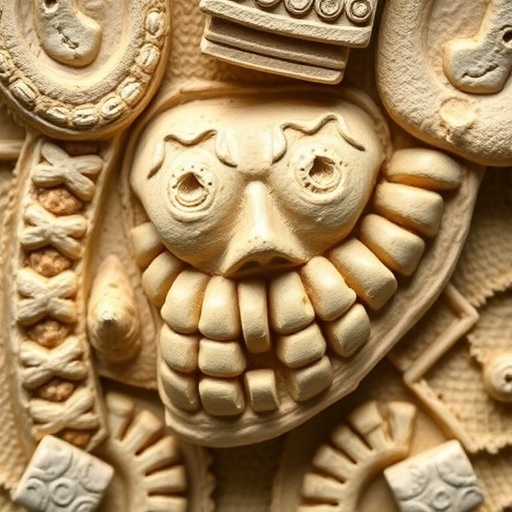
The researchers also examine material culture, including ceramic evidence from Ixtutz. Depictions on vessels showing people arranged in pairs sharing the contents of a pitcher point to the social and symbolic dimensions of eating—suggesting that maize-based foods may have been both meaningful and widely shared.

The work was published in PLOS One and supported by SECIHTI (formerly CONAHCYT) funding, plus an additional UNM research stay enabled through a UC MEXUS collaborative project. The authors report no competing interests.

While the results do not “prove” a single diet for all people, they provide strong evidence that maize was nutritionally and symbolically central for many studied individuals. As isotopic methods improve, such studies are likely to refine how ancient societies experienced everyday food, identity, and community life.

Overall, the findings offer a viral, story-rich window into the Classic Maya: maize as both a biochemical imprint in teeth and bones and a cultural anchor reflected in daily practices and artistic scenes.

Subject of Research: Diet reconstruction of Classic Maya communities using stable isotope analysis
Article Title: Profiling the diets of Classic Maya communities living in Southeastern Petén through stable isotope analysis
News Publication Date: 22-Jul-2026
Web References: http://dx.doi.org/10.1371/journal.pone.0353029
References: Profiling the diets of Classic Maya communities living in Southeastern Petén through stable isotope analysis. PLOS One. DOI: 10.1371/journal.pone.0353029
Image Credits: Proyecto Atlas Arqueológico de Guatemala, CC-BY 4.0
Keywords: Classic Maya; stable isotope analysis; diet reconstruction; maize; Petén; archaeology; bioarchaeology; carbon isotopes; nitrogen isotopes; PLOS One

Tags: Ancient Maya dietarchaeological biomarkers of ancient dietscarbon and nitrogen isotope ratioscultural continuity in maize agriculturedietary reconstruction using bones and teethdietary variation among Maya communitiesisotope signatures in archaeological samplesmaize consumption in Maya civilizationmaize cultivation in Petén Guatemalamaterial culture and food practices in Maya societynutritional role of maize in ancient culturesstable isotope analysis in archaeology
Share26Tweet16
Previous Post

Ceramic Vessels Show Social Inequality Was Baked into 19th-Century Brazil

Next Post

Time-Restricted Eating May Help Preserve Cognitive Function in Older Adults

Related Posts

UMD Researchers Clone and Characterize Powerful Hessian Fly Resistance Gene in Wheat
Agriculture

UMD Researchers Clone and Characterize Powerful Hessian Fly Resistance Gene in Wheat

August 14, 2026
Biochar and nitrification inhibitors reduce ammonia losses without sacrificing crop yields
Agriculture

Biochar and nitrification inhibitors reduce ammonia losses without sacrificing crop yields

August 14, 2026
Study exposes gaps in agricultural sustainability monitoring
Agriculture

Study exposes gaps in agricultural sustainability monitoring

August 13, 2026
Sustainability-labeled US meats cost more, with premiums ranging from 7% to 33%
Agriculture

Sustainability-labeled US meats cost more, with premiums ranging from 7% to 33%

August 12, 2026
Rapid wildfires reduce forests’ ability to recover, study finds
Agriculture

Rapid wildfires reduce forests’ ability to recover, study finds

August 12, 2026
UTIA plant pathologist selected as Fulbright Distinguished Scholar
Agriculture

UTIA plant pathologist selected as Fulbright Distinguished Scholar

August 12, 2026
Next Post
Time-Restricted Eating May Help Preserve Cognitive Function in Older Adults

Time-Restricted Eating May Help Preserve Cognitive Function in Older Adults

  • Mothers who receive childcare support from maternal grandparents show more

    Mothers who receive childcare support from maternal grandparents show more parental warmth, finds NTU Singapore study

    27656 shares
    Share 11059 Tweet 6912
  • University of Seville Breaks 120-Year-Old Mystery, Revises a Key Einstein Concept

    1061 shares
    Share 424 Tweet 265
  • Bee body mass, pathogens and local climate influence heat tolerance

    682 shares
    Share 273 Tweet 171
  • Researchers record first-ever images and data of a shark experiencing a boat strike

    546 shares
    Share 218 Tweet 137
  • Groundbreaking Clinical Trial Reveals Lubiprostone Enhances Kidney Function

    531 shares
    Share 212 Tweet 133
Science

Embark on a thrilling journey of discovery with Scienmag.com—your ultimate source for cutting-edge breakthroughs. Immerse yourself in a world where curiosity knows no limits and tomorrow’s possibilities become today’s reality!

RECENT NEWS

  • Tropical Forest Biomass Responds to Diverse Climate Controls
  • Survey-Based Model Reveals How Preparedness Constraints Shape Cholera Transmission in Sudan
  • Waste-Based Retrofits Improve Thermal Performance in North Sinai Social Housing
  • KAIST develops semiconductor neuron that harnesses noise to selectively process signals

Categories

  • Agriculture
  • Anthropology
  • Archaeology
  • Athmospheric
  • Biology
  • Biotechnology
  • Blog
  • Bussines
  • Cancer
  • Chemistry
  • Climate
  • Earth Science
  • Editorial Policy
  • Marine
  • Mathematics
  • Medicine
  • Pediatry
  • Policy
  • Psychology & Psychiatry
  • Science Education
  • Social Science
  • Space
  • Technology and Engineering

Subscribe to Blog via Email

Success! An email was just sent to confirm your subscription. Please find the email now and click 'Confirm Follow' to start subscribing.

Join 5,149 other subscribers

© 2025 Scienmag - Science Magazine

Welcome Back!

Login to your account below

Forgotten Password?

Retrieve your password

Please enter your username or email address to reset your password.

Log In
No Result
View All Result
  • HOME
  • SCIENCE NEWS
  • CONTACT US

© 2025 Scienmag - Science Magazine
