


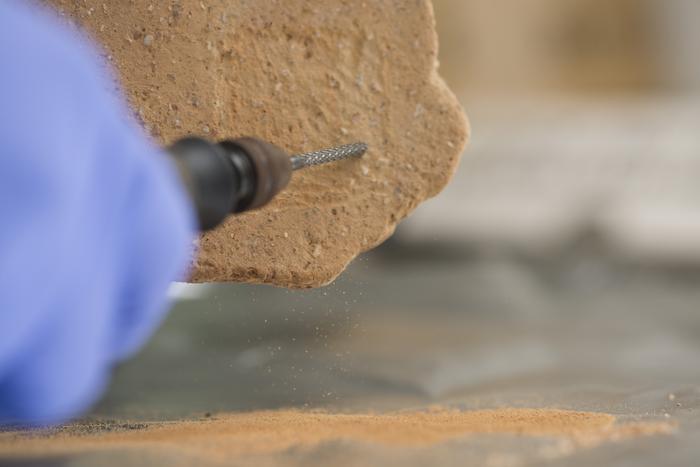
A new biomolecular archaeology study is using food residues trapped inside ceramic vessels to show that everyday diets in southern Brazil were far from uniform. By looking at how lipids and proteins survive for over a century in broken pottery, researchers can infer what different communities cooked, stored, and consumed.
The team analyzed more than 180 ceramic fragments from Babitonga Bay, spanning the late nineteenth to early twentieth centuries. Instead of relying on written records or cooking traditions, the study reconstructs diet directly from molecular traces embedded in ceramic matrix and vessel residues.
The workflow combined lipid profiling and protein residue detection. Lipids act as chemical fingerprints of broad food categories (such as marine fats or plant oils), while protein biomarkers help narrow those categories further. Together, the two lines of evidence reduce ambiguity that typically occurs when only one residue type is measured.
Results reveal sharp culinary boundaries aligned with social and cultural identities. Hand-modelled ceramics—associated with Indigenous, Afro-descendant, and Luso-Brazilian communities—contain stronger signals of marine resources, including fish and shellfish, alongside maize-derived components.
In contrast, wheel-thrown ceramics linked to early German immigrant groups show a greater contribution from terrestrial crops and animal products. Proteins and lipid signatures indicate meat and, in some cases, dairy-related processing, reflecting a different agricultural and livestock-centered food system.
Going beyond categories, the molecular analysis identified specific foods. Biomarkers compatible with processing of maize, rice, manioc, beans, and fruits and vegetables were detected. The fish signatures include members of the Sciaenidae family.
Chicken egg residues also emerged in the assemblage, demonstrating the capacity of ceramic residue chemistry to detect mixed household meals. Animal fats appear alongside plant-derived compounds, suggesting that cooking practices blended sources rather than using a single ingredient set.
Crucially, the pattern is interpreted not only as taste or tradition, but also as unequal access to food. The study argues that coastal resource use offered a comparatively accessible subsistence route for communities with fewer economic buffers, while livestock and certain crops mapped more closely onto property and market participation.
Published in Royal Society Open Science, the findings frame culinary diversity as a measurable outcome of social inequality and cultural interaction—captured in molecules that outlast the vessels that once held them.
Cite Scienmag News
Courtney Benton. (July 26, 2026). Ceramic Vessels Show Social Inequality Was Baked into 19th-Century Brazil. Scienmag. https://scienmag.com/ceramic-vessels-show-social-inequality-was-baked-into-19th-century-brazil/
Courtney Benton. "Ceramic Vessels Show Social Inequality Was Baked into 19th-Century Brazil." Scienmag, 26 July 2026, https://scienmag.com/ceramic-vessels-show-social-inequality-was-baked-into-19th-century-brazil/. Accessed 3 September 2026.
Courtney Benton. "Ceramic Vessels Show Social Inequality Was Baked into 19th-Century Brazil." Scienmag. July 26, 2026. https://scienmag.com/ceramic-vessels-show-social-inequality-was-baked-into-19th-century-brazil/


