


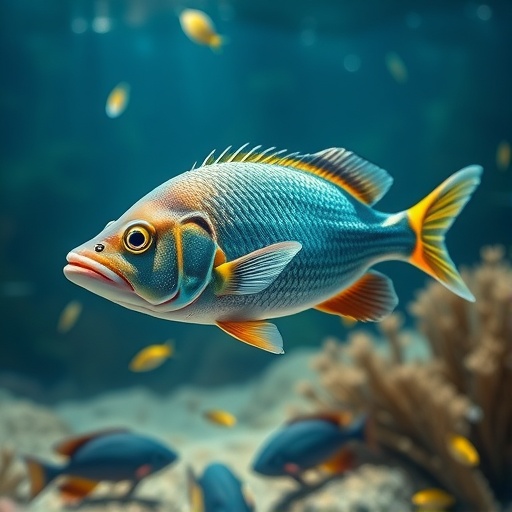
Rare and endangered species sit at the front line of chemical pollution, but protecting them is hard when experimental toxicity data are scarce. Traditional bioassays can require large numbers of organisms—an ethical and practical challenge for populations that are already under pressure. A new study in New Contaminants tackles this bottleneck with a predictive, non-testing framework that estimates toxicity from chemical structure and species biology.
The research focuses on the rare gudgeon (Gobiocypris rarus), a small freshwater fish endemic to China’s Yangtze River Basin. Because of its limited distribution and high sensitivity to environmental change, it has been classified as rare and endangered. Instead of running more laboratory exposures, the team built a machine learning enhanced quantitative structure–activity relationship (ML-QSAR) model tailored to this species.
To train the system, the authors assembled acute and chronic toxicity datasets for G. rarus. They then generated over 1,800 molecular descriptors capturing physicochemical and structural properties—such as electronic behavior, polarity, and interaction-relevant features—along with the fish’s developmental stage (embryos, juveniles, adults). This stage-aware design allows the model to reflect that biology is not static across development.
Six algorithms were compared, including random forest, support vector machines, neural networks, and generalized linear models. The random forest model delivered the strongest performance, reaching a coefficient of determination of 0.99 for acute toxicity and 0.93 for chronic toxicity, indicating accurate structure-to-effect predictions under limited experimental coverage.
A key finding is that acute and chronic toxicity are governed by different drivers. Life stage proved highly influential for short-term effects, consistent with the idea that embryos and juveniles have less mature metabolism and detoxification pathways. However, the sensitivity pattern varies across chemical classes, and adults may retain certain PFAS-like compounds longer due to stronger protein binding.
For chronic outcomes, the model leaned more heavily on molecular interaction descriptors. These features relate to how chemicals move, accumulate, and bind at the target level—considering properties such as ionization potential, polarizability, and atomic arrangement.
The authors then applied the best model to 73 pollutants reported in the rare gudgeon’s habitat, including many per- and polyfluoroalkyl substances (PFAS). For 12 PFAS compounds with available environmental concentration data, calculated risk quotients were far below 1, suggesting low immediate ecological risk under current measurements.
Importantly, the study warns against interpreting low quotients as “safe.” PFAS are persistent, can biomagnify across food webs, and may rise due to industrial shifts, seasonal effects, or replacement chemistry. The work therefore supports continued long-term monitoring of PFAS distribution and bioaccumulation in this ecosystem.
Finally, the ML-QSAR strategy offers a scalable blueprint for conservation science: integrate chemical fingerprints with developmental biology and machine learning to flag potential threats before populations experience irreversible harm. Future efforts will expand toxicity datasets, evaluate chemical mixtures, and improve performance for metals and newly emerging contaminants.
Cite Scienmag News
Teresa Odom. (July 15, 2026). Machine Learning Enables Safer Testing of Chemical Threats to Endangered Fish. Scienmag. https://scienmag.com/machine-learning-enables-safer-testing-of-chemical-threats-to-endangered-fish/
Teresa Odom. "Machine Learning Enables Safer Testing of Chemical Threats to Endangered Fish." Scienmag, 15 July 2026, https://scienmag.com/machine-learning-enables-safer-testing-of-chemical-threats-to-endangered-fish/. Accessed 3 September 2026.
Teresa Odom. "Machine Learning Enables Safer Testing of Chemical Threats to Endangered Fish." Scienmag. July 15, 2026. https://scienmag.com/machine-learning-enables-safer-testing-of-chemical-threats-to-endangered-fish/


