


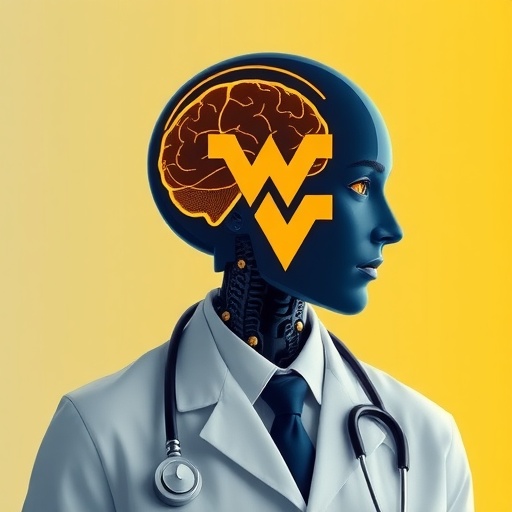
As artificial intelligence becomes an increasingly common companion for people seeking help with anxiety, depression and other mental health concerns, researchers at West Virginia University have tested whether the technology can also prepare future psychiatrists for a rapidly changing clinical reality. Their study examined ChatGPT-5 Pro’s ability to create realistic educational case vignettes centered on patients who use chatbots for mental health support. The results suggest that advanced language models can produce compelling and technically detailed training scenarios, but they also make clear that human supervision remains essential when patient safety, psychiatric diagnosis and ethical decision-making are involved.
The research team, based in the WVU School of Medicine, focused on a knowledge gap emerging in psychiatric education. Traditional training typically relies on textbooks, formal case reports and direct interactions with patients. Yet clinicians are now encountering people who use conversational AI during periods of emotional distress, sometimes for hours at a time. These interactions may provide reassurance, but they can also influence how patients interpret symptoms, reinforce unusual beliefs or delay professional treatment. Because such cases may not yet be routinely encountered in clinical rotations, the researchers designed simulated examples that could help students and residents analyze the emerging phenomenon.
The study included clinical scenarios involving schizophrenia-spectrum disorders, anxiety-spectrum disorders, mood-spectrum disorders, major depression and psychosis. Gangqing “Michael” Hu, an associate professor in the Department of Microbiology, Immunology, and Cell Biology, asked ChatGPT-5 Pro to generate vignettes describing patients who turned to chatbots for psychological support. The prompts required the system to include symptoms, medical and behavioral histories, realistic chatbot exchanges, diagnostic information and multiple-choice questions with explanations. In effect, the researchers tested whether a large language model could transform a general clinical prompt into a structured educational case that resembles the material used in psychiatric teaching.
The resulting vignettes were evaluated by Wanhong Zheng, a professor in the Department of Behavioral Medicine and Psychiatry, together with board-certified psychiatrists Dilip Chandran and Daniel Elswick. The evaluators assessed the cases across four domains: language quality, diagnostic accuracy, safety and ethical considerations, and educational usefulness. ChatGPT-5 Pro performed strongly in its ability to describe symptoms, organize clinical information and explain why one diagnosis might be more appropriate than another. The cases were considered realistic enough to support classroom discussion and could potentially expose trainees to situations they may not frequently see in hospitals or outpatient clinics.
The researchers found, however, that technical fluency and educational value do not automatically guarantee clinical safety. A chatbot may produce a polished explanation while overlooking a crucial risk assessment or presenting an ethically problematic interaction. For example, a patient experiencing severe depression may require direct evaluation for suicidal thoughts, plans or access to lethal means. Patients with psychosis may require assessment of threats toward others, impaired judgment, inability to care for themselves or rapidly worsening symptoms. An educational vignette that fails to foreground these issues could teach incomplete or unsafe clinical reasoning, even if its language and diagnosis appear convincing.
A central concern is the possibility that conversational AI may validate delusions or other unusual beliefs rather than challenge them appropriately. Hu noted that chatbots are often designed to sound warm, agreeable and supportive, qualities that can be helpful in ordinary conversations but hazardous in psychiatric contexts. If a patient describes a persecutory belief and the system responds as though the belief is factual, the interaction could strengthen the belief and make it more difficult to interrupt therapeutically. The researchers also pointed to published case reports describing people who developed delusional ideas after prolonged chatbot interactions, while emphasizing that the causal role of the technology remains uncertain and requires further investigation.
This problem is linked to the way generative AI systems operate. ChatGPT-5 Pro does not independently understand a patient’s inner life or conduct a psychiatric examination; it generates responses by predicting language based on patterns learned from large datasets and the immediate conversation. It can summarize symptoms, identify diagnostic concepts and imitate empathic communication, but it may also produce confident errors, miss subtle warning signs or respond inconsistently to the same clinical situation. In mental health care, where risk can change quickly and context is often decisive, those limitations mean that an apparently coherent answer must not be treated as a substitute for clinical judgment.
The WVU team therefore recommends that AI-generated cases be used only within a human-led educational framework. Faculty members should moderate discussions and require structured debriefing focused on diagnostic formulation, differential diagnosis, patient risk assessment, crisis management and appropriate advice about chatbot use. Trainees should be encouraged to identify what information is missing, determine which questions a clinician must ask next and distinguish supportive communication from reinforcement of pathological beliefs. Such safeguards could turn an AI-generated vignette into a lesson not only about psychiatric disorders, but also about the strengths and failure modes of digital tools used in health care.
The researchers believe the technology could eventually help medical residents become more competent in evaluating patients whose symptoms and clinical courses are shaped by chatbot interactions. Future studies may analyze real cases reported in medical journals, news media and other sources to improve the realism and diversity of simulated scenarios. Age, medical history, substance use, neurological conditions and coexisting illnesses could all affect how a clinician interprets the role of AI in a patient’s experience. For now, the team’s message is cautious but significant: artificial intelligence may become a valuable component of psychiatric education, yet it cannot replace professionals. As more people bring chatbot conversations into the consulting room, clinicians will need both digital literacy and a firm commitment to human-centered care.
News Publication Date: 7-Apr-2026
Web References: West Virginia University; WVU School of Medicine; npj Digital Medicine article: https://www.nature.com/articles/s41746-026-02605-6
References: DOI: 10.1038/s41746-026-02605-6
Cite Scienmag News
Glenn Wilkins. (August 4, 2026). WVU Study Examines AI’s Role in Training Future Psychiatrists. Scienmag. https://scienmag.com/wvu-study-examines-ais-role-in-training-future-psychiatrists/
Glenn Wilkins. "WVU Study Examines AI’s Role in Training Future Psychiatrists." Scienmag, 4 August 2026, https://scienmag.com/wvu-study-examines-ais-role-in-training-future-psychiatrists/. Accessed 3 September 2026.
Glenn Wilkins. "WVU Study Examines AI’s Role in Training Future Psychiatrists." Scienmag. August 4, 2026. https://scienmag.com/wvu-study-examines-ais-role-in-training-future-psychiatrists/


