


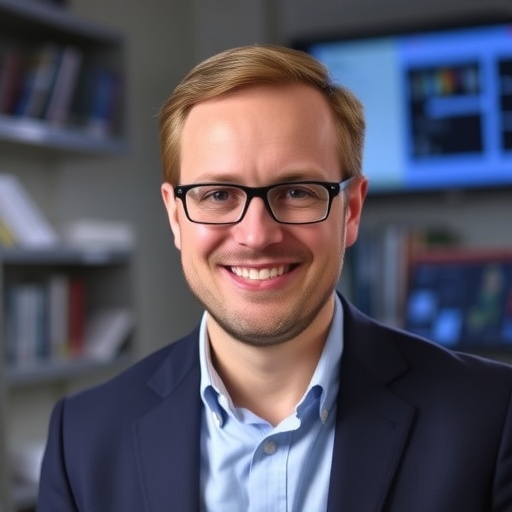
The International Society for Stem Cell Research (ISSCR) has announced that Lorenz Studer, M.D., has begun his term as president, placing one of the world’s most influential stem cell scientists at the helm of the organization as it enters a landmark period. Studer is the founding director of the Center for Stem Cell Biology at Memorial Sloan Kettering Cancer Center in the United States and is internationally recognized for converting fundamental discoveries in human stem cell biology into experimental strategies for treating neurological disease.
Studer’s work has helped reshape how researchers produce specialized human cells in the laboratory. His research has established methods for directing human pluripotent stem cells—cells capable of generating virtually every cell type in the body—toward specific neural identities. By controlling developmental signals in carefully timed sequences, scientists can produce populations of neurons and other neural cells that closely resemble those found in the human nervous system. These laboratory-generated cells are now used to investigate disease mechanisms, test potential medicines, and explore the possibility of replacing damaged tissue.
The technical importance of this approach extends far beyond cell production. Human pluripotent stem cell-derived neurons can provide experimental models that capture aspects of human biology often missed by animal systems or immortalized cell lines. Researchers can use them to study how genetic mutations affect neuronal development, how toxic proteins accumulate in neurodegenerative disorders, and how candidate drugs alter cellular function. Because the cells can be generated from different genetic backgrounds, they may also support more personalized approaches to disease modeling and therapeutic development.
Studer’s laboratory has placed particular emphasis on translating these discoveries into clinical applications. Among the most closely watched areas is Parkinson’s disease, in which the loss of dopamine-producing neurons contributes to tremor, rigidity, and impaired movement. Stem cell-derived dopamine neurons are being investigated as a potential replacement therapy designed to restore signaling within damaged brain circuits. Moving such treatments from the laboratory to patients requires rigorous control of cell identity, purity, genetic stability, immune compatibility, and long-term behavior after transplantation. Studer’s research has contributed to the scientific foundation for addressing these challenges.
“The ISSCR must be the place where stem cell researchers share their boldest ideas, where we help them navigate technical and ethical challenges, and where they find a community that will fight for the value of fundamental, high-risk research,” Studer said. “The ISSCR is your society. We are here to serve you, and we genuinely want to hear what is working, what we can do better, and what we should be bold enough to try next.” His remarks highlight the tension at the center of modern stem cell science: discoveries must be ambitious enough to transform medicine, but development must remain grounded in reproducible evidence and responsible oversight.
During his presidency, Studer will lead the society as it celebrates its 25th anniversary and prepares for its annual meeting in San Francisco next summer. The ISSCR represents researchers, clinicians, ethicists, and other specialists across more than 80 countries. Its work spans basic stem cell biology, organoid research, developmental biology, regenerative medicine, clinical translation, and the ethical governance of emerging technologies. The organization has become a major forum for setting scientific standards in a field where promising results can rapidly attract public attention and commercial investment.
ISSCR Chief Executive Officer Keith Alm said Studer embodies the innovation, rigor, and collaborative spirit associated with the organization. He added that Studer’s leadership would help strengthen the society’s international community while supporting the responsible development of stem cell research for patients. That responsibility is increasingly significant as experimental cell therapies move into clinical testing. Researchers must distinguish carefully between therapies supported by controlled trials and unproven interventions marketed directly to vulnerable patients, while regulators and scientists continue to define appropriate standards for manufacturing, monitoring, and informed consent.
Studer has been an active ISSCR leader for many years and previously served on the organization’s Board of Directors. In 2022, he received the ISSCR Achievement Award for transformative contributions to stem cell research and regenerative medicine. His presidency will also focus on supporting early-career scientists, whose work is essential to sustaining progress in a field that depends on expertise ranging from molecular genetics and bioengineering to immunology, neuroscience, and clinical medicine.
The society has also welcomed its newly elected officers and board members following the 2026 Annual Meeting. Fiona Doetsch, Ph.D., of the Biozentrum at the University of Basel in Switzerland, has begun her term as president-elect, while Malin Parmar, Ph.D., of Lund University in Sweden, has started her term as vice president. New board members include Jianping Fu, Ph.D., of the University of Michigan; Stefan Irion, M.D., of GC Therapeutics; and Kazuto Kato, Ph.D., of the University of Osaka. Shuibing Chen, Ph.D., of Weill Cornell Medicine, has been reappointed to the board. Together, the new leadership will guide a rapidly evolving scientific community whose next breakthroughs could determine whether stem cell biology becomes a dependable platform for treating conditions once considered irreversible.
Web References: International Society for Stem Cell Research — https://www.isscr.org/
Cite Scienmag News
Drew Townsend. (August 11, 2026). Lorenz Studer Begins Presidency of International Society for Stem Cell Research. Scienmag. https://scienmag.com/lorenz-studer-begins-presidency-of-international-society-for-stem-cell-research/
Drew Townsend. "Lorenz Studer Begins Presidency of International Society for Stem Cell Research." Scienmag, 11 August 2026, https://scienmag.com/lorenz-studer-begins-presidency-of-international-society-for-stem-cell-research/. Accessed 3 September 2026.
Drew Townsend. "Lorenz Studer Begins Presidency of International Society for Stem Cell Research." Scienmag. August 11, 2026. https://scienmag.com/lorenz-studer-begins-presidency-of-international-society-for-stem-cell-research/


