


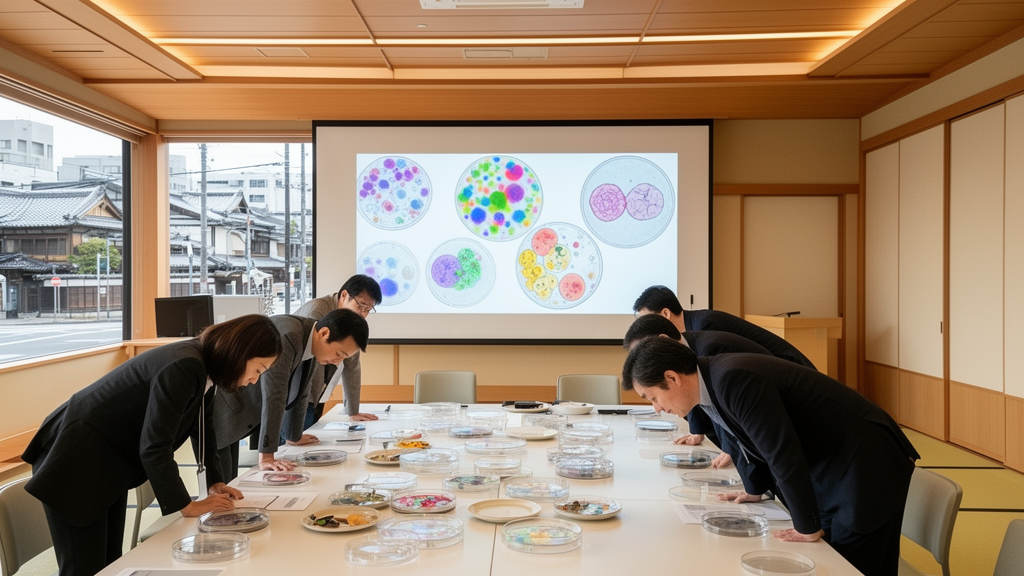
The International Society for Stem Cell Research brought scientists, clinicians, and innovators to Kyoto for a sold-out symposium marking 20 years of induced pluripotent stem cell, or iPSC, technology. The three-day meeting, held from 20 to 22 October, was organized in partnership with the Center for iPS Cell Research and Application at Kyoto University and co-sponsored by the Japanese Society for Regenerative Medicine. Registration reached capacity twice, even after ISSCR expanded the meeting to a larger venue, underscoring strong international interest in a field that now spans fundamental studies of cell identity and human development, disease modeling, drug discovery, clinical translation, and the development of stem cell-based therapies.
The opening plenary was chaired by Jun Takahashi of CiRA and brought together Shinya Yamanaka of CiRA, Kyoto University and the Gladstone Institutes; Janet Rossant, senior scientist emeritus at the SickKids Research Institute and editor-in-chief of Stem Cell Reports; and George Daley of Harvard Medical School. Yamanaka traced iPSC technology from its discovery to clinical trials involving iPSC-derived cells and tissues, including recent regulatory milestones in Japan, where two iPSC-derived regenerative medical products have received conditional, time-limited approval. He also described scientific and translational challenges that remain.
Rossant considered how iPSCs have reshaped pluripotent stem cell research and created opportunities to investigate early human development through stem cell-based embryo models, together with the ethical questions surrounding those systems. Daley examined cellular reprogramming, cell identity and differentiation, disease modeling, cell-based medicines, and continuing challenges in generating blood-forming stem cells from iPSCs. A group of scientific presentations focused on the developmental capacity, genetic stability, and safety of pluripotent cells.
Yasuhiro Takashima of Kyoto University discussed the expanded developmental potential of naïve human iPSCs, including their use in human embryo models to study early development, implantation, and pregnancy-related disorders and their possible relevance to future regenerative medicine. Ivana Barbaric of the University of Sheffield described research into how genetic changes arise in human pluripotent stem cells and how variant cells can acquire a competitive advantage in culture. Assa Sherman of Hebrew University of Jerusalem presented genome-wide screening research identifying genetic mechanisms that influence tumor formation in human pluripotent stem cells.
The presentations placed genetic stability, reliability, and tumor risk among the central issues for research use and the development of future cell-based therapies. Maike Sander of the Max Delbrück Center for Molecular Medicine presented advances in engineered stem cell-derived islet organoids for diabetes research. Her work incorporates blood vessels and supporting cells to improve beta-cell function and create more elaborate models for studying diabetes and evaluating potential treatments.
The meeting report described laboratory advances rather than a clinical treatment result. A related early-career presentation examined the immune response to replacement cells: Carl Andersson of Uppsala University used patient-specific stem cell-derived islets to investigate how autologous T cells differentially infiltrate and damage those islets in type 1 diabetes. The work was presented as a way to gain information that could support future efforts to improve cell-replacement therapies, but the supplied report did not describe a tested intervention or an outcome in patients.
A rapid-fire session featured 10 early-career scientists working across reprogramming, development, infection, and organ modeling. Mert Akgunduz of Kyoto University’s Institute for the Advanced Study of Human Biology developed a human stem cell-derived embryo model that recreates key aspects of human gastrulation and organogenesis, including tissue organization and early organ formation. Xueying Fan of Westlake University presented a computational framework for mapping reprogramming plasticity that captured a self-renewing OCT4-positive human hypoblast stem cell state.
Dimitrios Valakos of the Biomedical Research Foundation of the Academy of Athens examined changes in chromatin organization that help differentiated cells acquire and maintain pluripotency. Ramon Pfaendler of the Botnar Institute of Immune Engineering at ETH Zürich combined advanced imaging, deep learning, and molecular profiling to investigate how cell shape and spatial organization relate to early human cell-fate transitions. Other rapid-fire talks extended iPSC-based experimental systems into specialized areas of human biology.
Sarah Stucchi of Human Technopole used neural organoids and germline models to investigate how environmental chemicals, hormones, and genetic susceptibility influence development and may create windows of developmental vulnerability to endocrine disruptors. Zacharie Taoufiq of the Okinawa Institute of Science and Technology introduced a deep nuclear proteomics platform for cellular programming that was designed to accelerate the differentiation and maturation of human iPSC-derived cardiac muscle cells. Min Jung Kim of Ajou University described a human alveolar organoid model for studying macrophage-mediated infection with Mycobacterium abscessus and associated inflammation, with the aim of providing a platform for evaluating potential treatments.
These projects demonstrated the range of laboratory platforms being developed, but the symposium report supplied no evidence of therapeutic efficacy in patients. Additional presentations addressed structural and neurological models. Souta Motoike of CiRA generated human iPSC-derived jawbone assembloids with vascular networks and osteoclasts, creating systems for investigating jawbone biology and disease.
Marion Guillon of CHU Sainte-Justine and the Université de Montréal used gene-edited human brain organoids to model neurodevelopmental imbalance associated with epilepsy-related genetic mutations. The stated aim was to examine disruptions in early brain development and provide information relevant to future personalized approaches. As with the other organoid and assembloid work described at the meeting, these findings concern laboratory models and do not establish that a treatment has been developed or shown to work in people.
The program connected iPSC research with questions about early development and the biological conditions under which human cell systems form. Rossant’s presentation linked pluripotent cells with embryo-model systems, while talks on naïve iPSCs, germline models, and stem cell-derived organizers addressed selected features of early human development. The scientific themes included tissue organization, implantation, cellular differentiation, and the developmental consequences of environmental or genetic exposures.
Models of gastrulation, the hypoblast, germline development, neural organoids, and vascularized jawbone assembloids each represented distinct experimental systems. The program therefore presented iPSC technology not as a single application, but as a platform used to build models for investigating development, disease mechanisms, candidate treatments, and other questions in human biology. The event also highlighted the practical, regulatory, and manufacturing questions surrounding the movement of iPSC research toward medicine.
The release described ongoing clinical trials involving iPSC-derived cells and tissues, conditional, time-limited approval for two iPSC-derived regenerative medical products in Japan, and continued work in disease modeling, drug discovery, and scalable manufacturing. It did not identify the two products, their indications, the trial results, or the detailed basis and duration of the approvals, so those milestones cannot be evaluated further from the supplied information. Similarly, many talks concerned research approaches, models, or platform development rather than a consolidated set of clinical findings.
The symposium’s clearest reported achievement was the gathering of a capacity-limited international community to examine two decades of iPSC research and a broad portfolio of approaches still being refined, evaluated, and translated.
Subject of Research: International symposium reviewing advances in iPSC research and regenerative medicine
Article Title: Global stem cell research community gathers in Kyoto, Japan to celebrate 20 years of iPSC discovery and innovation
Article References: Global stem cell research community gathers in Kyoto, Japan to celebrate 20 years of iPSC discovery and innovation. Original publication (Bibliographic details unavailable.)
Image Credits: AI Generated
DOI: Not provided
Keywords: induced pluripotent stem cells, cellular reprogramming, regenerative medicine, stem cell organoids, human development models, genetic stability, disease modeling, clinical translation, stem cell safety, Kyoto symposium, Global, stem
Cite Scienmag News
Drew Townsend. (October 20, 2026). Kyoto iPSC Symposium Reviews Two Decades of Research and Translation. Scienmag. https://scienmag.com/kyoto-ipsc-symposium-reviews-two-decades-of-research-and-translation/
Drew Townsend. "Kyoto iPSC Symposium Reviews Two Decades of Research and Translation." Scienmag, 20 October 2026, https://scienmag.com/kyoto-ipsc-symposium-reviews-two-decades-of-research-and-translation/. Accessed 20 October 2026.
Drew Townsend. "Kyoto iPSC Symposium Reviews Two Decades of Research and Translation." Scienmag. October 20, 2026. https://scienmag.com/kyoto-ipsc-symposium-reviews-two-decades-of-research-and-translation/


