

Tuesday, October 20, 2026
Science
No Result
View All Result
  • Login
  • HOME
  • SCIENCE NEWS
  • CONTACT US
  • HOME
  • SCIENCE NEWS
  • CONTACT US
No Result
View All Result
Scienmag
No Result
View All Result
Home Science News

Home-cage testing finds early memory deficits in Alzheimer’s mouse model

October 20, 2026
in Science News
Diana Fleming
By Diana Fleming Scienmag Editorial Profile - Neurodegenerative Diseases
Reading Time: 2 mins read
0
Home-cage testing finds early memory deficits in Alzheimer’s mouse model

Home-cage testing finds early memory deficits in Alzheimer’s mouse model

65
SHARES
587
VIEWS
Share on FacebookShare on Twitter
ADVERTISEMENT

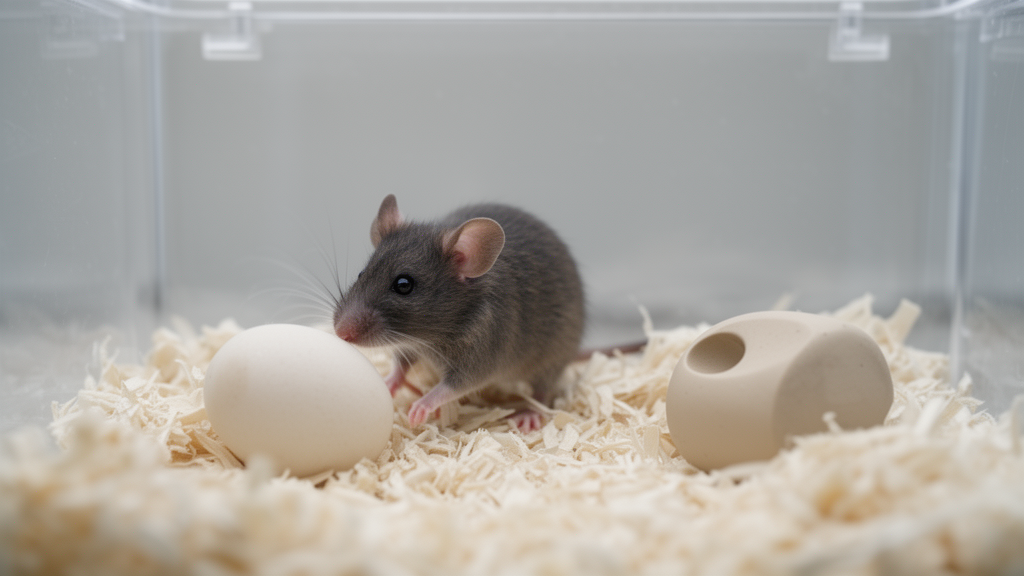
Researchers have developed an open-source platform called Operant House that automates operant conditioning tests in individually housed mice. The system detected significant working-memory deficits at five months of age in a knock-in mouse model carrying familial Alzheimer’s disease-associated amyloid precursor protein mutations, alongside subtle, spatially heterogeneous synaptic alterations in the prefrontal cortex.

Operant conditioning is a powerful method for probing cognitive functions, but its widespread use is constrained by low throughput, labor-intensive procedures and high costs. Operant House was designed to reduce experimenter intervention while allowing testing inside the home cage. The programmable device combines a touchscreen, retractable levers and a water-reward port, with live camera observation and recorded videos providing continuous monitoring of behavior. Because mice are individually housed, the researchers note that careful attention to animal welfare is required.

The team demonstrated the platform through two cognitive protocols. A delayed non-match-to-position test was used to assess working memory by requiring mice to remember the location of a stimulus across a delay. A two-choice spatial discrimination test addressed working-memory-related processes and behavioral flexibility. These tasks illustrate how Operant House can deliver automated operant conditioning with minimal experimenter intervention rather than relying on manually conducted procedures.

When applied to the familial Alzheimer’s model, the delayed non-match-to-position protocol revealed significant working-memory deficits as early as five months of age. At this stage, the researchers also detected subtle and spatially heterogeneous synaptic changes in the prefrontal cortex. Conventional electrophysiological measures were largely preserved at the same age, showing that the automated behavioral and synaptic observations occurred alongside electrophysiological findings that did not show comparable changes.

The study is a proof of concept centered on automated testing of higher cognitive functions in mice. Its results demonstrate the platform’s use for detecting behavioral and prefrontal synaptic differences in a familial Alzheimer’s disease model; they do not establish clinical benefits in people or show that the observed age of onset applies to humans. The findings also underscore the welfare requirements associated with individual home-cage testing. By combining programmed conditioning tasks with continuous video monitoring, Operant House offers a cost-effective and scalable platform for studying learning and higher cognition in mouse disease models.

Subject of Research: Automated home-cage operant testing of working memory in a familial Alzheimer’s disease mouse model

Article Title: Operant House: A versatile open-source platform for automated operant conditioning testing of mice in home cages

Article References: Otsuka, S., Nakamura, Y., Ito-Ishida, A., Suzuki, K., Ishikawa, A., Matsuda, K., Suyama, S., Contractor, A., & Yuzaki, M. (2026). Operant House: A versatile open-source platform for automated operant conditioning testing of mice in home cages. PLOS One, 21(10), e0360626. https://doi.org/10.1371/journal.pone.0360626

Image Credits: AI Generated

DOI: 10.1371/journal.pone.0360626

Keywords: operant conditioning, home cage, touchscreen testing, working memory, Alzheimer’s disease, mouse model, prefrontal cortex, synaptic alterations, automated behavior, open-source platform, Operant, House

Cite Scienmag News

Diana Fleming. (October 20, 2026). Home-cage testing finds early memory deficits in Alzheimer’s mouse model. Scienmag. https://scienmag.com/home-cage-testing-finds-early-memory-deficits-in-alzheimers-mouse-model/

Diana Fleming. "Home-cage testing finds early memory deficits in Alzheimer’s mouse model." Scienmag, 20 October 2026, https://scienmag.com/home-cage-testing-finds-early-memory-deficits-in-alzheimers-mouse-model/. Accessed 20 October 2026.

Diana Fleming. "Home-cage testing finds early memory deficits in Alzheimer’s mouse model." Scienmag. October 20, 2026. https://scienmag.com/home-cage-testing-finds-early-memory-deficits-in-alzheimers-mouse-model/


Tags: Alzheimer's diseaseAlzheimer's disease mouse modelanimal welfare in cognitive experimentsautomated behaviorautomated behavioral monitoringautomated home-cage testingdelayed non-match-to-position taskearly memory deficits in Alzheimer’shigh-throughput cognitive testinghome cageHousemouse modelopen-source platformOperantoperant conditioningoperant conditioning in miceprefrontal cortexspatial working memory assessmentsynaptic alterationssynaptic alterations in prefrontal cortextouchscreen behavioral assaystouchscreen testingtwo-choice spatial discrimination testworking memory
Share26Tweet16
Previous Post

Kyoto iPSC Symposium Reviews Two Decades of Research and Translation

Next Post

Artificial intelligence-empowered 4D bioprinting for craniomaxillofacial subunit reconstruction: a comprehensive review

Related Posts

Chinese transplant patients reveal how symptoms reshape eating and recovery
Science News

Chinese transplant patients reveal how symptoms reshape eating and recovery

October 20, 2026
Artificial intelligence-empowered 4D bioprinting for craniomaxillofacial subunit reconstruction: a comprehensive review
Science News

Artificial intelligence-empowered 4D bioprinting for craniomaxillofacial subunit reconstruction: a comprehensive review

October 20, 2026
Kyoto iPSC Symposium Reviews Two Decades of Research and Translation
Biology

Kyoto iPSC Symposium Reviews Two Decades of Research and Translation

October 20, 2026
Kashmir fruit growers manage inputs well but operate at inefficient scales
Science News

Kashmir fruit growers manage inputs well but operate at inefficient scales

October 20, 2026
Spectroscopy and DFT characterize methyl 6-bromo-2-naphthoate
Chemistry

Spectroscopy and DFT characterize methyl 6-bromo-2-naphthoate

October 20, 2026
Carbonation curing helps plain concrete but may shorten blended-cement life
Technology and Engineering

Carbonation curing helps plain concrete but may shorten blended-cement life

October 20, 2026
Next Post
Artificial intelligence-empowered 4D bioprinting for craniomaxillofacial subunit reconstruction: a comprehensive review

Artificial intelligence-empowered 4D bioprinting for craniomaxillofacial subunit reconstruction: a comprehensive review

  • Mothers who receive childcare support from maternal grandparents show more optimized

    Mothers who receive childcare support from maternal grandparents show more parental warmth, finds NTU Singapore study

    27656 shares
    Share 11059 Tweet 6912
  • University of Seville Breaks 120-Year-Old Mystery, Revises a Key Einstein Concept

    1061 shares
    Share 424 Tweet 265
  • Bee body mass, pathogens and local climate influence heat tolerance

    682 shares
    Share 273 Tweet 171
  • Researchers record first-ever images and data of a shark experiencing a boat strike

    546 shares
    Share 218 Tweet 137
  • Groundbreaking Clinical Trial Reveals Lubiprostone Enhances Kidney Function

    531 shares
    Share 212 Tweet 133
Science

Embark on a thrilling journey of discovery with Scienmag.com—your ultimate source for cutting-edge breakthroughs. Immerse yourself in a world where curiosity knows no limits and tomorrow’s possibilities become today’s reality!

RECENT NEWS

  • Chinese transplant patients reveal how symptoms reshape eating and recovery
  • Artificial intelligence-empowered 4D bioprinting for craniomaxillofacial subunit reconstruction: a comprehensive review
  • Home-cage testing finds early memory deficits in Alzheimer’s mouse model
  • Kyoto iPSC Symposium Reviews Two Decades of Research and Translation

Categories

  • Agriculture
  • Anthropology
  • Archaeology
  • Athmospheric
  • Biology
  • Biotechnology
  • Blog
  • Bussines
  • Cancer
  • Chemistry
  • Climate
  • Earth Science
  • Editorial Policy
  • Marine
  • Mathematics
  • Medicine
  • Pediatry
  • Policy
  • Psychology & Psychiatry
  • Science Education
  • Science News
  • Social Science
  • Space
  • Technology and Engineering

Subscribe to Blog via Email

Enter your email address to subscribe to this blog and receive notifications of new posts by email.

Join 5,150 other subscribers

© 2025 Scienmag - Science Magazine

Welcome Back!

Login to your account below

Forgotten Password?

Retrieve your password

Please enter your username or email address to reset your password.

Log In
No Result
View All Result
  • HOME
  • SCIENCE NEWS
  • CONTACT US

© 2025 Scienmag - Science Magazine

Discover more from Science

Subscribe now to keep reading and get access to the full archive.

Continue reading