


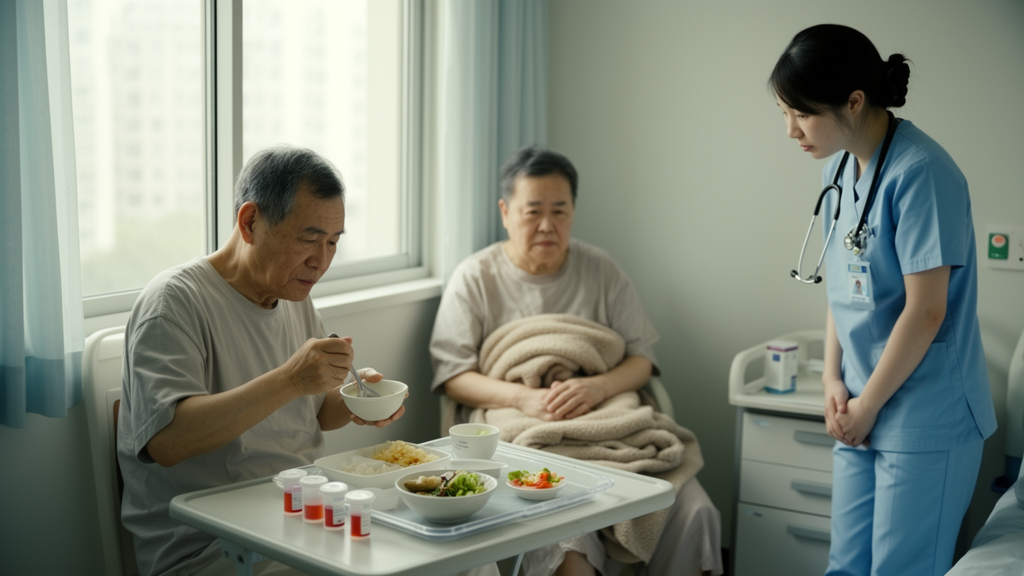
In a qualitative study of 16 Chinese patients recovering from hematopoietic stem cell transplantation, participants described nutrition during unit hospitalization not as an active route to rebuilding strength but as a constrained effort to sustain the smallest amount of food their bodies would tolerate. The findings show that treatment-related symptoms, protective isolation, restricted diets and institutional meal schedules could erode patients’ control over eating, even when they understood nutrition to be important. Rather than rejecting nutritional care, many patients adopted pragmatic strategies: choosing tolerable foods, reducing portions, eating slowly and drawing on support from clinicians and family members. The single-center study, conducted at a tertiary teaching hospital between February and June 2026, used semi-structured interviews to examine how patients experienced nutrition management after transplantation.
Most participants viewed nutrition as relevant to strength, treatment tolerance and recovery. Thirteen of 16 described eating as a way to support the body and prevent further decline, with some linking adequate intake to the regeneration of cells and the restoration of energy. Yet 12 held low expectations for meaningful nutritional improvement while hospitalized, and 11 treated reduced intake as an expected part of the transplant-unit experience. Patients often described their immediate objective as enduring the period until appetite and gastrointestinal function improved after discharge, rather than meeting an ideal intake target. This gap between recognizing nutrition’s importance and believing that eating could be improved in the unit points to a mismatch between protocol-style nutritional goals and the capacities of patients undergoing intensive treatment.
The transplant-unit environment directly limited patients’ control over what and when they could eat. Nine participants described constant clinical interruptions, continuous intravenous infusions, frequent toileting and poor sleep as leaving them exhausted and without the energy to prepare for or complete meals. Multiple intravenous lines also limited mobility for some patients. The exhaustion was not presented as a direct cause of malnutrition in the statistical sense, but it weakened their ability to act on nutritional advice: one participant said they were too tired to read educational materials or concentrate on eating, while another described being unable to manage ordinary meals. Their accounts show how the physical demands embedded in inpatient transplantation can make even willing patients unable to meet recommendations centered on eating enough.
Dietary restrictions narrowed choice for all 16 participants. Patients described restrictions on rich or strongly tonic foods, including eel, soft-shelled turtle and ginseng, as well as limitations on particular fish, seafood and spicy dishes. Some complied because doctors or nurses advised them not to eat these foods, but the restrictions could leave them with meals that differed markedly from their usual preferences. Eight participants also described a mismatch between home eating patterns and the unit’s fixed schedule. Some had small appetites and became hungry long before the next official meal, yet there was no food between the three main meals. Others ate alone rather than with family, making meals feel cold and task-like. Reheating family-cooked food for delivery to the unit could also reduce its texture, while transport over long distances left some meals soggy and less appealing.
Nutrition-impact symptoms affected not only the quantity consumed but also the meaning of food. Eleven participants reported nausea, vomiting or taste changes that made previously familiar foods repulsive or difficult to distinguish. The smell of meat, for example, could provoke vomiting, while chemotherapy-related changes made meals taste bitter or bland. Oral mucositis created another gap: 12 participants described painful mouths, ulcers and swallowing difficulty that sometimes left them unable to consume even water despite feeling hungry. Gastrointestinal symptoms were still more widespread, with 14 reporting diarrhea, bloating, impaired digestion or concern about poor absorption. Some feared that eating would trigger vomiting or abdominal pain, and one patient said oral nutritional supplement powder caused diarrhea. In these accounts, food ceased to function consistently as something nourishing or comforting; it could instead become painful, uncertain or futile.
Patients nevertheless tried to reclaim limited control over eating. Ten prioritized foods they could tolerate, even when those choices did not match ideal nutritional targets. Common choices included rice-water congee, millet congee, potato noodles, soft starch sheets, winter melon and steamed egg custard. Nine adjusted the pace, amount and expectations of eating to maintain a minimal intake. Some ate tiny bites while watching television or scrolling through a phone to divert attention from nausea; others stopped before reaching a point that would provoke vomiting. Seven also sought changes through conversations with family or clinical staff, including substitutions in food preparation or advice about whether a particular food was permitted. These behaviors indicate adaptation, but the study did not test whether they improved nutritional status or clinical outcomes.
When asked what form of nutritional support would be more useful, 13 of 16 participants wanted guidance that was practical and adapted to their current symptoms. Broad encouragement to “eat more” did not answer practical questions such as which food might be gentle on an unsettled stomach or when meat might be reintroduced after diarrhea. Patients wanted recommendations to change as nausea, oral pain, bloating and appetite fluctuated. Eight also wanted some autonomy over food-related decisions within the unit’s safety requirements, while 11 preferred realistic timelines for recovery over optimistic predictions. Several reported being told that weight or appetite could take months to improve, and one said that advice about rapid dietary restoration was discouraging when symptoms remained severe.
Family participation was central to these preferences: 14 of 16 participants regarded relatives as important participants in nutritional care. Family members prepared food, monitored restrictions, helped decide what could safely be brought into the unit and encouraged patients to continue eating. Their involvement was practical but also relational. For some, eating represented a collective family responsibility rather than an isolated act of self-management. Eight participants additionally said that advice was more acceptable when it aligned with culturally familiar ideas about nourishment and recovery. Their examples included congee for a sensitive stomach, mild foods such as pumpkin and taro, and the belief that nutritional restoration should proceed gradually. The researchers cautioned that food preferences and beliefs are not uniform across China; regional cuisine, local customs and stage-specific recovery beliefs may shape what different patients consider appropriate.
The study provides a patient-centered account of a difficult clinical period, but its evidence is preliminary. It included only 16 participants from one institution, all interviewed three to 21 months after transplantation, so recall bias is possible. The interviews averaged 27 minutes, which may have limited the depth of some accounts, and social-desirability bias could have influenced discussion of food, family support and treatment cooperation. The researchers did not compare patients’ accounts with those of nurses, physicians, dietitians or family caregivers, and patients with the most severe symptoms or those receiving enteral or parenteral nutrition may have been underrepresented. Accordingly, the findings describe how these participants experienced nutrition management rather than demonstrating that a particular nutritional intervention improves outcomes. Their central message is that transplant-unit nutrition is embodied and relational: successful support may need to account for symptoms, institutional constraints, family roles, cultural understandings of food and realistic recovery timelines, not merely prescribe intake targets.
Subject of Research: Patient experiences of nutrition management during hematopoietic stem cell transplantation hospitalization
Article Title: Chinese HSCT patients' perceptions and experiences of nutrition management during transplant-unit hospitalization: a qualitative study
Article References: Wang, Y., Cheng, Q., Zhu, M., Xu, H., Tu, N., Zhu, J., & Zhang, X. (2026). Chinese HSCT patients' perceptions and experiences of nutrition management during transplant-unit hospitalization: a qualitative study. Frontiers in Nutrition, 13, Article 1970435. https://doi.org/10.3389/fnut.2026.1970435
Image Credits: AI Generated
DOI: 10.3389/fnut.2026.1970435
Keywords: hematopoietic stem cell transplantation, nutrition management, nutrition-impact symptoms, transplant unit, qualitative study, Chinese patients, food preferences, family caregiving, mucositis, nutritional recovery, Chinese, HSCT
Cite Scienmag News
Daisy Hatcher. (October 20, 2026). Chinese transplant patients reveal how symptoms reshape eating and recovery. Scienmag. https://scienmag.com/chinese-transplant-patients-reveal-how-symptoms-reshape-eating-and-recovery/
Daisy Hatcher. "Chinese transplant patients reveal how symptoms reshape eating and recovery." Scienmag, 20 October 2026, https://scienmag.com/chinese-transplant-patients-reveal-how-symptoms-reshape-eating-and-recovery/. Accessed 20 October 2026.
Daisy Hatcher. "Chinese transplant patients reveal how symptoms reshape eating and recovery." Scienmag. October 20, 2026. https://scienmag.com/chinese-transplant-patients-reveal-how-symptoms-reshape-eating-and-recovery/


