


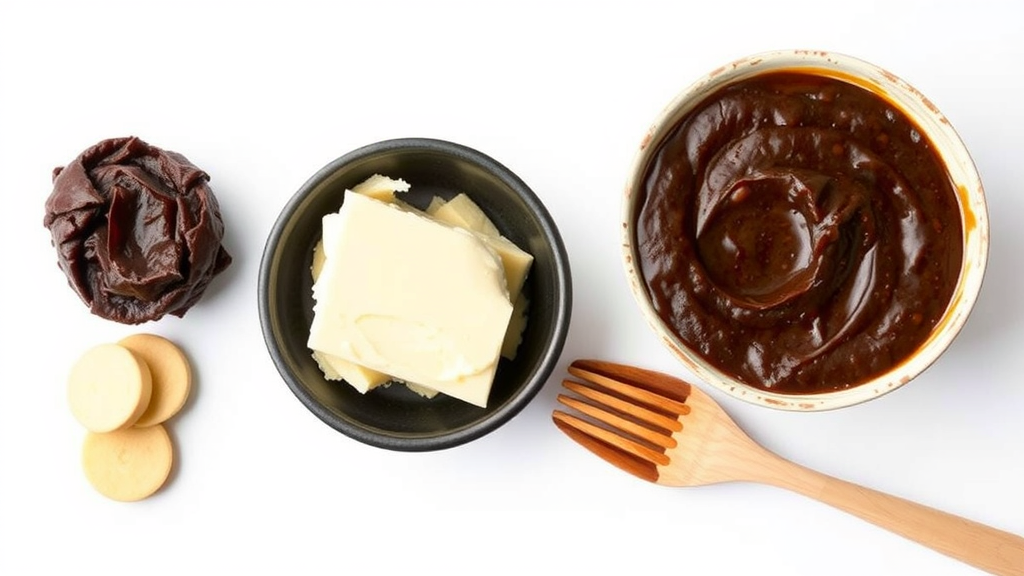
Butter has long been treated as a simple staple: cream, churned and washed, molded into blocks and prized mainly for its richness. But a new study from South Korea suggests that one of the world’s oldest fermentation traditions could transform this everyday fat into something far more interesting. Researchers at Kongju National University and Chungnam National University have shown that extracts from Korean traditional fermented soy pastes can be used to ferment butter, producing a product with higher lactic acid bacteria counts, enhanced umami and sour notes, a more appealing golden color, and better scores in consumer taste panels than butter made with a commercial starter culture. The work, published in Food Science of Animal Resources, points to a novel way of importing the microbial and biochemical wealth of traditional fermented foods into modern dairy products.
The team focused on three iconic Korean fermented soybean products: cheonggukjang, doenjang, and meju. Although all three begin with boiled soybeans, they diverge dramatically in their fermentation conditions, microbial communities, and resulting chemistry. Cheonggukjang is fermented briefly and with little salt, allowing Bacillus species to dominate. Doenjang undergoes prolonged maturation in a high-salt environment that reshapes its microbial ecology. Meju, the fermented soybean brick that serves as the foundation for both doenjang and soy sauce, is dominated by fungi such as Aspergillus species and is rich in the enzymes and metabolites those microbes generate. Because these pastes are known to contain bioactive compounds with antioxidant, anti-inflammatory, and immunomodulatory properties, the researchers reasoned that their extracts might act as functional starter ingredients rather than mere flavorings.
To test the idea, the scientists prepared extract solutions from commercially purchased cheonggukjang, doenjang, and meju by diluting each paste 1:100 in distilled water, then centrifuging and filtering the mixture. Each extract was inoculated at 0.5 percent by volume into 400 milliliters of milk cream. A control butter was fermented with a commercial starter containing Streptococcus thermophilus and Lactobacillus delbrueckii subsp. bulgaricus. All creams were fermented at 37 degrees Celsius for 24 hours, aged at 4 degrees Celsius for 12 hours, and then churned at 280 revolutions per minute for 15 minutes. The resulting butters were subjected to a battery of analyses covering pH, color, viscosity, moisture and fat content, microbial counts, electronic nose and electronic tongue profiling, and a sensory evaluation by a sixteen-member trained panel.
The pH results immediately revealed a fundamental biochemical divide. Butters fermented with the soy paste extracts had significantly higher pH values than the control, with the cheonggukjang sample highest of all. The explanation lies in the contrasting metabolisms of the microbial communities involved. Commercial lactic acid starter cultures flood the cream with lactic acid early in fermentation, driving pH down. The mixed communities drawn from traditional pastes, by contrast, include fungi and Bacillus species that decompose proteins and deaminate amino acids, releasing ammonia and other alkaline metabolites that push pH upward. The authors suggest this milder acidity may actually benefit the product, reducing sourness while allowing flavor-producing microbes to remain metabolically active, potentially enhancing both flavor quality and the delivery of probiotic organisms.
Physical properties told a reassuring story for manufacturers. Viscosity showed no significant differences among any of the butters, treated or control. Butter’s high-fat water-in-oil matrix provides substantial emulsification stability, and the small quantities of microbial metabolites generated during fermentation were simply not enough to alter its flow behavior. This means soy paste extracts can be incorporated without compromising the texture consumers expect. Color, however, did change: the meju and cheonggukjang butters were significantly more yellow than the control and the doenjang butter. Bacillus species abundant in these pastes produce peptides, free amino acids, and Maillard reaction products during fermentation, while molds and yeasts can promote browning reactions between reducing sugars and amino acids. The yellowness matters commercially, because previous research has shown that consumers associate a deeper golden hue in butter with higher purchase intention.
Microbial counts exposed the most striking differences. Total plate counts were significantly higher in all three extract-fermented butters than in the control, with cheonggukjang butter highest, reflecting its Bacillus-rich, low-salt, short-fermentation origin. Lactic acid bacteria counts were also elevated in all treated samples, but here meju butter took the lead. The researchers attribute this to Aspergillus oryzae, the fungus central to meju fermentation, whose powerful enzymes break proteins and carbohydrates into low-molecular-weight compounds that effectively feed lactic acid bacteria. Meju-derived communities also showed greater tolerance and adaptability to environmental stress than freeze-dried commercial strains. The doenjang-derived bacteria, adapted to high-salt conditions, grew more slowly in butter’s low-salt, high-fat environment, while cheonggukjang organisms, adapted to high water activity, were similarly constrained in the low-moisture product.
The flavor chemistry was mapped with an electronic nose, which identified elevated levels of volatile compounds including trimethylamine, ethanethiol, ethyl acetate, 2-methylbutanal, 3-methyl-1-butanol, and propyl acetate in the extract-fermented butters. Ethyl acetate, associated with buttery and fermented notes, was markedly higher in the meju butter. Principal component analysis of the aroma data achieved a discrimination index of 88, with the first principal component alone explaining 97.4 percent of the variance, cleanly separating the control from the treated samples and distinguishing the treated samples from one another. Notably, the sulfurous, rancid, and beany flavors often associated with fermented soybean products were not detected in the finished butter, suggesting the extracts can contribute desirable fermented aromas without importing off-flavors.
The electronic tongue added a taste dimension. Extract-fermented butters scored higher than the control in sourness, saltiness, and umami. The elevated sourness tracked with lactic acid bacteria counts, since more bacteria meant more organic acids. Saltiness was highest in the doenjang butter, consistent with residual salts carried over from its brine-fermented origin. Umami, measured against a monosodium glutamate reference, was highest in the meju butter, reflecting its greater content of glutamic acid, small peptides, and nucleotides released by the proteolytic activity of Aspergillus and Bacillus enzymes. Interestingly, the taste-based principal component analysis showed minimal differences among the three treated butters, indicating that despite their different origins, the pastes share overlapping microbial communities and metabolite profiles that converge in the finished dairy matrix.
The sensory panel delivered the verdict that matters most to consumers. The meju butter scored highest in flavor, taste, absence of off-flavor, and overall acceptability, and together with the cheonggukjang butter earned the top appearance scores, mirroring the color measurements. Panelists rated all extract-fermented butters higher than the control for texture attributes, likely because metabolites such as melanoidins, polyphenols, and peptides disperse within the fat matrix and moderate greasiness. The authors caution that their extracts contained both microorganisms and metabolites, so the observed effects reflect their combined action, and further microbiological work will be needed to separate the two. Still, the conclusion is clear: meju extract in particular can meaningfully improve the quality, microbial profile, and sensory appeal of fermented butter. As demand grows for dairy products that offer health benefits beyond basic nutrition, this study suggests that centuries-old Korean fermentation wisdom may have a place on the modern breakfast table, one golden, umami-rich pat at a time.
Subject of Research: Use of Korean traditional fermented soy paste extracts as starter ingredients to improve the quality and sensory properties of fermented butter
Article Title: Quality properties of fermented butter using extract solution from Korean traditional fermented pastes
Article References: Jeong, Y.-S., Yong, H. I., & Park, S.-Y. (2026). Quality properties of fermented butter using extract solution from Korean traditional fermented pastes. Food Science of Animal Resources, 46(1), Article 92. https://doi.org/10.1007/s44463-026-00089-2
Image Credits: AI Generated
DOI: 10.1007/s44463-026-00089-2
Keywords: fermented butter, Korean fermented soy paste, meju, doenjang, cheonggukjang, lactic acid bacteria, electronic nose, electronic tongue, sensory evaluation, food fermentation, dairy quality, umami
Cite Scienmag News
Alan Morgan. (September 12, 2026). Korean Fermented Soy Pastes Turn Ordinary Butter Into a Flavor-Rich Functional Food. Scienmag. https://scienmag.com/korean-fermented-soy-pastes-turn-ordinary-butter-into-a-flavor-rich-functional-food/
Alan Morgan. "Korean Fermented Soy Pastes Turn Ordinary Butter Into a Flavor-Rich Functional Food." Scienmag, 12 September 2026, https://scienmag.com/korean-fermented-soy-pastes-turn-ordinary-butter-into-a-flavor-rich-functional-food/. Accessed 5 October 2026.
Alan Morgan. "Korean Fermented Soy Pastes Turn Ordinary Butter Into a Flavor-Rich Functional Food." Scienmag. September 12, 2026. https://scienmag.com/korean-fermented-soy-pastes-turn-ordinary-butter-into-a-flavor-rich-functional-food/


