

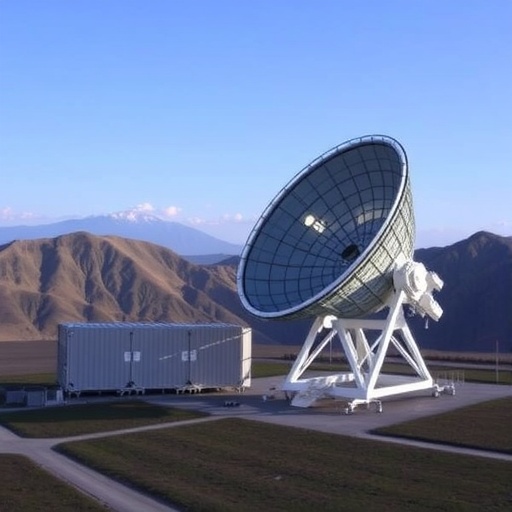
South Korea has dramatically expanded its stake in what promises to be one of the most revolutionary ground-based observatories ever built, injecting new funds into the Giant Magellan Telescope (GMT) and bringing its total financial commitment to nearly $110 million. The move, announced on July 7, 2026, solidifies the Korea Astronomy and Space Science Institute (KASI) as the GMT’s third-largest partner and ensures that the nation’s scientists will remain at the forefront of the coming era of extremely large telescopes. The fresh investment arrives at a pivotal moment: the consortium building the telescope has elected to privately fund a critical phase of the U.S. National Science Foundation’s review process, an unusual step that highlights both the urgency and the confidence driving this monumental project.
At the heart of this push is the NSF’s Major Facilities Final Design Phase, which commenced in June 2025 and runs through 2027. Traditionally, this kind of review receives direct NSF support, but the international GMT consortium — with South Korea as a key player — decided to shoulder a significant portion of the cost privately. By doing so, they keep the telescope on track for construction in Chile’s Atacama Desert without the delays that often accompany complex public funding cycles. The decision underscores the consortium’s belief that the science enabled by the GMT is too important to wait, and KASI’s multimillion-dollar infusion is a tangible vote of confidence that the age of 30-meter-class telescopes must begin as soon as possible.
The GMT’s design is a radical departure from conventional telescopes. Instead of a single monolithic mirror, it will use seven enormous 8.4-meter primary mirrors arranged in a hexagonal flower-like pattern, yielding a combined light-collecting area equivalent to a 25.4-meter aperture. This segmented mirror approach, backed by adaptive optics that can correct atmospheric turbulence in real time, will deliver images up to ten times sharper than those from the Hubble Space Telescope at certain wavelengths. The optical system funnels light into a suite of exquisitely sensitive instruments, two of which are being developed with substantial KASI involvement and stand to redefine our understanding of the cosmos.
The first of these, the GMT-Consortium Large Earth Finder (G-CLEF), is a high-resolution optical spectrograph engineered to dissect starlight with unprecedented precision. By measuring the tiny, periodic Doppler shifts in a star’s spectrum caused by the gravitational tug of an orbiting planet, G-CLEF will be able to detect rocky, Earth-mass worlds in the habitable zones of nearby Sun-like stars. Its spectral resolution and stability are so finely tuned that it could, over many nights of observation, tease out the signal of a planet whose gravitational influence shifts its star’s velocity by just a few centimeters per second — the realm where true Earth twins hide. This capability makes G-CLEF a direct pathfinder for future space missions aimed at characterizing exoplanet atmospheres.
Equally transformative is KASI’s work on the GMT Near-Infrared Spectrograph (GMTNIRS). Operating in the near- to mid-infrared range, this instrument will penetrate the dust-shrouded nurseries where stars and planets are born, revealing the chemistry and kinematics of protoplanetary disks in fine detail. Because it can observe at long wavelengths where thermal emission from dust and young planets peaks, GMTNIRS will trace the formation of planetary systems at stages invisible to optical telescopes. It will also reach back to the epoch of the first galaxies, measuring the spectral features of ancient stellar populations to chart how the Universe emerged from its dark ages. Both instruments rely on advanced cryogenic optics and detectors that KASI engineers have helped design, building technical expertise that South Korea’s nascent space agency, KASA, will leverage for its own ambitious missions.
All of this technology will be deployed at the GMT’s site on Las Campanas Peak in Chile’s Atacama Desert, a location chosen for its extreme aridity, high altitude, and astonishing atmospheric stability. The Southern Hemisphere sky accessible from here contains some of the most coveted targets in modern astronomy: the galactic center, with its supermassive black hole that the Event Horizon Telescope has already immortalized; Alpha Centauri, the nearest star system to our own and a prime candidate for habitable zone planets; and the Magellanic Clouds, laboratories of stellar evolution right on our doorstep. By 2030, Chile is expected to host roughly 75 percent of the world’s astronomical observing capability, and the GMT will be the flagship of that transformation.
KASI has been part of the GMT project since 2009, and its deepened involvement mirrors a broader shift in global astronomy. The science questions that drive the field — Are we alone? How did the first light emerge? — demand facilities that no single nation can build alone. The GMT’s international consortium now spans the United States, South Korea, Australia, Brazil, and others, pooling resources and expertise. KASI’s trajectory from a junior partner to a core contributor reflects South Korea’s strategic vision of using participation in these mega-science projects to accelerate its own research capacity and to secure a seat at the table when the next generation of discoveries reshapes textbooks.
With the NSF final design phase underway and major components of the telescope already cast and polished — including most of the colossal primary mirror segments — the path to first light is becoming increasingly tangible. The collective effort aims to begin science operations early in the next decade, just as the Vera C. Rubin Observatory, in which KASI is also a partner, begins releasing torrents of survey data. The GMT will provide the spectroscopic follow-up muscle to pursue the most tantalizing targets Rubin uncovers. In an era where astronomy’s most profound questions demand an orchestrated interplay between survey telescopes, space observatories, and giant ground-based eyes, South Korea’s renewed commitment ensures it will not merely witness the discoveries to come — it will help make them.
Subject of Research: Development of the Giant Magellan Telescope and its scientific instrumentation, including the G-CLEF and GMTNIRS spectrographs.
Article Title: South Korea Cements Role in Giant Magellan Telescope with $110 Million Commitment
News Publication Date: July 7, 2026
Web References:
Giant Magellan Telescope Advances to National Science Foundation Final Design Phase
References: None
Image Credits: Damien Jemison, Giant Magellan Telescope – GMTO Corporation
Keywords
Giant Magellan Telescope, KASI, Korea Astronomy and Space Science Institute, extremely large telescope, G-CLEF, GMTNIRS, NSF Final Design Phase, Chile astronomy, exoplanets, ground-based astronomy, adaptive optics, infrared spectroscopy


