


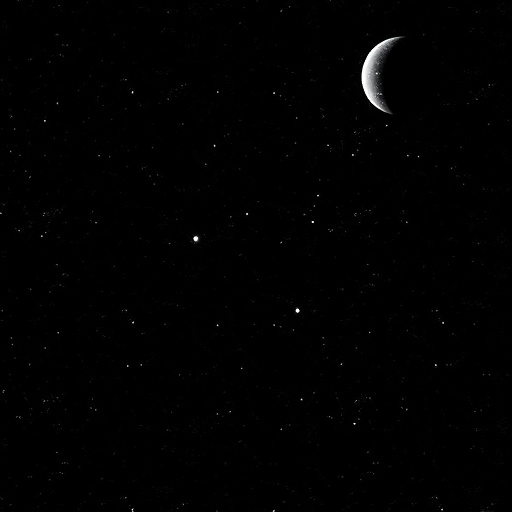
The James Webb Space Telescope (JWST) has once again revolutionized our understanding of the cosmos, this time by offering an unprecedented glimpse into the surface composition and history of a rocky exoplanet. The recent study targeting LHS 3844 b, a terrestrial planet orbiting a nearby M-dwarf star, leverages JWST’s mid-infrared spectroscopy capabilities to decode the surface characteristics of this distant world. This breakthrough marks a significant advance in exoplanet science, as it forges a path beyond atmospheric analysis toward direct surface characterization, uncovering clues about not only the planet’s exterior but also its geological past and interior processes.
LHS 3844 b orbits its parent star in a tight, rapid revolution, rendering it tidally locked with permanent dayside and nightside hemispheres. Prior studies have identified it as a rocky world with a brightness and size consistent with terrestrial composition. However, until now, the exact nature of its surface materials remained a mystery. Using JWST’s Mid-Infrared Instrument (MIRI), researchers captured a thermal emission spectrum spanning 5 to 12 micrometers, a wavelength range sensitive to the reflective and emissive signatures of varied silicate minerals and geological materials. This spectral window holds critical potential to distinguish different types of rock based on their unique vibrational modes and chemical bonds, a method analogous to remote sensing techniques applied in terrestrial geology.
The resulting spectrum of LHS 3844 b was strikingly featureless and dark, a profile well-matched by surfaces dominated by low-silica volcanic rocks such as basalt or olivine-rich compositions. Basalt, a common product of volcanic activity, suggests that the planet’s surface resembles the dark, rocky plains found on the Moon or Mercury, hinting at a history of volcanic resurfacing but minimal recent volcanic activity. The low reflectivity indicated by the data further implies a surface that has undergone significant weathering, likely due to relentless exposure to space weather phenomena such as micrometeorite bombardment and stellar wind irradiation.
One of the key insights from this thermal emission spectrum is the refutation of small-grained, fresh powdery surfaces. Freshly pulverized rock dust tends to exhibit pronounced spectral features in the mid-infrared and higher albedo; however, the observed data deviate from this expectation. Instead, the measurements align more closely with weathered, coarser-grained materials where the surface texture and mineral structure have been altered over time. Space weathering processes darken and flatten spectral features by modifying the surface at a microscopic scale, a phenomenon well-documented on airless bodies like the Moon, and now observed in an exoplanetary environment for the first time.
Intriguingly, the data also places strict upper limits on the presence of volcanic gases or transient exospheres composed of trace compounds such as carbon dioxide (CO₂) and sulfur dioxide (SO₂). The spectrum constrains CO₂ gas concentrations to no more than 100 mbar and SO₂ to below 10 µbar, both at high confidence levels (5σ and 3σ respectively). This suggests an absence of significant outgassing activity or active volcanism that might replenish an exosphere or atmosphere with these species. The lack of detectable volcanic gases supports the interpretation of LHS 3844 b as an airless, geologically inactive surface, or at least one that has not exhibited volcanic resurfacing in the recent geological past.
The implications of these findings extend beyond the characterization of a single exoplanet. The ability to resolve mid-infrared spectral features of rocky exoplanet surfaces opens a transformative new window into planetary science beyond the Solar System. It means astronomers can now begin to inventory planetary surfaces and their compositions remotely, providing a comparative baseline to understand planet formation, differentiation, and evolutionary pathways. Mineralogical insights can illuminate the thermal history, tectonic activity, and volatile inventory of distant worlds, enhancing our understanding of planetary habitability and the diversity of rocky planet outcomes in the galaxy.
JWST’s observations of LHS 3844 b act as a pioneering case study demonstrating that mid-infrared spectroscopy can discern surface compositions despite challenges posed by the faintness of signal and the interplay of different surface processes. The star’s relative proximity, combined with the planet’s favorable transit geometry and day-side illumination, afforded the optimal conditions to extract a thermal emission spectrum at high signal-to-noise ratio. Such spectra are sensitive to both bulk chemistry and physical conditions like grain size and roughness, attributes that may answer compelling questions about geological processes such as volcanism, tectonics, and space weathering on exoplanets.
The study also serves as a testament to the synergy between space telescopes and sophisticated planetary models. Laboratory spectral libraries of terrestrial and lunar rocks, along with experimental simulations of space weathering effects, were essential in interpreting the JWST data. By comparing LHS 3844 b’s spectrum against these analogs, researchers could confidently constrain surface mineralogy and rule out alternative hypotheses involving fresh, fine-grained silicates or thick exospheres. Continuous refinements in modeling atmospheric and surface processes will further enhance the fidelity of future interpretations as more planetary targets come into view with JWST.
The dark, featureless surface of LHS 3844 b hints at a harsh and austere planetary environment, devoid of the atmospheric and volcanic activity that might otherwise lead to more dynamic and chemically diverse spectral signatures. Such a surface might resemble ancient volcanic plains, frozen in time under the constant bombardment of stellar radiation and cosmic particles, slowly changing but fundamentally inert. If confirmed, this reinforces theories predicting that many rocky exoplanets orbiting close to small, cool stars could be geologically quiescent and deprived of substantial atmospheres, challenging assumptions about the habitability of tidally locked terrestrial exoplanets.
LHS 3844 b’s investigation is a milestone that encourages a future catalog of exoplanet surface observations, where JWST and next-generation observatories can systematically characterize the geology and surface chemistry of diverse terrestrial worlds. By mapping spectral variability among exoplanets, scientists can unlock population-level insights into planetary composition gradients, volcanic evolution, and the prevalence of Earth-like versus Moon-like surfaces throughout the galaxy. This will ultimately inform targets for follow-up observations, biosignature searches, and the selection of planets for further characterization with future missions.
The results also raise intriguing questions about the evolutionary fate of tidally locked planets. Without an atmosphere or ongoing volcano-driven surface renewal, these worlds’ surfaces endure a constant ray of harsh stellar radiation and wind, aging into dark, weathered plates of ancient rock. The lack of active geological resurfacing may pose challenges for habitability scenarios that depend on surface recycling or volatile exchange. However, these environments also provide a natural laboratory for studying how exoplanet surfaces evolve under extreme conditions fundamentally different from those on Earth.
In addition to its geophysical insights, the thermal emission spectrum measured by JWST sets a benchmark for the capabilities of space-based observatories. It illustrates how mid-infrared wavelengths can be harnessed, not only to reveal atmospheres but also directly to study surface compositions, a methodological advancement that could be revolutionary. Techniques refined on targets like LHS 3844 b will become invaluable tools for unlocking the secrets of smaller, less reflective worlds that have previously remained enigmatic due to observational limitations.
As astronomy progresses in this new era, combining JWST observations with ground-based telescopes and upcoming missions such as the Extremely Large Telescope (ELT) or the Origins Space Telescope will create a multi-faceted approach to exoplanetary science. Together, these observatories will provide complementary data to explore surface-atmosphere interactions, volcanic activity, and space weathering processes across a broad spectrum of planetary conditions, advancing our collective understanding of rocky exoplanets.
In summary, research on LHS 3844 b’s surface via JWST mid-infrared spectroscopy has broken new ground in exoplanet science, presenting the first robust characterization of a rocky exoplanet’s surface mineralogy and physical state. The identification of a dark, basaltic, and space-weathered terrain devoid of volcanic gases defines a novel class of exoplanet surfaces, setting the stage for future exploratory research. As these findings ripple through the astrophysical community, they illuminate the path toward decoding the myriad rocky worlds scattered throughout our galaxy, broadening the horizons of planetary science and the search for life beyond Earth.
Cite Scienmag News
Grant Pearson. (May 4, 2026). JWST Reveals Dark, Featureless Surface on LHS 3844b. Scienmag. https://scienmag.com/jwst-reveals-dark-featureless-surface-on-lhs-3844b/
Grant Pearson. "JWST Reveals Dark, Featureless Surface on LHS 3844b." Scienmag, 4 May 2026, https://scienmag.com/jwst-reveals-dark-featureless-surface-on-lhs-3844b/. Accessed 3 September 2026.
Grant Pearson. "JWST Reveals Dark, Featureless Surface on LHS 3844b." Scienmag. May 4, 2026. https://scienmag.com/jwst-reveals-dark-featureless-surface-on-lhs-3844b/


