


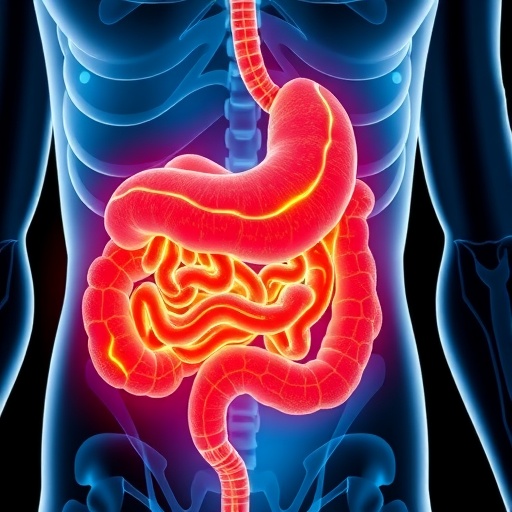
In an exhilarating breakthrough that promises to reshape our understanding of Parkinson’s disease (PD), researchers have illuminated a novel biological axis linking gut immunity and neurodegeneration. A study led by An, K., Wang, D., and Qu, Y., published in the prestigious journal npj Parkinson’s Disease in 2026, reveals that branched-chain amino acids (BCAAs), commonly known as essential nutrients pivotal for muscle metabolism, hold the key to mitigating CD4+ T-cell-associated gut immune inflammation in Parkinson’s patients. This groundbreaking revelation not only challenges prior assumptions centered exclusively on the brain but also opens up revolutionary therapeutic possibilities targeting the gut-immune-brain interface.
Parkinson’s disease, traditionally characterized by the progressive loss of dopaminergic neurons in the substantia nigra, manifests with hallmark motor symptoms such as tremor, rigidity, and bradykinesia. Although the central nervous system pathology has been extensively studied, emerging evidence in the last decade has increasingly implicated peripheral immune mechanisms and gut dysfunction in disease onset and progression. The gut-brain axis, a bidirectional communication network, is now recognized as a crucial modulator of neuroinflammation. However, the exact molecular players dictating this crosstown traffic have remained elusive—until now.
The study at hand elucidates how CD4+ T cells, a subset of adaptive immune cells, orchestrate an aberrant inflammatory cascade within the gut mucosa of Parkinson’s patients. These immune effectors, normally tasked with maintaining intestinal homeostasis, are pathologically activated, triggering a hostile microenvironment. This inflammation not only disrupts gut barrier integrity but potentially facilitates systemic immune activation and neuroimmune interactions, thereby exacerbating neuronal vulnerability in PD. By deciphering how these immune cells propagate inflammation, the researchers identify a critical therapeutic target beyond the neuronal landscape.
Branched-chain amino acids—leucine, isoleucine, and valine—known predominantly for their role in protein synthesis and energy metabolism, emerge in this investigation as potent immunomodulatory agents. Intriguingly, the administration of BCAAs was found to significantly attenuate the hyperactivation of CD4+ T cells in the gut, rebalancing the immune milieu. This effect was not a mere secondary consequence of nutritional supplementation but rather a direct biochemical modulation of T cell signaling pathways, including mTOR and NF-κB cascades, which orchestrate cellular metabolism and inflammatory gene expression. These findings hint at a novel intersection of metabolism and immunity in PD pathophysiology.
One of the most compelling aspects of the research lies in its rigorous experimental design, which combines sophisticated murine models of Parkinson’s disease with ex vivo human tissue analysis. The animal models, genetically engineered to recapitulate α-synuclein aggregation—a hallmark of PD pathology—displayed marked gut inflammation and increased infiltration of CD4+ T cells at early disease stages. Treatment with BCAAs not only dampened gut immune activation but also attenuated neurodegenerative markers in the brain, suggesting a systemic immunometabolic mechanism underlying disease progression. Complimentary human biopsy data corroborated these findings, demonstrating elevated gut CD4+ T cell activity in PD patients that was reduced upon BCAA exposure.
The implications of this study extend far beyond the academic sphere, heralding a paradigm shift in how Parkinson’s disease can be approached clinically. Current treatments predominantly address dopaminergic symptoms without altering disease course or targeting neuroinflammation. Interventions harnessing the immunoregulatory functions of BCAAs could revolutionize PD management by stabilizing gut immune homeostasis and preventing peripheral contributions to central neurodegeneration. Given the safety profile and widespread availability of BCAAs as dietary supplements, translational applications may rapidly advance into clinical trials, expediting potential therapeutic breakthroughs.
At a molecular level, the researchers elucidate that BCAAs modulate the metabolic fitness of CD4+ T cells, shifting them from a pro-inflammatory Th1/Th17 phenotype towards a regulatory T cell (Treg) state, thereby curbing autoimmune-like responses in the gut. This shifts the prevailing dogma that dietary amino acids serve passive roles toward a dynamic concept where metabolic substrates act as critical immunological checkpoints. Such insight resonates with broader fields of neuroimmunology and metabolic syndrome research, suggesting interlinked pathways that might underlie diverse chronic diseases.
Further delving into the gut environment, the study highlights how BCAA treatment helps restore the integrity of the intestinal epithelial barrier by reducing pro-inflammatory cytokine expression and enhancing tight junction proteins such as occludin and claudin. This fortification of mucosal defenses prevents translocation of microbial-derived antigens and endotoxins that could otherwise trigger systemic inflammation and promote neuroimmune activation. The restoration of barrier function represents a vital leverage point to interrupt the vicious cycle linking gut dysbiosis to cerebral neuroinflammation seen in PD.
The results open enlightening questions about how nutritional supplementation and metabolic interventions can be tailored in a precision medicine framework to combat neurodegenerative diseases. Individual variations in gut microbiota composition and amino acid metabolism could dictate personalized treatment regimens, optimizing the immunomodulatory benefits of BCAAs. Importantly, the research invites deeper inquiry into the timing, dosage, and formulation of BCAA administration to maximize efficacy and minimize unintended effects, highlighting the nuanced interplay of diet, immunity, and neurobiology.
In an era where neurodegenerative disorders impose escalating social and economic burdens, such studies provide a refreshing beacon of hope. They underscore the necessity of interdisciplinary collaboration, merging immunology, neurology, and metabolism into an integrated understanding of Parkinson’s disease. Translating benchside discoveries to bedside applications will undoubtedly require further longitudinal studies and clinical validation, but the foundation laid by this team is robust and promising.
This paradigm-shifting research dovetails with an expanding body of literature that calls for redefining Parkinson’s disease as a multisystem disorder with pivotal contributions from peripheral immune networks and metabolic dysregulation. It reframes BCAAs not merely as building blocks of proteins but as sophisticated modulators capable of recalibrating immune homeostasis. Harnessing these mechanisms could not only ameliorate neuroinflammation but potentially slow or halt disease progression, transforming patient prognoses.
Moreover, the findings ignite speculation on similar immune-metabolic interfaces that might be exploited in related neurodegenerative disorders such as Alzheimer’s disease and multiple sclerosis, where gut inflammation and T cell dysfunction also figure prominently. The study catalyzes a broader conversation on how biomedical science can harness naturally occurring molecules to reshape maladaptive immune responses without resorting to broad immunosuppression.
The authors emphasize the importance of cautious optimism as they advocate for clinical trials to evaluate BCAA supplementation’s safety and efficacy within well-characterized PD cohorts. Optimizing delivery methods—be it oral supplementation, intravenous administration, or even gut-targeted formulations—will be crucial to achieve therapeutic concentrations in the intestinal milieu. Additionally, monitoring immunological biomarkers will be indispensable to verify mechanistic hypotheses and fine-tune treatment protocols.
In conclusion, this pioneering research heralds an emergent frontier in neurodegenerative disease treatment, linking branched-chain amino acids to immune modulation within the gut and consequential neuroprotection. It boldly challenges entrenched notions of Parkinson’s pathology, advocating for a holistic view encompassing systemic immune crosstalk and metabolic stewardship. As the scientific community and clinicians eagerly anticipate further trials, this discovery stands as a palpable testament to the innovation that arises when immunometabolism converges with neuroscience, potentially reshaping the lives of millions affected by Parkinson’s disease worldwide.
Cite Scienmag News
Cassandra Pierce. (May 4, 2026). Branched-Chain Amino Acids Ease Gut Inflammation in Parkinson’s. Scienmag. https://scienmag.com/branched-chain-amino-acids-ease-gut-inflammation-in-parkinsons/
Cassandra Pierce. "Branched-Chain Amino Acids Ease Gut Inflammation in Parkinson’s." Scienmag, 4 May 2026, https://scienmag.com/branched-chain-amino-acids-ease-gut-inflammation-in-parkinsons/. Accessed 4 September 2026.
Cassandra Pierce. "Branched-Chain Amino Acids Ease Gut Inflammation in Parkinson’s." Scienmag. May 4, 2026. https://scienmag.com/branched-chain-amino-acids-ease-gut-inflammation-in-parkinsons/


