


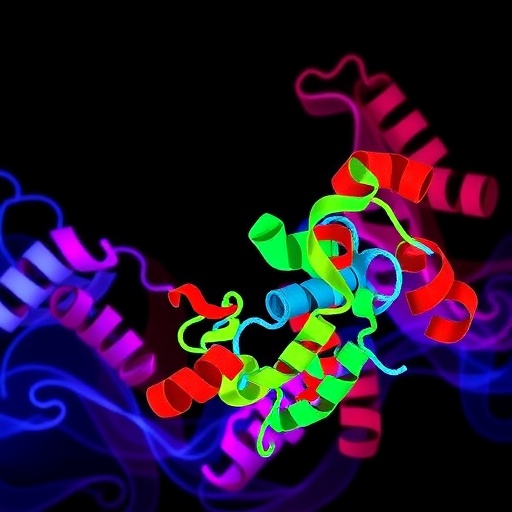
In a groundbreaking study poised to redefine therapeutic approaches in pancreatic cancer, researchers have unveiled the pivotal role of the zinc finger protein ZNF274 in modulating cancer cell behavior and drug resistance. This discovery provides critical insights into the molecular underpinnings governing lineage plasticity—a process by which cancer cells alter their phenotypic identity—ultimately leading to intrinsic resistance to CDK7 inhibitors, a class of drugs that has shown promise in targeting aggressive tumors. The study, published in Nature Communications, reveals that ZNF274 acts as a molecular gatekeeper, constraining the ability of pancreatic cancer cells to adapt and survive under pharmacological pressures.
Pancreatic cancer remains one of the deadliest malignancies, largely attributable to its late diagnosis and formidable resistance to existing treatments. Despite advances in molecular therapies, the intricate pathways that cancer cells exploit to evade drugs are still not fully understood. CDK7 inhibitors have emerged as potent candidates in halting tumor growth by obstructing transcriptional machinery essential for cancer cell proliferation. However, intrinsic resistance limits the clinical efficacy of these agents. The latest findings contribute a crucial layer of understanding by implicating ZNF274 in this resistance mechanism.
At the molecular level, ZNF274 is a zinc finger transcriptional regulator traditionally recognized for its role in chromatin remodeling and gene expression control. The study highlights how ZNF274 maintains cellular identity by restricting the flexibility of pancreatic tumor cells to shift lineage-specific gene expression profiles. This restriction prevents the tumor cells from adopting alternative, drug-resistant phenotypes, indirectly influencing their sensitivity to CDK7 inhibition. By constraining lineage plasticity, ZNF274 essentially governs the epigenetic landscape that determines cell fate decisions in the cancer microenvironment.
The researchers employed a combination of genomic profiling, chromatin immunoprecipitation sequencing (ChIP-seq), and RNA sequencing (RNA-seq) to map the genomic occupancy and transcriptional influence of ZNF274 in pancreatic tumor models. Their data illustrate that ZNF274 localizes to regulatory elements of lineage-specific genes and suppresses enhancer reprogramming that could otherwise enable cancer cells to transition into resilient cellular states. This functional repression is crucial to maintaining the tumor cells’ susceptibility to CDK7 inhibitors.
Further experiments demonstrated that the loss or suppression of ZNF274 leads to an enhanced epithelial-to-mesenchymal transition (EMT) phenotype—a hallmark of cellular plasticity often associated with metastasis and therapeutic resistance. Pancreatic cancer cells deficient in ZNF274 exhibit increased transcriptional heterogeneity and switch to transcriptional programs that effectively bypass the cytostatic effects of CDK7 inhibition. This adaptation not only facilitates tumor survival but also contributes to disease progression, underscoring the dual role of lineage plasticity in cancer aggressiveness and drug resistance.
The therapeutic implications of these findings are profound. Targeting the molecular pathways that regulate lineage plasticity could bolster the efficacy of CDK7 inhibitors and potentially overcome the notorious resistance barriers in pancreatic cancer treatment. The study suggests that combinational therapies aimed at restoring or mimicking ZNF274 function may re-sensitize resistant cancer cells to CDK7 blockade, paving the way for more durable clinical responses.
Importantly, the elucidation of ZNF274’s role extends beyond pancreatic cancer, offering a conceptual framework that might apply to other malignancies exhibiting high plasticity and resistance phenotypes. Lineage plasticity is increasingly recognized as a universal resistance mechanism in diverse cancers, including lung, prostate, and breast cancers. Therefore, insights from this research could catalyze broader oncology efforts toward precision medicine approaches that address tumor adaptability.
The methodological approach of this study is characterized by its integration of state-of-the-art epigenetics and transcriptomics, providing an unprecedented resolution into the dynamic interplay between chromatin regulators and drug response pathways. By dissecting the chromatin landscape, the investigators were able to trace the precise epigenetic alterations accompanying the loss of ZNF274, revealing how enhancer landscapes remodel in response to therapeutic stress.
One particularly novel aspect of the work is the identification of specific enhancer regions whose accessibility changes upon ZNF274 depletion. These enhancers act as switches that activate alternative gene expression programs, facilitating drug resistance. By mapping these enhancer landscapes, the study offers potential biomarkers for predicting therapeutic outcomes and for stratifying patients likely to benefit from CDK7 inhibitor therapies.
Clinically, pancreatic cancer patients often succumb to disease because of intrinsic or rapidly acquired resistance. The discovery of ZNF274’s role adds a new dimension to patient stratification, suggesting that expression levels or functional status of ZNF274 could serve as a predictive biomarker. This could enable oncologists to tailor treatment regimens, opting for CDK7 inhibitors when ZNF274-mediated constraints on plasticity are intact, or alternative strategies when plasticity is unrestrained.
In addition, the research opens avenues for drug discovery, highlighting ZNF274 itself or its downstream effectors as potential therapeutic targets. Small molecules or biologics designed to enhance ZNF274 activity or prevent its loss may complement CDK7 inhibition, transforming the standard of care for patients battling this formidable cancer.
The study’s implications also ripple into the broader understanding of cancer epigenetics. It underscores the intricate balance between transcription factors and chromatin regulators in determining cell fate under the duress of chemotherapy. This balance between fixed identity and plasticity dictates both tumor evolution and therapeutic vulnerability, a duality that is central to the future design of cancer interventions.
While the current research is preclinical, involving in vitro and in vivo models of pancreatic cancer, its translational relevance is clear. The detailed mechanistic insights into ZNF274 function provide a blueprint for clinical trials aimed at evaluating combinatorial treatment strategies that integrate epigenetic modulators with CDK7 inhibitors.
Looking forward, further studies will be essential to unravel the complex network of interactions in which ZNF274 participates. Determining how ZNF274 interfaces with other epigenetic regulators or signaling cascades will illuminate the broader regulatory circuits that sustain cancer cell identity and drug resistance. Moreover, exploring whether similar mechanisms govern plasticity in cancer stem cells could reveal novel therapeutic vulnerabilities.
The revelation that lineage plasticity, modulated by factors such as ZNF274, is a central driver of resistance to CDK7 inhibitors in pancreatic cancer marks an important milestone. It challenges existing paradigms of cancer therapy that focus primarily on targeting static genetic alterations, advocating instead for dynamic strategies that consider phenotypic adaptability and epigenetic regulation.
This study represents a leap forward in our molecular understanding of pancreatic cancer’s resilience, equipping researchers and clinicians with new tools to confront one of oncology’s toughest challenges. With further validation and clinical integration, targeting lineage plasticity could revolutionize how we approach treatment resistance, potentially extending survival and improving quality of life for countless patients worldwide.
Cite Scienmag News
Kristina Jarvis. (May 24, 2026). ZNF274 Blocks Lineage Switch, Fuels CDK7 Drug Resistance. Scienmag. https://scienmag.com/znf274-blocks-lineage-switch-fuels-cdk7-drug-resistance/
Kristina Jarvis. "ZNF274 Blocks Lineage Switch, Fuels CDK7 Drug Resistance." Scienmag, 24 May 2026, https://scienmag.com/znf274-blocks-lineage-switch-fuels-cdk7-drug-resistance/. Accessed 5 September 2026.
Kristina Jarvis. "ZNF274 Blocks Lineage Switch, Fuels CDK7 Drug Resistance." Scienmag. May 24, 2026. https://scienmag.com/znf274-blocks-lineage-switch-fuels-cdk7-drug-resistance/


