


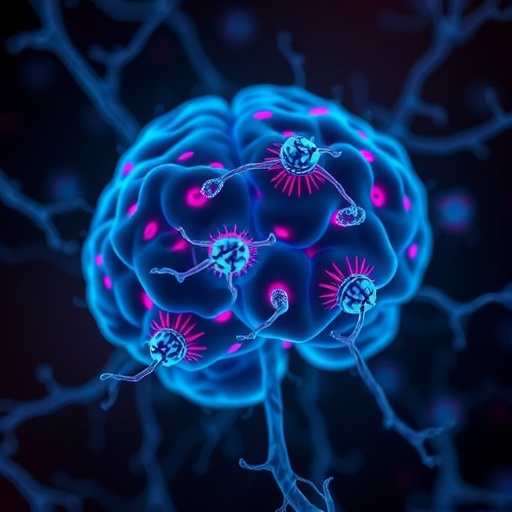
In a groundbreaking study that sheds light on the intricate cellular choreography underlying fear memory extinction, researchers have unveiled the pivotal role of microglia—traditionally known as the brain’s immune sentinels—in reshaping and silencing the neural circuits that store traumatic memories. This discovery, emerging from cutting-edge investigations into neuronal ensembles called engrams, dramatically expands our understanding of how the brain adapts to extinguish deeply embedded fear responses.
Fear memories are encoded in the brain by specialized groups of neurons, or engrams, that fire cohesively in response to trauma-associated cues. Extinction learning, the process by which these fear responses diminish through repeated exposure to non-threatening stimuli, has long been a focus of neuroscientific inquiry, particularly given its therapeutic relevance for conditions such as PTSD. Yet, despite extensive research, the precise cellular players and mechanisms orchestrating this attenuation of fear have remained elusive—until now.
The research conducted by Liu, Wo, Kramer, and colleagues, published in Nature Neuroscience in 2026, delves into the dynamic interactions between microglia and fear engram neurons within the dentate gyrus, a crucial hippocampal subregion implicated in contextual memory processing. Their findings reveal that microglia are not merely passive immune responders but active architects in the remodeling and regulation of neuronal activity during extinction learning.
During the extinction process, microglia were observed to migrate specifically toward the soma—the cell body—as well as to the dendritic processes of engram neurons. This targeted recruitment is instrumental in initiating transient neuronal silencing, wherein the reactivity of fear neurons is temporarily diminished. Such silencing is thought to underlie the suppression of fear behavior, highlighting a direct microglia-to-neuron communication pathway that modulates memory expression.
Intriguingly, when the authors employed strategies to inhibit microglial recruitment to the neuronal soma, this transient silencing was significantly impaired. The extinction-induced reduction in engram neuron reactivity was attenuated, resulting in a notable slowing of the extinction process. This causal relationship underscores microglia’s essential function in modulating neural excitability linked to the recall and fading of fear memory.
In parallel, microglia’s interactions with dendritic processes promote the physical remodeling of synaptic connections within the engram ensemble. This remodeling involves microglia-mediated engulfment of synapses—an activity reminiscent of their known role in synaptic pruning during development and plasticity. Such synaptic engulfment reduces connectivity within the fear circuitry, further contributing to the attenuation of the fear memory trace.
Mechanistically, the study highlights the involvement of complement signaling pathways in mediating this synaptic remodeling. Complement proteins, originally characterized for their role in immune defense, tag synapses on engram neurons to signal microglia for engulfment. Blocking this complement signaling abrogated the extinction-induced synaptic remodeling and, consequentially, slowed the extinction behavioral outcomes.
Collectively, these findings paint a sophisticated picture wherein microglia orchestrate a two-pronged approach to fear extinction. First, by transiently silencing engram neurons through somatic contact, they immediately suppress fear expression. Second, by physically remodeling synaptic architecture via dendritic interactions and complement signaling, they consolidate longer-term extinction by restructuring the neuronal network.
The implications of this study resonate deeply within the fields of neuroscience and psychiatry. By illuminating microglia as crucial regulators of fear engrams, it opens new avenues for therapeutic strategies aimed at modulating microglial activity to enhance extinction learning. This could revolutionize treatment paradigms for anxiety disorders, offering hope for interventions that more directly address the cellular roots of traumatic memory persistence.
Moreover, this research provides a fresh perspective on microglia’s dual role in both immune defense and neural circuit plasticity. The delineation of their involvement in memory processing challenges the traditional neuron-centric view of cognition and memory, positioning immune cells as integral components within the neural substrate of behavioral adaptation.
Further exploration is warranted to dissect how microglial dynamics are regulated during extinction and whether these mechanisms are conserved across different brain regions and forms of learning. Understanding the signals that guide microglial recruitment and synaptic engagement promises to deepen insights into the cellular basis of memory and the plasticity underlying emotional resilience.
In addition, this study stimulates questions about the balance between microglial-mediated remodeling and neuronal health, particularly in pathological states where microglial activation is dysregulated. Could aberrant microglial activity contribute to maladaptive memory persistence seen in certain neuropsychiatric disorders? These lines of inquiry hold significant promise for translating cellular neuroscience into clinical advances.
The elegance of the Liu et al. study lies not only in its precise mechanistic revelations but also in its broader conceptual framework, reframing extinction learning as a microglia-dependent phenomenon involving coordinated silencing and structural remodeling of memory circuits. This integrative approach combines sophisticated imaging, molecular tools, and behavioral analyses to decode the cellular dialogues that extinguish fear.
As future research builds upon these findings, microglia may emerge as prime targets in the rational design of interventions for trauma-related conditions. Modulating microglial functions to enhance their beneficial roles while mitigating harmful inflammation could usher in a new era of precision neuropsychiatry.
This landmark work also underscores the importance of interdisciplinary collaboration, weaving immunology and neuroscience into a unified narrative that elucidates the brain’s capacity for emotional adaptation. The microglia-mediated extinction pathway represents a paradigm shift in our understanding of memory plasticity—one that marries immune function with cognitive processes in a fundamentally transformative way.
Ultimately, these discoveries not only deepen our scientific grasp of how fear memories fade but also carry profound implications for the millions suffering from the enduring shadows of trauma. By unlocking the microglial keys to fear memory remodeling, this research points toward a future where the scars of fear can be more effectively healed at their most elemental level.
Cite Scienmag News
Cassandra Pierce. (May 4, 2026). Microglia’s Role in Fear Memory Extinction. Scienmag. https://scienmag.com/microglias-role-in-fear-memory-extinction/
Cassandra Pierce. "Microglia’s Role in Fear Memory Extinction." Scienmag, 4 May 2026, https://scienmag.com/microglias-role-in-fear-memory-extinction/. Accessed 3 September 2026.
Cassandra Pierce. "Microglia’s Role in Fear Memory Extinction." Scienmag. May 4, 2026. https://scienmag.com/microglias-role-in-fear-memory-extinction/


