


Affective sensitivity to air pollution (ASAP) describes the extent to which affect, or mood, fluctuates in accordance with daily changes in air pollution, which can vary between individuals, according to a study published August 7, 2024 in the open-access journal PLOS ONE by Michelle Ng from Stanford University, USA, and colleagues.

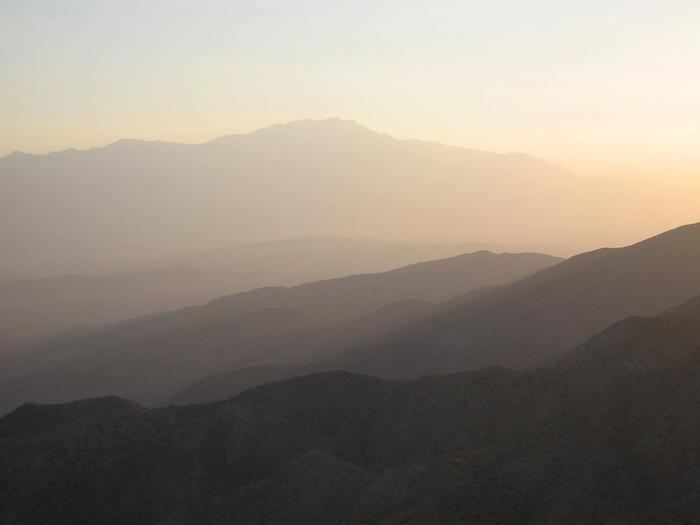
Credit: Joshua Tree National Park, Flickr, CC0 (
Affective sensitivity to air pollution (ASAP) describes the extent to which affect, or mood, fluctuates in accordance with daily changes in air pollution, which can vary between individuals, according to a study published August 7, 2024 in the open-access journal PLOS ONE by Michelle Ng from Stanford University, USA, and colleagues.
Individuals’ sensitivity to climate hazards is a central component of their vulnerability to climate change. Building on known associations between air pollution exposure and adverse mental health outcomes, Michelle Ng and colleagues introduce the ASAP construct and illustrate its measurement using intensive longitudinal data. Specifically, the authors applied statistical models to intensive repeated measures data obtained from 150 US individuals for more than a year. The researchers used the models to examine whether and how individuals’ daily affective states fluctuate with the daily concentrations of outdoor air pollution in their county. They looked at two components of individuals’ affective state: arousal, the level of physiological activation, and valence, the positivity or negativity of their mood.
The work demonstrated the viability of using air pollution data obtained from local air quality monitors alongside psychological data to assess individuals’ ASAP. The researchers found that individuals’ affect arousal was lower than usual on days with higher than usual air pollution. Most importantly, there were substantial differences in ASAP between individuals.
The finding that individuals’ day-to-day affect may be disrupted by air pollution has important implications. For example, ASAP could help partially explain one of the mechanisms by which exposure to air pollution increases longer-term risk for adverse mental health outcomes, such as symptoms of anxiety and depression. In addition, if air pollution blunts an individual’s affect, the blunting might be associated with a lack of climate action.
The authors state that ASAP can be leveraged to better integrate affect and mental health in climate adaptation planning, for example to inform climate vulnerability assessments and design personalized interventions to support affect in the context of air pollution exposure.
The authors add: “According to the World Health Organization, 90% of the world’s population breathes air that does not meet its standards for livable air quality. We propose a person-specific construct called “affective sensitivity to air pollution” based on our finding that individuals differ significantly in how their affective states fluctuate in accordance with their daily exposures to air pollution.”
#####
In your coverage please use this URL to provide access to the freely available article in PLOS ONE:
Citation: Ng M, Gerstorf D, Conroy DE, Pincus AL, Ram N (2024) Affective Sensitivity to Air Pollution (ASAP): Person-specific associations between daily air pollution and affective states. PLoS ONE 19(8): e0307430.
Author Countries: USA, Germany
Funding: This work was generously supported by the US National Institute on Aging (RC1-AG035645) and the US National Science Foundation Graduate Research Fellowship Program (DGE-1656518).
Journal
PLoS ONE
Method of Research
Observational study
Subject of Research
People
Article Title
Affective Sensitivity to Air Pollution (ASAP): Person-specific associations between daily air pollution and affective states
Article Publication Date
7-Aug-2024
COI Statement
The authors have declared that no competing interests exist.
Cite Scienmag News
Russell Cooper. (August 7, 2024). Individuals vary in how air pollution impacts their mood. Scienmag. https://scienmag.com/individuals-vary-in-how-air-pollution-impacts-their-mood/
Russell Cooper. "Individuals vary in how air pollution impacts their mood." Scienmag, 7 August 2024, https://scienmag.com/individuals-vary-in-how-air-pollution-impacts-their-mood/. Accessed 7 September 2026.
Russell Cooper. "Individuals vary in how air pollution impacts their mood." Scienmag. August 7, 2024. https://scienmag.com/individuals-vary-in-how-air-pollution-impacts-their-mood/

