

Wednesday, October 28, 2026
Science
No Result
View All Result
  • Login
  • HOME
  • SCIENCE NEWS
  • CONTACT US
  • HOME
  • SCIENCE NEWS
  • CONTACT US
No Result
View All Result
Scienmag
No Result
View All Result
Home Science News Medicine

IL-33/ST2 pathway linked to allergic rhinitis severity in Chinese cross-sectional study

October 28, 2026
in Medicine
Ophelia Keating
By Ophelia Keating Scienmag Editorial Profile - Health Services Research
Reading Time: 3 mins read
0
IL-33/ST2 pathway linked to allergic rhinitis severity in Chinese cross-sectional study

IL-33/ST2 pathway linked to allergic rhinitis severity in Chinese cross-sectional study

65
SHARES
587
VIEWS
Share on FacebookShare on Twitter
ADVERTISEMENT

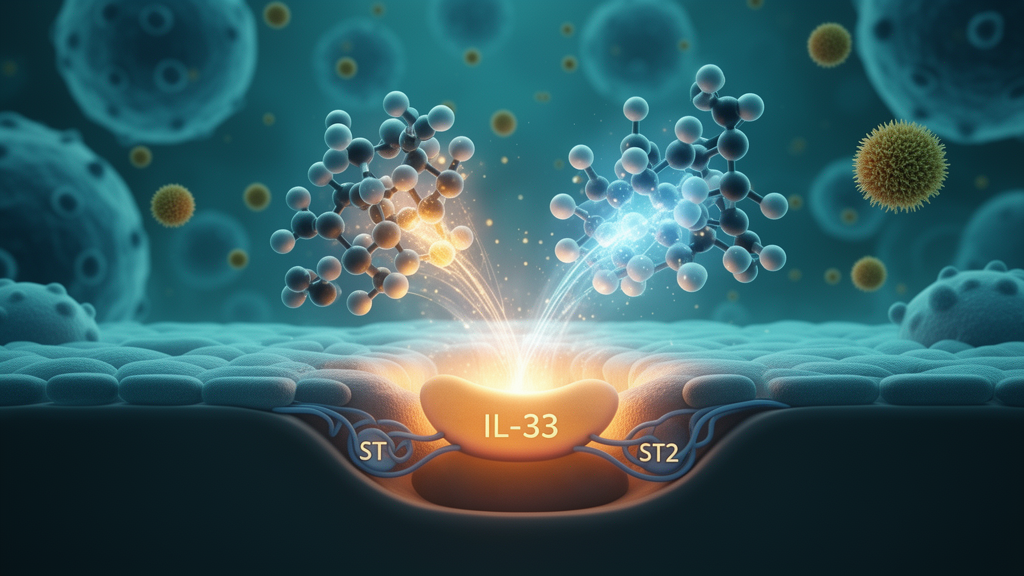
Patients with allergic rhinitis show elevated blood levels of IL-33, ST2, TNF-α and IL-6, and the concentrations of these four markers rise in step with symptom severity, according to a single-centre cross-sectional study conducted at a hospital in Chengdu, China. The findings, published as an open-access research article in Allergy, Asthma & Clinical Immunology, add to evidence that the IL-33/ST2 signalling axis is active in allergic airway disease.

The study was a prospective, cross-sectional observational investigation carried out between February and June 2025. Researchers from the Third Affiliated Hospital of Chengdu University of Traditional Chinese Medicine recruited 81 participants diagnosed with allergic rhinitis from the hospital’s Otolaryngology and Pulmonology Departments. As a comparison group, 85 healthy controls were selected from the same hospital’s Physical Examination Center, giving a total of 166 participants in the analysis.

To test whether these molecules are measurable correlates of the disease, the team quantified serum concentrations of IL-33, ST2, TNF-α and IL-6 using ELISA in both patients and controls. They then used Spearman’s rank correlation analysis to examine relationships between the pathway components, cytokine expression and clinical symptom severity scores.

The results showed statistically significant elevations of all four markers in the allergic rhinitis group compared with the healthy controls, with each measured level substantially higher than the corresponding value in healthy subjects at the P < 0.05 threshold. Positive correlations were also found between these biomarkers and symptom severity, meaning that patients reporting more severe symptoms tended to have higher serum concentrations of the measured proteins.

The authors conclude that aberrant activation of the IL-33/ST2 pathway, together with elevated TNF-α and IL-6 levels, is closely associated with the pathogenesis and progression of allergic rhinitis.

Several limitations of the study design should be kept in view when interpreting the findings. As a cross-sectional comparison of patients and controls at a single centre, the study can document associations between biomarker levels and symptom severity but cannot establish that IL-33/ST2 activation causes allergic rhinitis or its progression. The sample of 81 patients was drawn from one hospital in Sichuan, so the generalisability of the measured concentrations to other populations remains to be tested.

The correlation analysis is also a statistical association rather than a demonstration of a predictive or causal relationship, and serum cytokine levels can be influenced by factors such as recent allergen exposure, infections and comorbid conditions that the published abstract does not detail. The article was shared early as a peer-reviewed, accepted manuscript carrying a permanent DOI, and the authors note that this version is subject to further edits before the final Version of Record replaces it.

Even with those caveats, the study contributes a quantified, paired dataset linking a specific innate immune signalling pathway to both disease status and symptom burden in allergic rhinitis. If the biomarker-severity correlations hold up in larger and more diverse cohorts, serum IL-33, ST2, TNF-α and IL-6 could eventually complement symptom-based assessment tools, and the IL-33/ST2 axis may become a focus for interventional research in allergic airway inflammation.

Subject of Research: Serum IL-33/ST2 pathway biomarkers and inflammatory cytokines in allergic rhinitis patients compared with healthy controls

Article Title: Association between the IL-33/ST2 pathway and downstream inflammatory factors in the context of allergic rhinitis

Article References: Lin, Y., Wang, Y., Guo, Z., Xiao, L., Yang, J., Liu, Y., & Wu, M. (2026). Association between the IL-33/ST2 pathway and downstream inflammatory factors in the context of allergic rhinitis. Allergy, Asthma & Clinical Immunology. https://doi.org/10.1186/s13223-026-01065-7

Image Credits: AI Generated

DOI: 10.1186/s13223-026-01065-7

Keywords: allergic rhinitis, IL-33, ST2, TNF-alpha, IL-6, biomarkers, cross-sectional study, ELISA, Spearman correlation, allergy, inflammation, Chengdu

Cite Scienmag News

Ophelia Keating. (October 28, 2026). IL-33/ST2 pathway linked to allergic rhinitis severity in Chinese cross-sectional study. Scienmag. https://scienmag.com/il-33-st2-pathway-linked-to-allergic-rhinitis-severity-in-chinese-cross-sectional-study/


Ophelia Keating. "IL-33/ST2 pathway linked to allergic rhinitis severity in Chinese cross-sectional study." Scienmag, 28 October 2026, https://scienmag.com/il-33-st2-pathway-linked-to-allergic-rhinitis-severity-in-chinese-cross-sectional-study/. Accessed 28 October 2026.

Ophelia Keating. "IL-33/ST2 pathway linked to allergic rhinitis severity in Chinese cross-sectional study." Scienmag. October 28, 2026. https://scienmag.com/il-33-st2-pathway-linked-to-allergic-rhinitis-severity-in-chinese-cross-sectional-study/

Tags: allergic rhinitisallergyAsian population studies on allergy biomarkersBiomarkersbiomarkers for allergic airway inflammationChengducorrelation of IL-33/ST2 with symptom severitycross-sectional studycross-sectional study of allergic rhinitis in Chinacytokine biomarkers for allergic rhinitis diagnosiscytokine levels and disease severityELISAELISA detection of inflammatory markersIL-33IL-33/ST2 pathway in allergic rhinitisIL-6immune response in allergicimmune signaling axis in allergic diseasesinflammationrole of TNF-alpha and IL-6 in allergic rhinitisserum cytokine measurement in allergySpearman correlationST2TNF-alpha
Share26Tweet16
Previous Post

Multi-paradigm EEG signals and AI enable reliable biometric authentication

Next Post

Calibrated blunt clamp makes rat pain reflex test more reliable

Related Posts

Systematic review maps end-of-life psychosocial and spiritual needs in physical disability
Medicine

Systematic review maps end-of-life psychosocial and spiritual needs in physical disability

October 28, 2026
Text Message Campaign Reached Only a Third of Patients Overdue for Colorectal Cancer Screening
Medicine

Text Message Campaign Reached Only a Third of Patients Overdue for Colorectal Cancer Screening

October 28, 2026
FOXO1 Emerges as Candidate Regulator and Biomarker in Hip Dysplasia
Medicine

FOXO1 Emerges as Candidate Regulator and Biomarker in Hip Dysplasia

October 28, 2026
Regulators, developers and clinicians in Shenzhen voice concerns over medical AI governance
Medicine

Regulators, developers and clinicians in Shenzhen voice concerns over medical AI governance

October 28, 2026
Modified One-Layer Vasovasostomy Matches Gold Standard in Vasectomy Reversal
Medicine

Modified One-Layer Vasovasostomy Matches Gold Standard in Vasectomy Reversal

October 28, 2026
Small Bone Window Surgery Completely Obliterates Rare C1 Dural Fistulas
Medicine

Small Bone Window Surgery Completely Obliterates Rare C1 Dural Fistulas

October 28, 2026
Next Post
Calibrated blunt clamp makes rat pain reflex test more reliable

Calibrated blunt clamp makes rat pain reflex test more reliable

  • Mothers who receive childcare support from maternal grandparents show more optimized

    Mothers who receive childcare support from maternal grandparents show more parental warmth, finds NTU Singapore study

    27656 shares
    Share 11059 Tweet 6912
  • University of Seville Breaks 120-Year-Old Mystery, Revises a Key Einstein Concept

    1061 shares
    Share 424 Tweet 265
  • Bee body mass, pathogens and local climate influence heat tolerance

    682 shares
    Share 273 Tweet 171
  • Researchers record first-ever images and data of a shark experiencing a boat strike

    546 shares
    Share 218 Tweet 137
  • Groundbreaking Clinical Trial Reveals Lubiprostone Enhances Kidney Function

    531 shares
    Share 212 Tweet 133
Science

Embark on a thrilling journey of discovery with Scienmag.com—your ultimate source for cutting-edge breakthroughs. Immerse yourself in a world where curiosity knows no limits and tomorrow’s possibilities become today’s reality!

RECENT NEWS

  • Systematic review maps end-of-life psychosocial and spiritual needs in physical disability
  • Text Message Campaign Reached Only a Third of Patients Overdue for Colorectal Cancer Screening
  • FOXO1 Emerges as Candidate Regulator and Biomarker in Hip Dysplasia
  • Regulators, developers and clinicians in Shenzhen voice concerns over medical AI governance

Categories

  • Agriculture
  • Anthropology
  • Archaeology
  • Athmospheric
  • Biology
  • Biotechnology
  • Blog
  • Bussines
  • Cancer
  • Chemistry
  • Climate
  • Earth Science
  • Editorial Policy
  • Marine
  • Mathematics
  • Medicine
  • Pediatry
  • Policy
  • Psychology & Psychiatry
  • Science Education
  • Science News
  • Social Science
  • Space
  • Technology and Engineering

Subscribe to Blog via Email

Enter your email address to subscribe to this blog and receive notifications of new posts by email.

Join 5,151 other subscribers

© 2025 Scienmag - Science Magazine

Welcome Back!

Login to your account below

Forgotten Password?

Retrieve your password

Please enter your username or email address to reset your password.

Log In
No Result
View All Result
  • HOME
  • SCIENCE NEWS
  • CONTACT US

© 2025 Scienmag - Science Magazine

Discover more from Science

Subscribe now to keep reading and get access to the full archive.

Continue reading



