Hydrogen-rich water, or HRW, is ordinary water infused with dissolved molecular hydrogen gas, and it has quietly become one of the most actively studied functional liquids in science. A new comprehensive review synthesizing 170 peer-reviewed publications, most of them published since 2020, traces the field from the electrochemistry of hydrogen generation to documented effects in fruit storage, crop cultivation, livestock, laboratory animals and human clinical trials. The central appeal of molecular hydrogen lies in its unusual chemistry: it is a small, non-polar molecule that diffuses readily across cell membranes and can selectively neutralize harmful reactive oxygen species without disturbing beneficial signaling molecules. That selectivity, the review argues, is what positions HRW as a candidate intervention across such wildly different domains, from extending the shelf life of kiwifruit to improving metabolic markers in patients with impaired fasting glucose.
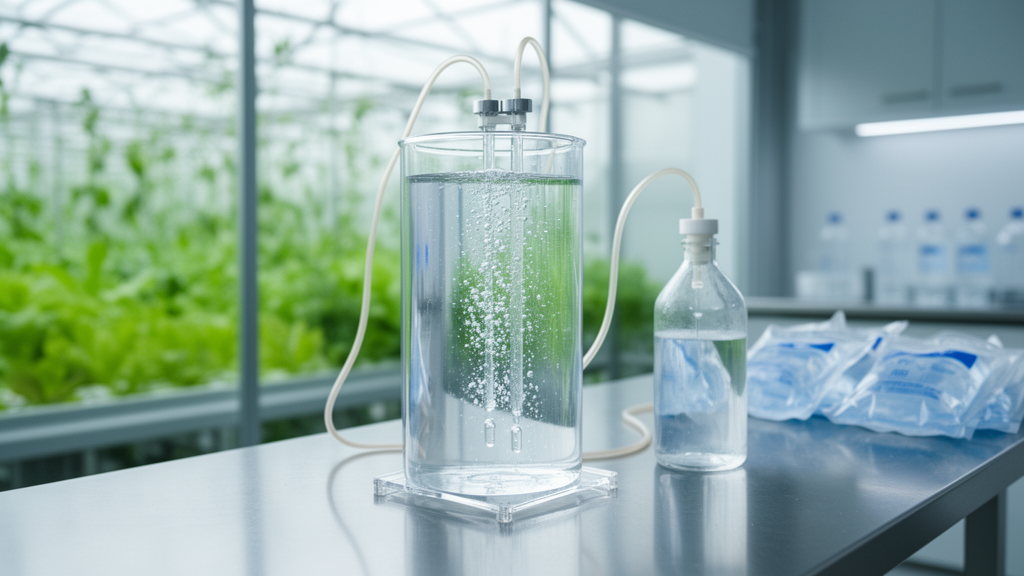
Producing HRW is chemically straightforward in principle but demanding in practice. Three major approaches dominate the literature. The first is direct dissolution of externally generated hydrogen gas, typically by bubbling the gas through water via a diffuser; one reported protocol bubbling hydrogen into distilled water at 150 milliliters per minute for 30 minutes yielded roughly 0.8 milligrams of dissolved hydrogen per liter. The second relies on solid hydrogen-generating materials such as magnesium tablets and sticks, which react with water according to the equation Mg + 2H2O yields Mg(OH)2 + H2, releasing hydrogen in situ while also raising alkalinity. The third is electrolysis, in which electrical current splits water into hydrogen and oxygen, with proton exchange membrane systems particularly relevant for drinking-water devices because they separate the hydrogen and oxygen streams and can deliver high-purity hydrogen with minimal alteration of pH or mineral content.
The review emphasizes that HRW is not a chemically uniform product. Hydrogen-bubbled water, magnesium-derived water, alkaline-stick water and electrolyzed water can contain similar dissolved hydrogen concentrations yet differ substantially in pH, oxidation-reduction potential, dissolved oxygen and ionic composition. Hydrogen-bubbled water prepared from tap water in one study contained about 1.6 milligrams per liter of hydrogen with a pH of 7.15 and an oxidation-reduction potential of minus 283 millivolts, while magnesium-stick preparations have shown hydrogen concentrations of roughly 0.55 to 0.65 millimolar with pH values drifting toward 8 or higher. Under atmospheric pressure and room temperature, the theoretical saturation concentration of dissolved hydrogen is only about 1.6 milligrams per liter, a hard physical ceiling that shapes what any commercial product can realistically deliver.
That low solubility leads to the field’s most stubborn technical problem: hydrogen escapes. Because the gas is small and highly diffusible, dissolved hydrogen concentrations fall steadily after production, especially when the water is exposed to air or transferred between containers. In one frequently cited comparison, hydrogen-bubbled and magnesium-derived waters lost half their hydrogen content in roughly two hours and were nearly depleted after eight hours, although the review stresses this reflects specific experimental conditions rather than a universal shelf life. Mitigation strategies include airtight packaging with minimal headspace, aluminum or stainless-steel containers, hydrocolloid stabilizers such as pectin, high-pressure storage and cool temperatures, since gas solubility drops as temperature rises. The authors argue that any reported hydrogen concentration should always be paired with storage details such as container type, headspace, temperature and elapsed time.
In food systems, the applications are strikingly diverse. Postharvest treatment with hydrogen-rich water has delayed ripening in kiwifruit and banana by suppressing ethylene biosynthesis and pectin degradation, maintained firmness in okra by upregulating cell-wall biosynthesis genes, and delayed pericarp browning in litchi by enhancing glutathione and ascorbate metabolism. Modified-atmosphere packaging containing 4 percent hydrogen prolonged strawberry shelf life while preserving anthocyanins and firmness. Beyond preservation, HRW has been used as a processing medium: rice milk prepared with hydrogen-saturated water showed improved mineral, amino-acid and aroma profiles, and alkaline HRW treatment modified potato flour into a potential wheat-flour substitute. In dairy and fermentation, the reducing environment of HRW reduced biogenic amine formation in butter and red beet pickles, and hydrogen-enriched solvents extracted higher yields of phenolics and flavonoids from tomato peel, olive leaves and other agri-food wastes than plain water.
In plant cultivation, hydrogen-rich water acts less as a simple antioxidant and more as a regulator of redox signaling. Treatments have promoted root and hypocotyl elongation in mung bean seedlings through gibberellic acid and auxin pathways, improved germination and nutrient uptake in wheat, and increased berry weight, yield and anthocyanin content in irrigated grapevines. Under stress, the effects are broader still: HRW pretreatment alleviated cold damage in rice, high-light damage in maize, UV damage in radish sprouts, and salinity stress in Arabidopsis and rice through sodium exclusion and improved potassium-to-sodium ratios. Notably, in cadmium-contaminated soils the goal can run in either direction, reducing metal uptake in food crops while enhancing cadmium accumulation in plants grown for phytoremediation, a dual use the review highlights as agriculturally significant.
The animal evidence spans farm species, laboratory models and companion animals. Broiler chickens drinking hydrogen water at 1 to 1.5 milligrams per liter showed increased superoxide dismutase activity, lower cholesterol fractions and improved feed conversion, while heat-stressed laying hens produced better eggs with healthier intestinal morphology. In weaned piglets, HRW supplementation reduced diarrhea, restored intestinal tight-junction integrity and shifted gut microbial composition. In aquaculture, juvenile mandarin fish exposed to dissolved hydrogen for two hours daily over eight weeks gained weight faster with better feed efficiency. Laboratory rodent studies, the largest evidence base, report cardioprotection through PI3K/Akt and Nrf2 signaling, neuroprotection in radiation and brain-injury models, reduced liver injury in steatohepatitis, and even improved survival in a murine sepsis model, where hydrogen-rich saline raised survival from 31 percent to 69 percent.
Human research remains the most heterogeneous. Randomized trials have reported improved lipid and glucose markers in metabolic syndrome, reduced liver fat in non-alcoholic fatty liver disease, improved endothelial function with high-concentration hydrogen water, and reduced anxiety and sympathetic nerve activity in healthy adults. Exercise studies show a mixed picture: sprint performance improved in professional soccer players and repeated-sprint power rose in university athletes, yet endurance-trained runners showed no treadmill benefit, and a trial in national-level fin swimmers found a 0.6 percent improvement in 400-meter performance but no effect on repeated sprints, suggesting task-specific rather than generalized enhancement. A trial in women with premenstrual syndrome reported significantly lower symptom scores over three cycles, though the sample was small. Most tellingly, a placebo-controlled trial in chronic mountain sickness found that HRW increased both malondialdehyde, a marker of oxidative damage, and total antioxidant capacity, with the damage marker rising more in participants with higher body mass index, a clear warning that hydrogen water is not uniformly antioxidative.
The review’s authors are candid about the barriers between laboratory promise and commercial reality. Dissolved hydrogen is unstable, products vary enormously in concentration and chemistry depending on production method, and there are no clear regulatory frameworks governing health claims in the food and beverage sectors. Standardized analytical methods, validated packaging, and adequately powered clinical trials with defined hydrogen dosing are the field’s most urgent needs. Emerging evidence that baseline endogenous hydrogen production and individual metabolic status may determine who responds adds a further layer of complexity. Still, with 117 of the 170 reviewed references published from 2020 onward, the trajectory is unmistakable: hydrogen-rich water has moved from a niche curiosity to a cross-disciplinary research platform spanning chemistry, agriculture, veterinary science and medicine, and the coming decade of standardized trials will determine whether its therapeutic promise survives rigorous scrutiny.
Subject of Research: Production methods, properties and applications of hydrogen-rich water
Article Title: Hydrogenated water: understanding its production, properties, and applications
Article References: Salsabila, N., Sezer, N., Yetis, H., Ahmed, T., Al-Kuwari, R., Erdogan, H. M., Al-Ansari, T., & Bicer, Y. (2026). Hydrogenated water: understanding its production, properties, and applications. Results in Chemistry, 31, Article 103991. https://doi.org/10.1016/j.rechem.2026.103991
Image Credits: AI Generated
DOI: 10.1016/j.rechem.2026.103991
Keywords: hydrogen-rich water, molecular hydrogen, electrolysis, antioxidant, food preservation, agriculture, animal health, clinical trials, hydrogen retention, PEM electrolysis, oxidative stress, Hydrogenated
Cite Scienmag News
Bethany Barker. (October 25, 2026). Hydrogen-Rich Water: From Electrolysis Chemistry to Farms, Food and Clinics. Scienmag. https://scienmag.com/hydrogen-rich-water-from-electrolysis-chemistry-to-farms-food-and-clinics/
Bethany Barker. "Hydrogen-Rich Water: From Electrolysis Chemistry to Farms, Food and Clinics." Scienmag, 25 October 2026, https://scienmag.com/hydrogen-rich-water-from-electrolysis-chemistry-to-farms-food-and-clinics/. Accessed 25 October 2026.
Bethany Barker. "Hydrogen-Rich Water: From Electrolysis Chemistry to Farms, Food and Clinics." Scienmag. October 25, 2026. https://scienmag.com/hydrogen-rich-water-from-electrolysis-chemistry-to-farms-food-and-clinics/