


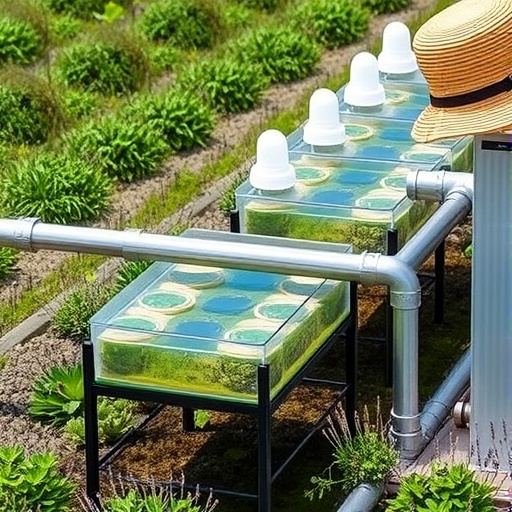
A new study in Nature Communications reports a hybrid bioelectrochemical strategy designed to turn hard-to-treat wastewater into a platform for “negative carbon” performance. By coupling electrochemical control with microbial metabolism, the researchers aim to simultaneously capture carbon while reallocating nitrogen and phosphorus into more recoverable forms.
The core of the approach combines bioelectrochemical reactors with a hierarchical utilization scheme for C, N, and P. Instead of treating these elements as separate removal targets, the process channels them through coordinated pathways where electricity-driven conditions shape microbial activity.
Technically, the system leverages electrically mediated redox gradients that steer microbial consortia toward more efficient conversion of dissolved organics. Under tuned operating potentials, electron transfer processes improve the fate of carbon substrates, enabling stronger attenuation of carbon emissions associated with conventional treatment steps.
For nitrogen, the method promotes sequential transformations that can enhance the breakdown of ammonia- and nitrate-related pollutants. Electrical bias and reactor microenvironments work together to support nitrification-like and denitrification-like functions, increasing the likelihood of converting reactive nitrogen into less mobile end products.
Phosphorus recovery is addressed through electrochemical and biological coordination, encouraging the formation of phosphorus-containing solids that are more amenable to capture. This reduces the need for purely chemical precipitation and may lower the overall energy demand of P management.
Because wastewater chemistry varies widely, the study emphasizes robustness: the hybrid system maintains performance across fluctuating influent characteristics by dynamically sustaining favorable electrochemical conditions. The researchers report that this stability helps prevent the typical “one-size-fits-all” bottlenecks that degrade treatment efficiency.
Beyond pollutant removal, the work’s central claim is carbon mitigation. By improving the coupling between carbon breakdown and electricity-assisted microbial metabolism, the process reduces carbon released during treatment and strengthens pathways that can effectively offset emissions.
The findings place bioelectrochemical wastewater treatment closer to grid-relevant sustainability goals. With electricity as an operational lever, the system demonstrates how microbial ecology can be engineered for resource recovery rather than only waste destruction.
If scaled, the technology could reshape how municipalities and industrial facilities manage C, N, and P together, delivering a more circular approach to water stewardship. The authors suggest the framework can be adapted to different waste streams where integrated elemental recovery is critical.
Cite Scienmag News
Violet Maxwell. (July 29, 2026). Hybrid bioelectrochemical system boosts C, N, and P removal for negative carbon wastewater. Scienmag. https://scienmag.com/hybrid-bioelectrochemical-system-boosts-c-n-and-p-removal-for-negative-carbon-wastewater/
Violet Maxwell. "Hybrid bioelectrochemical system boosts C, N, and P removal for negative carbon wastewater." Scienmag, 29 July 2026, https://scienmag.com/hybrid-bioelectrochemical-system-boosts-c-n-and-p-removal-for-negative-carbon-wastewater/. Accessed 4 September 2026.
Violet Maxwell. "Hybrid bioelectrochemical system boosts C, N, and P removal for negative carbon wastewater." Scienmag. July 29, 2026. https://scienmag.com/hybrid-bioelectrochemical-system-boosts-c-n-and-p-removal-for-negative-carbon-wastewater/


