

Friday, September 4, 2026
Science
No Result
View All Result
  • Login
  • HOME
  • SCIENCE NEWS
  • CONTACT US
  • HOME
  • SCIENCE NEWS
  • CONTACT US
No Result
View All Result
Scienmag
No Result
View All Result
Home Science News Psychology & Psychiatry

Resting-State Brain Activity Abnormalities Linked to Late-Life Depression Meta-Analysis

July 29, 2026
in Psychology & Psychiatry
Glenn Wilkins
By Glenn Wilkins Scienmag Editorial Profile - Clinical Psychology
Reading Time: 2 mins read
0
Resting-State Brain Activity Abnormalities Linked to Late-Life Depression Meta-Analysis

Resting-State Brain Activity Abnormalities Linked to Late-Life Depression Meta-Analysis

65
SHARES
587
VIEWS
Share on FacebookShare on Twitter
ADVERTISEMENT

A new meta-analysis is tightening the link between late-life depression and the brain’s baseline activity—revealing that mood symptoms may ride on subtle, system-wide changes rather than isolated lesions. Published in Translational Psychiatry in 2026, the study synthesizes resting-state functional MRI results from multiple investigations, focusing on what the brain does when it is not performing a specific task.

Researchers centered their analysis on intrinsic activity: the spontaneous neural fluctuations that can be captured through functional connectivity and related resting-state metrics. By pooling findings across studies, the team aimed to reduce the noise of individual experiments and estimate more stable patterns of abnormality in older adults experiencing depression.

Across the compiled datasets, the authors report consistent deviations in network-level organization. These alterations suggest that late-life depression involves disruptions in how brain regions synchronize during “rest,” potentially affecting how cognitive control, emotion regulation, and memory networks interact. In other words, the disorder appears to reshape the brain’s default communication architecture.

A key technical element of the work is the meta-analytic approach to resting-state imaging, which aggregates reported effects while accounting for differences in study design. This strategy helps identify brain signatures that replicate beyond single-cohort idiosyncrasies, strengthening confidence in which regions and networks are most implicated.

The paper’s emphasis on intrinsic brain activity also reframes depression as a disorder of ongoing dynamics. Instead of viewing symptoms solely as responses to external stressors, the findings point toward persistent network dysregulation—changes that may influence vulnerability, symptom persistence, and treatment responsiveness.

Importantly, the analysis targets late-life depression, a clinical category often accompanied by heterogeneity in comorbidities and neurobiological risk. By examining resting-state abnormalities, the study provides a pathway toward biomarkers that could complement clinical screening and help stratify patients in the future.

Taken together, the study advances a growing consensus that resting-state brain networks carry informative signals in affective disorders. It also underscores the utility of meta-analysis for consolidating functional imaging evidence, where effect sizes can vary substantially across laboratories.

With the DOI pinpointed as 10.1038/s41398-026-04210-3, the report is set to become a reference point for ongoing efforts to map depression onto reproducible neural network alterations in aging brains. For now, the message is clear: even without a task, the brain of someone with late-life depression is measurably “different.”

Subject of Research: Late-life depression; intrinsic brain activity (resting-state functional imaging)

Article Title: Abnormalities of intrinsic brain activity in late-life depression: a meta-analysis of resting-state functional imaging studies

Article References: Lin, J., Lin, L., Zhang, H., Kemp, G. J., Li, L., & Gong, Q. (2026). Abnormalities of intrinsic brain activity in late-life depression: a meta-analysis of resting-state functional imaging studies. Translational Psychiatry. https://doi.org/10.1038/s41398-026-04210-3

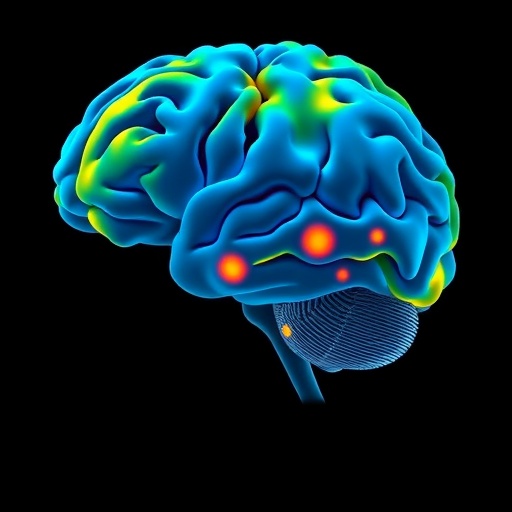
Image Credits: AI Generated

DOI: 10.1038/s41398-026-04210-3

Keywords: aging-related brain activity patterns, brain network alterations in elderly, cognitive control brain changes, default mode network disruptions, emotion regulation neural correlates, functional brain connectivity abnormalities, intrinsic brain activity in depression, late-life depression, meta-analysis of resting-state studies, neural basis of late-life depression, neural connectivity in depression, resting-state functional MRI

Cite Scienmag News

Glenn Wilkins. (July 29, 2026). Resting-State Brain Activity Abnormalities Linked to Late-Life Depression Meta-Analysis. Scienmag. https://scienmag.com/resting-state-brain-activity-abnormalities-linked-to-late-life-depression-meta-analysis/


Glenn Wilkins. "Resting-State Brain Activity Abnormalities Linked to Late-Life Depression Meta-Analysis." Scienmag, 29 July 2026, https://scienmag.com/resting-state-brain-activity-abnormalities-linked-to-late-life-depression-meta-analysis/. Accessed 4 September 2026.

Glenn Wilkins. "Resting-State Brain Activity Abnormalities Linked to Late-Life Depression Meta-Analysis." Scienmag. July 29, 2026. https://scienmag.com/resting-state-brain-activity-abnormalities-linked-to-late-life-depression-meta-analysis/

Tags: aging-related brain activity patternsbrain network alterations in elderlycognitive control brain changesdefault mode network disruptionsemotion regulation neural correlatesfunctional brain connectivity abnormalitiesintrinsic brain activity in depressionlate-life depressionmeta-analysis of resting-state studiesneural basis of late-life depressionneural connectivity in depressionresting-state functional MRI
Share26Tweet16
Previous Post

Hybrid bioelectrochemical system boosts C, N, and P removal for negative carbon wastewater

Next Post

Mitochondria plaques in Alzheimer’s linked to buildup and lysosomal dysfunction

Related Posts

HIV Advocacy Training Boosts Prevention Efforts Among Ugandans Living with HIV
Psychology & Psychiatry

HIV Advocacy Training Boosts Prevention Efforts Among Ugandans Living with HIV

September 3, 2026
Physical activity may protect the heart by easing depression, study suggests
Psychology & Psychiatry

Physical activity may protect the heart by easing depression, study suggests

September 3, 2026
Phone-Based Support Shows Promise for Caregivers After Pediatric Mental Health Crises
Psychology & Psychiatry

Phone-Based Support Shows Promise for Caregivers After Pediatric Mental Health Crises

September 3, 2026
Mindfulness Program Quality Key to Teen Mental and Metabolic Health
Psychology & Psychiatry

Mindfulness Program Quality Key to Teen Mental and Metabolic Health

September 3, 2026
Bayesian adaptive testing with variable lengths and new stopping rules
Psychology & Psychiatry

Bayesian adaptive testing with variable lengths and new stopping rules

September 3, 2026
How Infants Learn to Tell Close Relationships From Casual Ones
Psychology & Psychiatry

How Infants Learn to Tell Close Relationships From Casual Ones

September 3, 2026
Next Post
Mitochondria plaques in Alzheimer’s linked to buildup and lysosomal dysfunction

Mitochondria plaques in Alzheimer’s linked to buildup and lysosomal dysfunction

  • Mothers who receive childcare support from maternal grandparents show more optimized

    Mothers who receive childcare support from maternal grandparents show more parental warmth, finds NTU Singapore study

    27656 shares
    Share 11059 Tweet 6912
  • University of Seville Breaks 120-Year-Old Mystery, Revises a Key Einstein Concept

    1061 shares
    Share 424 Tweet 265
  • Bee body mass, pathogens and local climate influence heat tolerance

    682 shares
    Share 273 Tweet 171
  • Researchers record first-ever images and data of a shark experiencing a boat strike

    546 shares
    Share 218 Tweet 137
  • Groundbreaking Clinical Trial Reveals Lubiprostone Enhances Kidney Function

    531 shares
    Share 212 Tweet 133
Science

Embark on a thrilling journey of discovery with Scienmag.com—your ultimate source for cutting-edge breakthroughs. Immerse yourself in a world where curiosity knows no limits and tomorrow’s possibilities become today’s reality!

RECENT NEWS

  • Mesoamerican midsummer drought shows surprising diversity across regions
  • How people in South Sudan’s Sudd wetlands adapt to flood risk
  • Metformin restores mitochondrial quality control in Down syndrome fibroblasts
  • Multiomics approach reverses age-related disease susceptibility in oysters

Categories

  • Agriculture
  • Anthropology
  • Archaeology
  • Athmospheric
  • Biology
  • Biotechnology
  • Blog
  • Bussines
  • Cancer
  • Chemistry
  • Climate
  • Earth Science
  • Editorial Policy
  • Marine
  • Mathematics
  • Medicine
  • Pediatry
  • Policy
  • Psychology & Psychiatry
  • Science Education
  • Social Science
  • Space
  • Technology and Engineering

Subscribe to Blog via Email

Enter your email address to subscribe to this blog and receive notifications of new posts by email.

Join 5,151 other subscribers

© 2025 Scienmag - Science Magazine

Welcome Back!

Login to your account below

Forgotten Password?

Retrieve your password

Please enter your username or email address to reset your password.

Log In
No Result
View All Result
  • HOME
  • SCIENCE NEWS
  • CONTACT US

© 2025 Scienmag - Science Magazine

Discover more from Science

Subscribe now to keep reading and get access to the full archive.

Continue reading