

Sunday, July 26, 2026
Science
No Result
View All Result
  • Login
  • HOME
  • SCIENCE NEWS
  • CONTACT US
  • HOME
  • SCIENCE NEWS
  • CONTACT US
No Result
View All Result
Scienmag
No Result
View All Result
Home Science News Earth Science

How Seawater Chemistry Shapes Foraminiferal Calcite Composition

July 26, 2026
in Earth Science
Reading Time: 2 mins read
0
How Seawater Chemistry Shapes Foraminiferal Calcite Composition

How Seawater Chemistry Shapes Foraminiferal Calcite Composition

65
SHARES
587
VIEWS
Share on FacebookShare on Twitter
ADVERTISEMENT

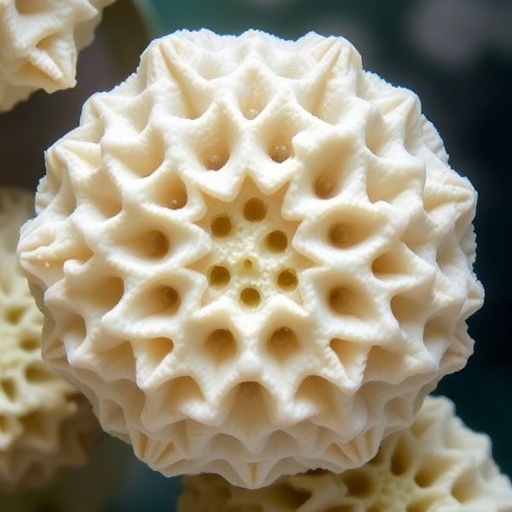
A new study is sharpening a long-debated connection in Earth science: how the chemistry of seawater records itself inside the tiny shells of foraminifera. Using foraminiferal calcite—the mineral that many species build from dissolved ions—the researchers argue that geochemical signals in the shell can be traced back to the water masses that surrounded them. The work, published in Communications Earth & Environment, is timed for a moment when both climate forecasts and paleoceanography increasingly demand chemistry that is as reliable as it is detailed.

Foraminifera live in marine environments where carbonate chemistry is shaped by temperature, salinity, and dissolved carbon dioxide. As they precipitate calcite, their shells can incorporate trace elements and alter isotopic compositions in ways that may preserve the seawater conditions at the time of formation. The key question has been how faithfully those shell signals reflect external seawater chemistry, rather than being blurred by biological “vital effects” or by diagenetic alteration after death.

The authors frame their analysis around the chemical link between seawater and foraminiferal calcite. Their approach connects seawater carbonate system parameters to the composition of the resulting mineral. By treating calcite chemistry as a coupled outcome of environmental chemistry and mineral formation, they aim to reduce ambiguity when shells are used as proxies for past ocean conditions.

Technically, the study emphasizes that foraminiferal calcite does not merely mirror seawater in a simple one-to-one fashion. Instead, the mineral’s chemistry reflects how dissolved species, saturation state, and partitioning behavior influence precipitation at the time the organisms calcify. This perspective helps explain why different sites or time periods can produce systematically different shell compositions even when temperature estimates appear similar.

The findings also matter for interpreting sediment cores, where foraminifera serve as time capsules of ocean change. If the seawater-to-calcite relationship is clearer, then reconstructions of ocean chemistry—such as carbonate chemistry variability and carbon cycling signals—can be made with greater confidence. That improvement is especially relevant for studies targeting rapid climate shifts, such as those driven by changes in CO₂ uptake and ocean circulation.

Importantly for future work, the results provide a framework that can be tested across species, water depths, and environmental gradients. If the seawater–calcite linkage holds broadly, it could standardize proxy calibration and help separate genuine environmental trends from biological or post-depositional noise.

The paper’s viral appeal will likely come from its practical promise: turning microfossil chemistry into a more direct readout of seawater conditions. In an era when ocean chemistry is changing quickly, better proxies are not only valuable for the past—they also help interpret how modern ecosystems may respond as carbonate availability and acidity shift.

In short, the study strengthens the idea that foraminiferal calcite chemistry is not just a record of biology or temperature, but a measurable imprint of the surrounding seawater’s chemical environment. That connection—more constrained and more traceable—could become a cornerstone for both paleoceanographic reconstruction and climate-era monitoring.

Subject of Research: Seawater chemistry as recorded in foraminiferal calcite (biogeochemical proxy interpretation)

Article Title: The link between seawater and foraminiferal calcite chemistry

Article References: François, D., Reichart, GJ., Roverts, R. et al. The link between seawater and foraminiferal calcite chemistry. Commun Earth Environ (2026). https://doi.org/10.1038/s43247-026-03854-9

DOI: 10.1038/s43247-026-03854-9

Keywords: foraminiferal calcite; seawater chemistry; carbonate system; proxies; paleoceanography; stable isotopes; trace elements

Tags: biological vital effects on shell chemistrycalibration of geochemical proxies in paleoenvironmental studiescarbonate chemistry and trace element incorporationdiagenetic alteration of foraminiferal calcitedissolved CO2 impact on calcite compositionisotopic signatures in foraminiferal shellsmineral formation in marine organismspaleoceanography and climate reconstructionseawater carbonate system parametersSeawater chemistry influence on foraminiferal calciteseawater chemistry recordseawater temperature and salinity effects
Share26Tweet16
Previous Post

Venus Is Far From Dead, Scientists Find

Next Post

Inflammatory Biomarkers Distinguish Asymptomatic From Symptomatic Tuberculosis

Related Posts

Scientists Unravel Climate Drivers Behind Bronze Age Civilization Collapses
Earth Science

Scientists Unravel Climate Drivers Behind Bronze Age Civilization Collapses

July 26, 2026
Crustose Coralline Algae Shield Shallow Reefs from Dissolution
Earth Science

Crustose Coralline Algae Shield Shallow Reefs from Dissolution

July 18, 2026
Ice-to-ocean method tracks mercury mobilization and export from Greenland ice sheet
Earth Science

Ice-to-ocean method tracks mercury mobilization and export from Greenland ice sheet

July 17, 2026
Scientists identify rare oddball meteorite linked to dinosaur extinction
Earth Science

Scientists identify rare oddball meteorite linked to dinosaur extinction

July 17, 2026
Mediterranean Outflow Waters Power North Atlantic Deep Convection Sites
Earth Science

Mediterranean Outflow Waters Power North Atlantic Deep Convection Sites

July 17, 2026
Elevation-Driven Warming at High Altitudes Across the Westerly Tibetan Plateau
Earth Science

Elevation-Driven Warming at High Altitudes Across the Westerly Tibetan Plateau

July 17, 2026
Next Post
Inflammatory Biomarkers Distinguish Asymptomatic From Symptomatic Tuberculosis

Inflammatory Biomarkers Distinguish Asymptomatic From Symptomatic Tuberculosis

  • Mothers who receive childcare support from maternal grandparents show more

    Mothers who receive childcare support from maternal grandparents show more parental warmth, finds NTU Singapore study

    27656 shares
    Share 11059 Tweet 6912
  • University of Seville Breaks 120-Year-Old Mystery, Revises a Key Einstein Concept

    1061 shares
    Share 424 Tweet 265
  • Bee body mass, pathogens and local climate influence heat tolerance

    682 shares
    Share 273 Tweet 171
  • Researchers record first-ever images and data of a shark experiencing a boat strike

    546 shares
    Share 218 Tweet 137
  • Groundbreaking Clinical Trial Reveals Lubiprostone Enhances Kidney Function

    531 shares
    Share 212 Tweet 133
Science

Embark on a thrilling journey of discovery with Scienmag.com—your ultimate source for cutting-edge breakthroughs. Immerse yourself in a world where curiosity knows no limits and tomorrow’s possibilities become today’s reality!

RECENT NEWS

  • Children tailor curiosity to individuals when objects seem useful or special
  • Self-Deploying Reinforced Concrete Buildings Could Speed Construction and Reduce Labor
  • Coordinated Vascular and Glial Cell Response in Pig Sepsis Model
  • Inflammatory Biomarkers Distinguish Asymptomatic From Symptomatic Tuberculosis

Categories

  • Agriculture
  • Anthropology
  • Archaeology
  • Athmospheric
  • Biology
  • Biotechnology
  • Blog
  • Bussines
  • Cancer
  • Chemistry
  • Climate
  • Earth Science
  • Editorial Policy
  • Marine
  • Mathematics
  • Medicine
  • Pediatry
  • Policy
  • Psychology & Psychiatry
  • Science Education
  • Social Science
  • Space
  • Technology and Engineering

Subscribe to Blog via Email

Enter your email address to subscribe to this blog and receive notifications of new posts by email.

Join 5,146 other subscribers

© 2025 Scienmag - Science Magazine

Welcome Back!

Login to your account below

Forgotten Password?

Retrieve your password

Please enter your username or email address to reset your password.

Log In
No Result
View All Result
  • HOME
  • SCIENCE NEWS
  • CONTACT US

© 2025 Scienmag - Science Magazine

Discover more from Science

Subscribe now to keep reading and get access to the full archive.

Continue reading
