

Sunday, July 26, 2026
Science
No Result
View All Result
  • Login
  • HOME
  • SCIENCE NEWS
  • CONTACT US
  • HOME
  • SCIENCE NEWS
  • CONTACT US
No Result
View All Result
Scienmag
No Result
View All Result
Home Science News Medicine

Inflammatory Biomarkers Distinguish Asymptomatic From Symptomatic Tuberculosis

July 26, 2026
in Medicine
Reading Time: 2 mins read
0
Inflammatory Biomarkers Distinguish Asymptomatic From Symptomatic Tuberculosis

Inflammatory Biomarkers Distinguish Asymptomatic From Symptomatic Tuberculosis

65
SHARES
587
VIEWS
Share on FacebookShare on Twitter
ADVERTISEMENT

A new viral science news report from Nature Communications highlights how the immune system’s earliest fingerprints may distinguish people who carry tuberculosis without symptoms from those who develop overt disease. The study, led by Awany and colleagues, asks a question that has long shaped TB diagnostics: which inflammatory signals rise early, which appear only after illness begins, and which may remain undetected by standard clinical approaches.

Researchers analyzed inflammatory biomarkers across groups spanning asymptomatic infection and symptomatic tuberculosis. By profiling multiple immune-associated markers rather than relying on a single readout, the team aimed to map a more informative immunological trajectory—one that could improve interpretation of TB risk in real-world settings.

The work emphasizes that “asymptomatic” does not mean “immunologically silent.” Even without classic symptoms, infected individuals can show detectable systemic shifts, including altered cytokine-linked patterns. The researchers report that these signatures partially overlap with those seen in active disease, yet also diverge in ways consistent with different stages of host–pathogen interaction.

Technically, the approach integrates statistical modeling to compare biomarker distributions between clinical categories and to identify markers that best separate asymptomatic from symptomatic states. This includes evaluating effect sizes and consistency across immune pathways tied to inflammation and leukocyte signaling.

A central implication is clinical stratification: inflammatory biomarkers may help categorize TB beyond sputum-based or symptom-based criteria. For screening programs, such stratification could reduce missed cases by flagging individuals whose immune profiles suggest progression risk, even when symptoms are absent.

The findings also suggest potential biological mechanisms. Distinct inflammatory patterns may reflect differences in bacterial burden, lesion dynamics in the lung, and the balance between protective versus damaging immune responses. In symptomatic disease, the biomarker landscape appears skewed toward stronger, more dysregulated inflammation.

If validated in larger cohorts, the study’s biomarker panel could support earlier and more accurate triage—especially in settings where access to confirmatory testing is limited. The authors frame the results as a step toward immune-guided TB diagnostics and improved monitoring of disease states.

Ultimately, the research reframes TB as a spectrum of immunological states rather than a binary label. By refining the inflammatory signatures associated with asymptomatic versus symptomatic infection, the study offers a roadmap for next-generation, pathway-aware diagnostic strategies.

If your goal is translational impact, this work underscores why multi-marker immune profiling is gaining traction. It may turn inflammatory noise into actionable signal—helping clinicians identify who needs urgent evaluation, and who can be monitored more safely.

Subject of Research: Tuberculosis immune biomarkers (asymptomatic vs symptomatic)

Article Title: Inflammatory biomarkers of asymptomatic and symptomatic tuberculosis.

Article References: Awany, D., Ariefdien, D.T., Mendelsohn, S.C. et al. Inflammatory biomarkers of asymptomatic and symptomatic tuberculosis. Nat Commun (2026). https://doi.org/10.1038/s41467-026-75909-6

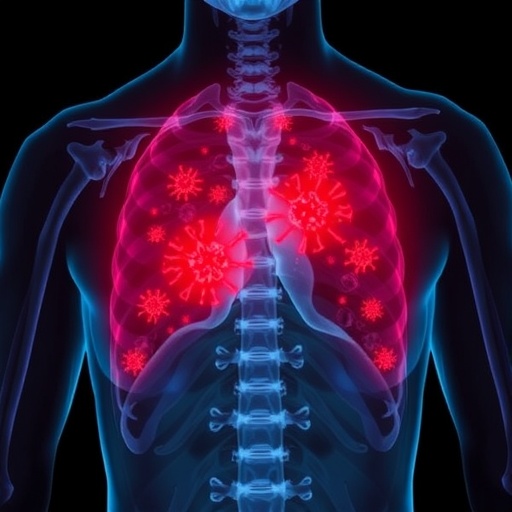
Image Credits: AI Generated

DOI: https://doi.org/10.1038/s41467-026-75909-6

Keywords: tuberculosis; inflammatory biomarkers; asymptomatic infection; symptomatic TB; cytokine profiles; immune stratification

Tags: asymptomatic TB detectioncytokine signatures in TB diagnosisdistinguishing asymptomatic from symptomatic tuberculosishost-pathogen interaction in TBimmune biomarkers for TB disease stagesimmune pathway analysis in TB diagnosisimmune response profiling in tuberculosisinflammatory immune markers in TBstatistical modeling of TB biomarkerssystemic immune shifts in latent TBTB immunological trajectory analysisTuberculosis biomarkers
Share26Tweet16
Previous Post

How Seawater Chemistry Shapes Foraminiferal Calcite Composition

Next Post

Coordinated Vascular and Glial Cell Response in Pig Sepsis Model

Related Posts

Brain regions differently control food intake following GIPR agonist or antagonist treatment
Medicine

Brain regions differently control food intake following GIPR agonist or antagonist treatment

July 26, 2026
Prebiotic sodas pack as much sugar as fiber, study finds
Medicine

Prebiotic sodas pack as much sugar as fiber, study finds

July 26, 2026
Sleep Quality Links Synergistically with Frailty to Increase Cardiometabolic Multimorbidity in Elderly Chinese
Medicine

Sleep Quality Links Synergistically with Frailty to Increase Cardiometabolic Multimorbidity in Elderly Chinese

July 19, 2026
Cognitive reserve helps older adults resist frailty and recover better
Medicine

Cognitive reserve helps older adults resist frailty and recover better

July 19, 2026
Physical Activity and Health Inequality in China’s Older Adults
Medicine

Physical Activity and Health Inequality in China’s Older Adults

July 19, 2026
Factors Influencing Elderly Preference for Dental Services
Medicine

Factors Influencing Elderly Preference for Dental Services

July 18, 2026
Next Post
Coordinated Vascular and Glial Cell Response in Pig Sepsis Model

Coordinated Vascular and Glial Cell Response in Pig Sepsis Model

  • Mothers who receive childcare support from maternal grandparents show more

    Mothers who receive childcare support from maternal grandparents show more parental warmth, finds NTU Singapore study

    27656 shares
    Share 11059 Tweet 6912
  • University of Seville Breaks 120-Year-Old Mystery, Revises a Key Einstein Concept

    1061 shares
    Share 424 Tweet 265
  • Bee body mass, pathogens and local climate influence heat tolerance

    682 shares
    Share 273 Tweet 171
  • Researchers record first-ever images and data of a shark experiencing a boat strike

    546 shares
    Share 218 Tweet 137
  • Groundbreaking Clinical Trial Reveals Lubiprostone Enhances Kidney Function

    531 shares
    Share 212 Tweet 133
Science

Embark on a thrilling journey of discovery with Scienmag.com—your ultimate source for cutting-edge breakthroughs. Immerse yourself in a world where curiosity knows no limits and tomorrow’s possibilities become today’s reality!

RECENT NEWS

  • Centuries-long cooling after achieving net-zero greenhouse gas emissions
  • Brain regions differently control food intake following GIPR agonist or antagonist treatment
  • Children tailor curiosity to individuals when objects seem useful or special
  • Self-Deploying Reinforced Concrete Buildings Could Speed Construction and Reduce Labor

Categories

  • Agriculture
  • Anthropology
  • Archaeology
  • Athmospheric
  • Biology
  • Biotechnology
  • Blog
  • Bussines
  • Cancer
  • Chemistry
  • Climate
  • Earth Science
  • Editorial Policy
  • Marine
  • Mathematics
  • Medicine
  • Pediatry
  • Policy
  • Psychology & Psychiatry
  • Science Education
  • Social Science
  • Space
  • Technology and Engineering

Subscribe to Blog via Email

Success! An email was just sent to confirm your subscription. Please find the email now and click 'Confirm Follow' to start subscribing.

Join 5,146 other subscribers

© 2025 Scienmag - Science Magazine

Welcome Back!

Login to your account below

Forgotten Password?

Retrieve your password

Please enter your username or email address to reset your password.

Log In
No Result
View All Result
  • HOME
  • SCIENCE NEWS
  • CONTACT US

© 2025 Scienmag - Science Magazine
